


.png?width=26&height=26&name=youtubemobile%20(Custom).png)
.png?width=26&height=26&name=instgrammobile%20(Custom).png)


There are Ferrari people, and then there are Ferrari people who get funny about the Mondial. The...
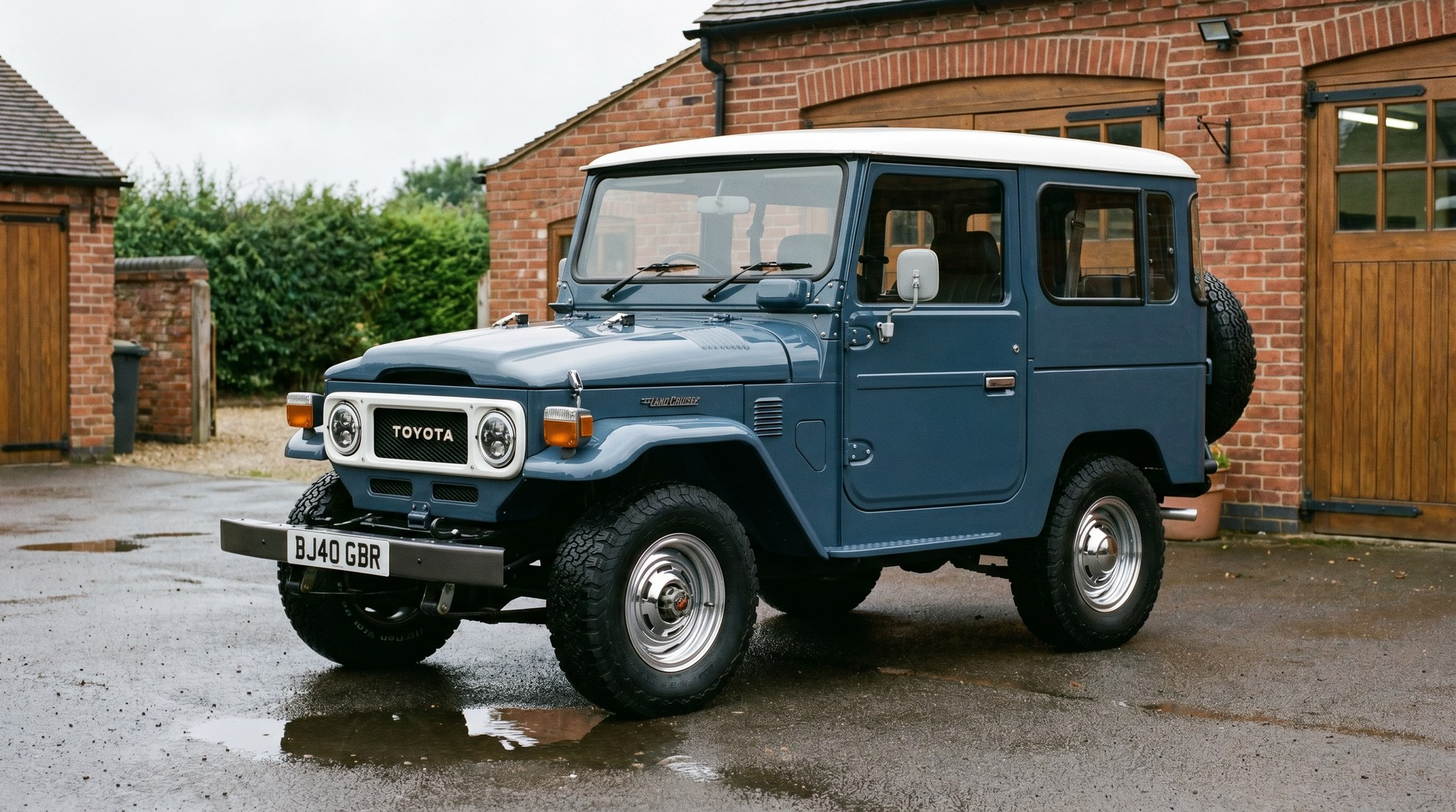




The Toyota Land Cruiser BJ40 and FJ40 are proof that a vehicle does not need leather, mood lighting or a cup holder shaped like a small cathedral to earn devotion. They are simple, upright, noisy, slow by modern standards and about as aerodynamic as a garden shed. Yet somehow, when one clatters past with mud on the tyres and a spare wheel on the back, most sensible people stop what they are doing and stare.
That is the magic of the 40 Series Land Cruiser. It was built for farms, mines, deserts, mountains and places where breaking down is not merely annoying but potentially life threatening. Toyota launched the 40 Series in August 1960, and the model helped make the Land Cruiser name famous across the world as a rugged cross country vehicle. The trick today is knowing whether the one in front of you is a wonderful old warrior or a very expensive orange pile of rust wearing a brave face.
What are the BJ40 and FJ40?
The simple version is this: FJ means petrol, BJ means diesel. More specifically, the FJ40 used Toyota’s F series petrol engine family, while the BJ40 and its close BJ41 and BJ42 relatives used B series diesel engines. The 40 in the name normally points to the short wheelbase body, which is the classic two door shape most people picture when they hear “old Land Cruiser”. Toyota listed the FJ40 wheelbase at 2,285 mm, with the FJ43 and FJ45 sitting on longer wheelbases.
The FJ40 arrived first, using Toyota’s tough inline six petrol engine. Toyota’s own figures for an early FJ40 list a 3,878 cc F engine producing 125 PS at 3,600 rpm. The diesel story came later. Toyota added the 3.0 litre four cylinder B diesel to the 40 Series line up in 1974, after adding the larger H six cylinder diesel in 1973. In normal buyer terms, the FJ40 is usually smoother and more characterful, while the BJ40 is slower, thriftier and more tractor like in the best possible way.
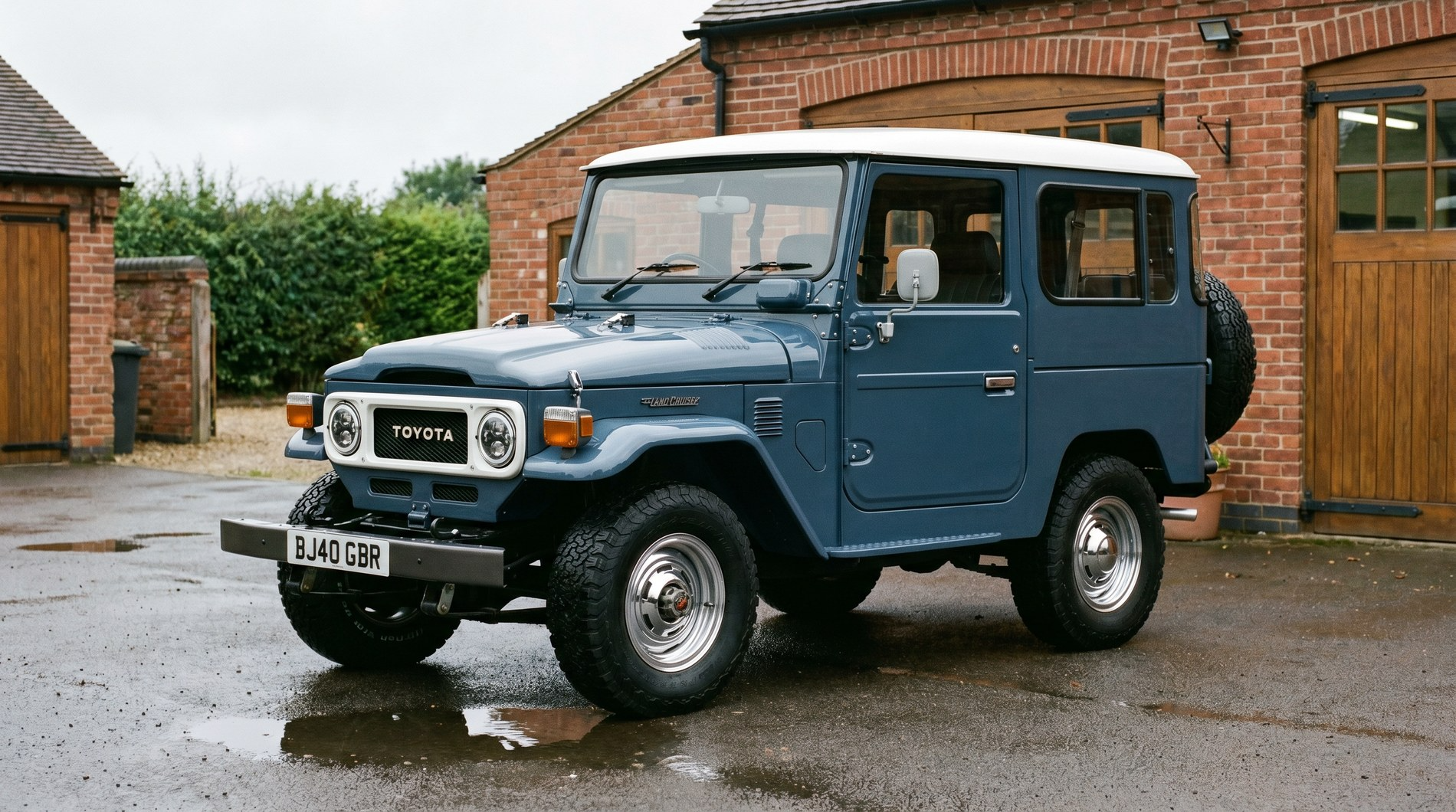
A very short history, because you do need one
The Land Cruiser family began with the Toyota Jeep BJ in 1951, originally developed for Japan’s National Police Reserve. Toyota changed the name to Land Cruiser in June 1954 because Jeep was a Willys trademark. By the time the 40 Series arrived in 1960, Toyota had refined the idea into a proper world vehicle: strong ladder chassis, live axles, leaf springs, simple panels and mechanical parts designed to take punishment rather than impress a showroom lighting designer.
The 40 Series stayed in production for an astonishing length of time. Toyota describes the third generation Land Cruiser as being cherished for 24 years around the world, and Japan production ran until the mid 1980s. The UK officially began selling the Land Cruiser in 1975, according to Toyota UK, which is why genuine UK history is less common than many people assume. You will see imports from Japan, Europe, the Middle East, North America, South America and Australia, and every one of those regions brings its own climate, specification and paperwork story.
Which one should you want?
If you want the classic experience with a bit more pace and that lovely old six cylinder petrol charm, the FJ40 is the obvious choice. Later FJ40s with the 4.2 litre 2F petrol engine, four speed gearbox and front disc brakes are often the easiest to live with, especially if you intend to use the car rather than merely polish it and point at it during Sunday breakfast. A well sorted petrol car feels strong, lazy and honest, although it will drink fuel with the casual confidence of a rugby club on tour.
If you want economy, longevity and a more agricultural feel, the BJ40 has a lot going for it. The 3.0 litre B diesel is not quick, but speed is not really the point here unless your hobby is being overtaken by delivery vans on inclines. Later BJ41 and BJ42 models can have the 2B or 3B diesel, and Classic.com notes that the 3.0 litre B is more common between 1974 and 1981, the 3.2 litre 2B appears around 1980 to 1982, and the 3.4 litre 3B becomes widely used from 1981. The BJ can suit UK buyers nicely if originality, fuel economy and low speed torque matter more than refinement.
The body is where the money hides
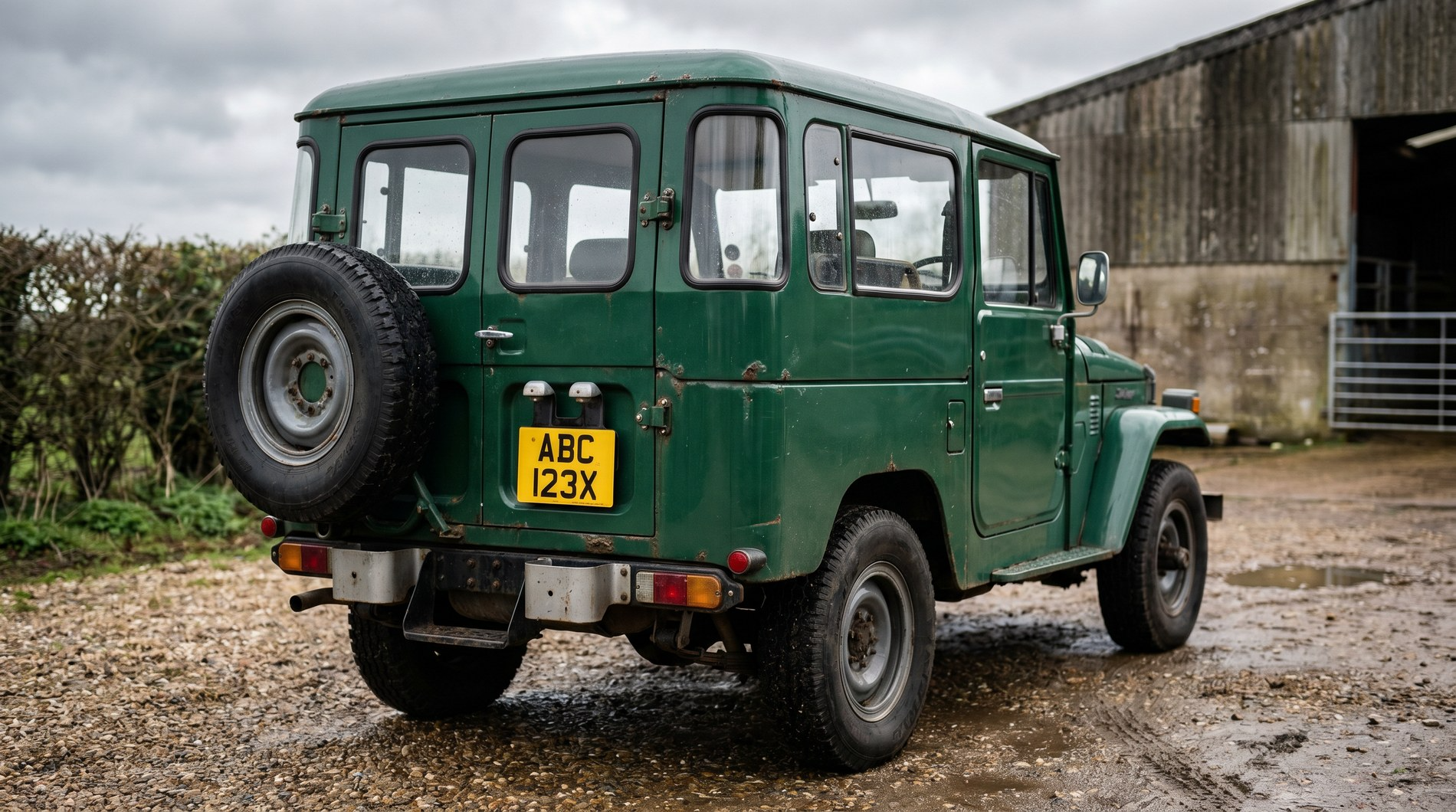
Mechanically, these Land Cruisers are wonderfully strong. Bodywork is another matter. Rust is the great leveller, and it does not care how many appreciative comments the vehicle received outside the coffee shop. Check the floors, sills, rear quarters, wheel arches, door bottoms, windscreen frame, bulkhead, roof gutters, rear sill, body mounts and the area around the rear doors. If the seller says “they all do that”, smile politely and keep looking, because they may all rust, but you do not have to fund all of it.
Be especially suspicious of shiny paint on a car with vague history. Fresh paint is not automatically bad, but it can hide filler, patch repairs and rot that has merely been delayed until the next owner gets the invoice. Cool Cruisers of Texas, a long established Land Cruiser parts specialist, is blunt about this and warns that repainting can conceal major body problems. Take a magnet, a torch and someone emotionally colder than you. Enthusiasm is useful. Blind optimism is how you end up owning a decorative shed.
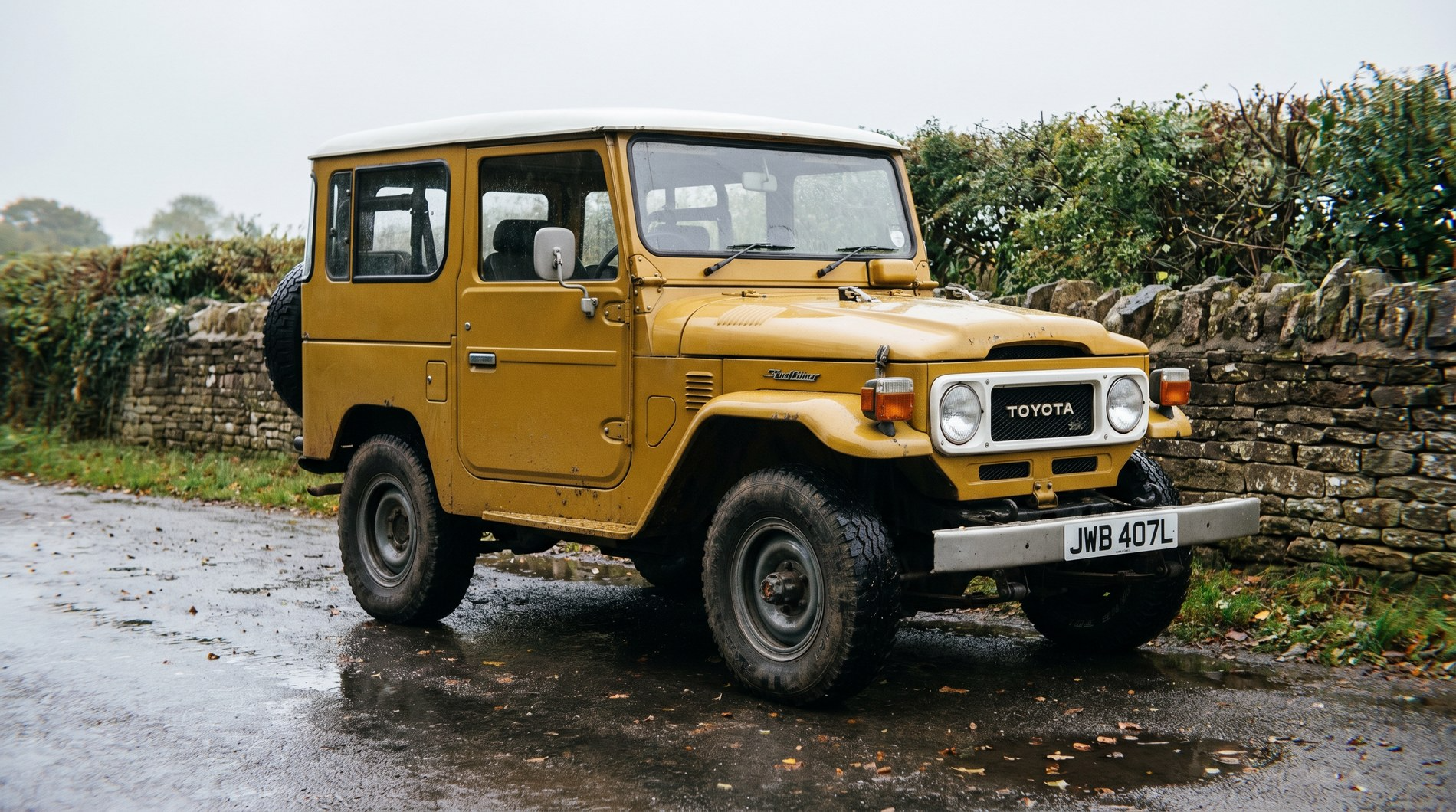
The chassis needs slow, boring attention
The ladder chassis is tough, but it still deserves proper inspection. Look at spring hangers, outriggers, crossmembers, steering box mounts, bumper mounts and any areas where mud can sit quietly for years plotting financial violence. Surface rust is normal on an old working four wheel drive. Heavy scaling, fresh underseal over suspicious lumps, poor welding and bent chassis rails are very different things.
Do not be afraid to get filthy. A Land Cruiser that looks honest underneath is usually a better buy than one that has been blackened within an inch of its life. Check that the body sits squarely, the doors close properly, and the gaps look broadly consistent. These were not coachbuilt Italian exotics, so do not expect jewellery box panel fit, but if the roof, doors and tub appear to be having a family argument, investigate further.
Engines: tough, but not immortal
The petrol F and 2F engines have a superb reputation because they are low stressed and built like industrial machinery. They should start cleanly, idle steadily, pull without drama and show decent oil pressure once warm. Smoke on start up, heavy breathing, rattles, overheating or a cooling system full of rusty soup all need taking seriously. A tired engine may still run because old Toyotas are annoyingly determined, but “it still runs” is not the same as “it is healthy”.
The B series diesel is similarly stout, but you should expect noise rather than chaos. It will clatter, especially when cold, but it should not sound as though someone has dropped a cutlery drawer into a cement mixer. Check for hard starting, excessive black smoke, oil leaks, coolant leaks, blow by and poor hot restarting. With either petrol or diesel, history matters. Regular oil changes, a healthy cooling system and evidence of proper use are worth more than a freshly steam cleaned engine bay that smells faintly of panic.
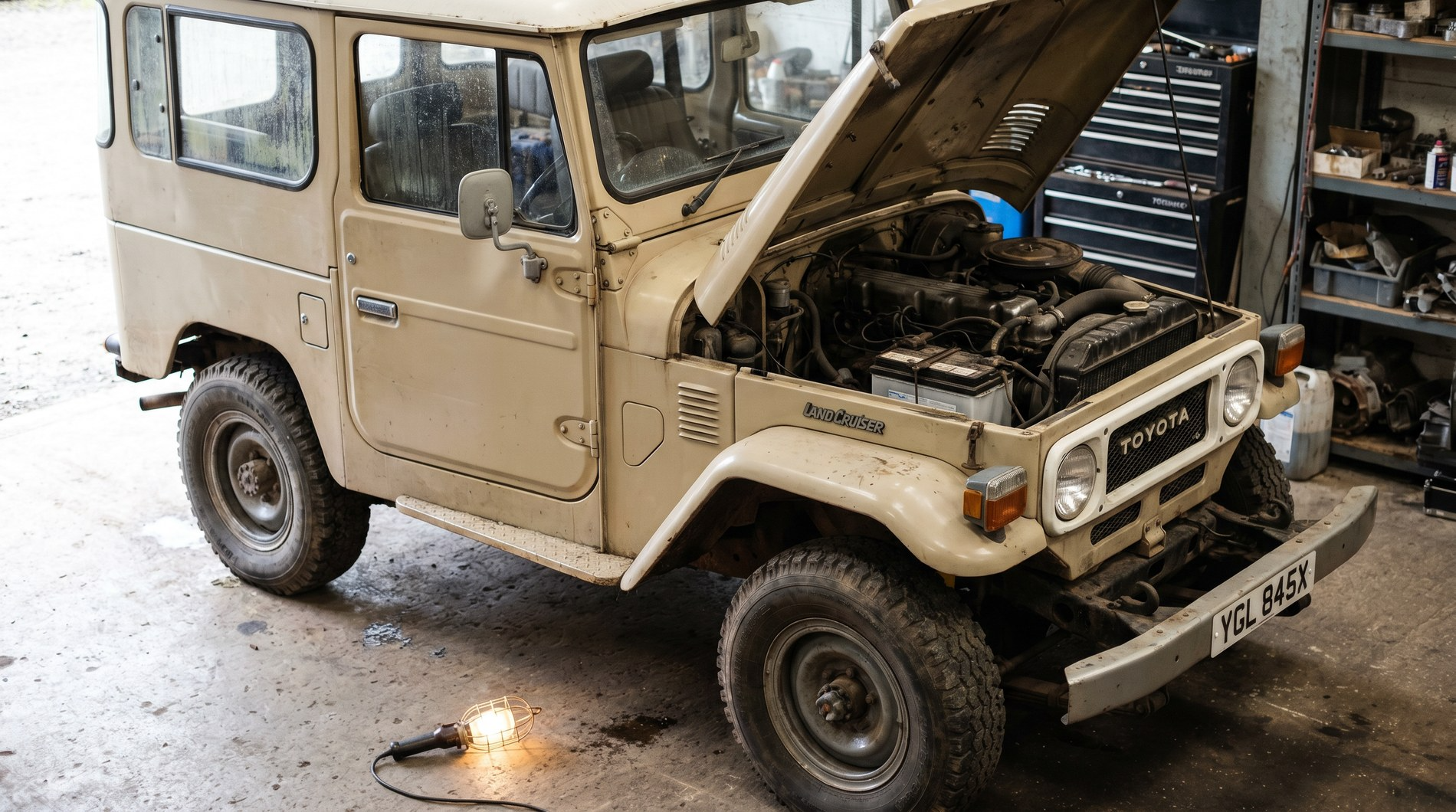
Gearboxes and four wheel drive system
Early FJ40s used a three speed manual gearbox, while later cars gained a four speed. Toyota’s 40 Series used a two speed transfer case, giving high and low range for road and off road work. On a test drive, make sure the gearbox selects cleanly, does not jump out of gear and does not howl like a haunted washing machine. A little old vehicle noise is normal. A noise that makes the seller turn up the radio is not.
You must also check the transfer case properly. Engage four wheel drive, then low range, and listen for unpleasant clunks, grinding, vibration or refusal to select. FJ Classics rightly recommends checking high and low range operation, transfer case leaks and unusual noise before buying. Many old Land Cruisers have spent years doing short trips, posing, or being dragged around fields. The system may be legendary, but it still needs to be tested rather than admired.
Axles, steering and suspension
The 40 Series runs live axles and leaf springs, which is good news if your idea of engineering beauty involves durability and a large hammer. The ride is firm, the steering can be vague, and the body will not glide over poor roads like a modern Range Rover. That is not a fault. That is the contract. What you are looking for is excessive wander, uneven ride height, cracked springs, tired shackles, leaking dampers and clonks from bushes or joints.
Pay close attention to the front axle. Swivel housings can leak, wheel bearings wear, and neglected front end work can become expensive. Look at the tyres too. Odd wear can point to worn steering components, poor alignment or previous off road abuse. Power steering is a welcome addition on some later or modified cars, but badly fitted conversions can create their own problems, so judge the quality of the work rather than the promise of easier parking.
Brakes: later can be nicer, earlier is not hopeless
Front disc brakes are a desirable feature on later FJ40s in some markets. Cool Cruisers notes that 1976 to 1983 FJ40s are often sought after because they combine front disc brakes, the larger 2F engine, four speed gearbox and ambulance rear doors. That does not mean an earlier drum brake car is bad. Properly maintained drums can work well enough, but they need careful adjustment and a realistic driver.
On a test drive, the vehicle should stop in a straight line without grabbing, pulling or making your passenger suddenly religious. Check the condition of brake lines, hoses, wheel cylinders, master cylinder, servo if fitted, and the handbrake. Old four wheel drives often cover little mileage, which sounds lovely until you remember that brake fluid absorbs moisture while the car sits looking photogenic.
Interior, trim and missing bits
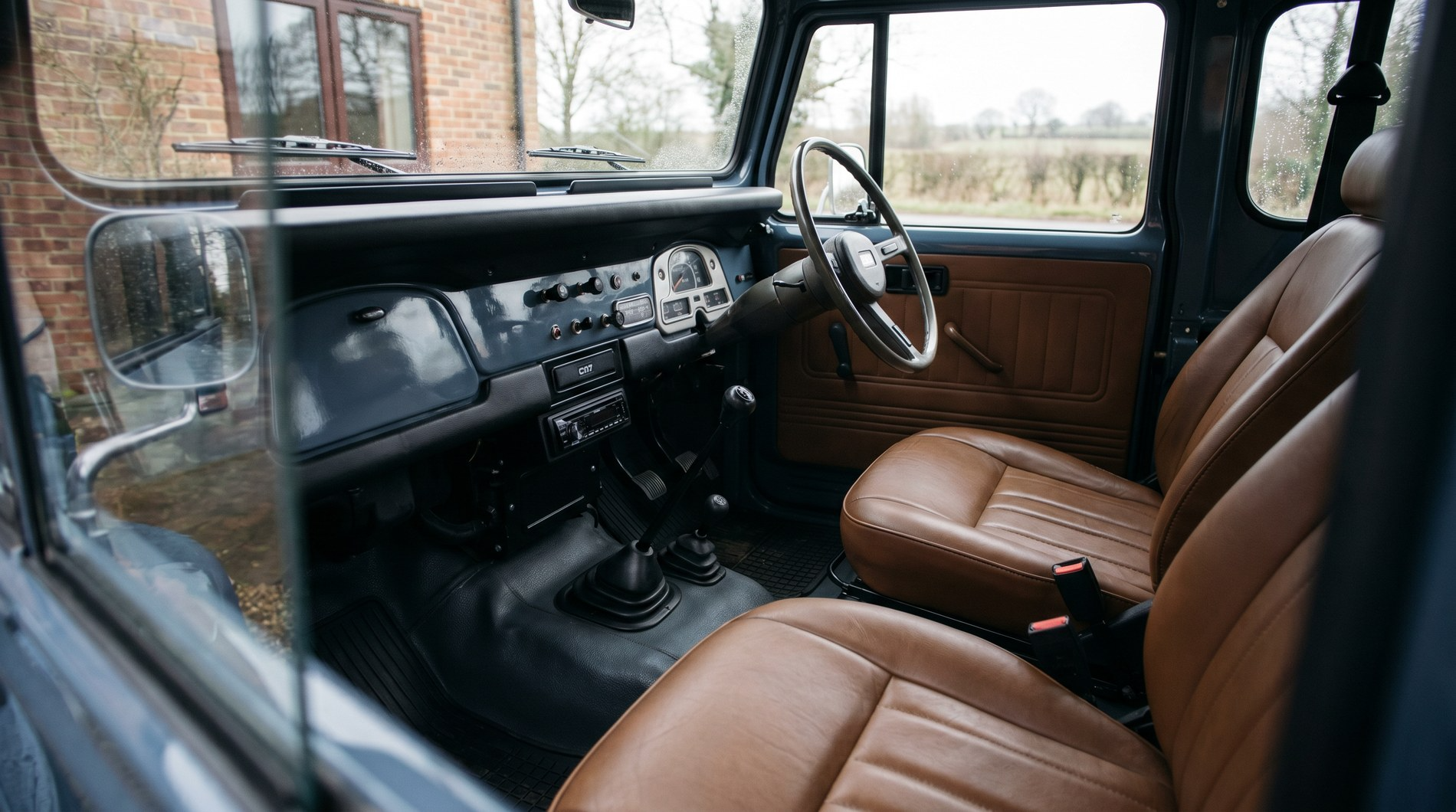
The cabin should be simple, functional and delightfully upright. Do not expect luxury unless someone has restored or modified it. You should expect honesty. Check the seats, floor mats, dash pads, gauges, switches, heater, wipers, door seals, rear seats if fitted, seat belts, headlining and all glass. Missing trim can be surprisingly irritating to replace, especially if you are trying to return an imported or mixed year vehicle to factory correctness.
Originality matters more on some cars than others. A sympathetic upgrade can make a Land Cruiser far easier to use, but a badly altered one can become a puzzle assembled by six owners, three catalogues and one man with a domestic light switch. Cool Cruisers lists original seats, roll bar, jump seats, tools, jack, keys, badges, lights, bumpers and emissions equipment among the items worth checking on later FJ40s. Even if UK rules differ from American ones, the broader point stands: missing parts cost money.
Imports, paperwork and identity
Because the UK market includes many imported Land Cruisers, paperwork is not a boring side issue. It is central. Check the chassis number, engine number, registration documents, import papers, NOVA status where relevant, MOT history, tax class and any restoration records. Make sure the identity on paper matches the vehicle in front of you. If the story is complicated, slow down. If the seller gets annoyed because you are asking reasonable questions, slow down even more.
Provenance also affects value. A dry climate import can be excellent if properly registered and honestly described, but not all imports are equal. Classic.com warns that the 40 Series market contains vehicles from a wide mix of regions, including South America, the Middle East, Japan and the United States, and that buyers should understand provenance before purchase. In plain English, do not pay top money for a mystery car with a nice steering wheel and a romantic story.
Original, restored or modified?
An original survivor has charm, especially if it has good paint, factory trim and honest patina. It may also have tired wiring, old seals, slow wipers and the sort of heater that offers moral support rather than warmth. A restored Land Cruiser can be wonderful if the work is documented and done properly. A badly restored one can be worse than an unrestored car because you are paying for someone else’s shortcuts.
Modified cars need a calm inspection. Engine swaps, suspension lifts, larger tyres, power steering conversions, disc brake upgrades and modern interiors can all make sense, but only when the engineering is sound. Huge tyres can make steering, gearing and braking worse. A lift kit can improve clearance while ruining road manners. A modern engine may look exciting until you discover that the wiring resembles a plate of noodles. Buy the quality of the work, not the list of parts.
What are they like to drive?
A good 40 Series Land Cruiser is charming rather than polished. It is mechanical, upright and honest. The steering takes effort, the pedals feel old fashioned, the gearbox needs patience, and wind noise arrives early and brings friends. The petrol FJ40 has a smoother, stronger feel, while the diesel BJ40 rewards a slower driving style and suits people who find torque more interesting than speed.
If you are expecting a modern SUV, you will be disappointed before leaving the seller’s road. If you are expecting a beautifully simple old machine that makes every short journey feel like you might accidentally discover a new country, you will understand it immediately. These cars are not fast, quiet or sophisticated. They are dependable, characterful and deeply likeable, which is better than sophisticated in almost every pub car park conversation.
What should you pay?
Prices vary wildly because condition, originality, country of origin and restoration quality matter more than the badge. The Classic Valuer shows an FJ40 median price of £26,880 since 2020, with a wide spread from low project money to six figure collector sales. For BJ40 and later diesel variants, the same logic applies: rust free condition, correct paperwork and the quality of any restoration matter more than the exact badge on the wing.
For a UK buyer, it is safer to think in bands rather than fixed prices. Rough or incomplete projects can sit below sensible driver money, but they often cost far more to save than expected. Usable, presentable cars commonly live around the mid twenties to forties depending on engine, condition and paperwork. Excellent restored examples, rare specifications and high end restomods can go much higher. The cheapest car is rarely the cheapest way into ownership.
The inspection checklist, without the nonsense
Start with identity and rust. Confirm the paperwork, chassis number and engine details, then inspect the body and chassis before getting dazzled by paint, wheels or a vintage looking shovel bolted to the side. Next, check mechanical health: cold start, hot start, oil pressure, cooling system, smoke, leaks, gearbox, transfer case, brakes and steering. Then check the parts that make ownership pleasant, such as door seals, heater, wipers, lights, seats, gauges and tyres.
Finally, look at the seller as much as the vehicle. A good seller will usually know what they have, explain the history clearly and accept a proper inspection. A poor seller will rush you, tell you old vehicles are all the same, and describe rust holes as “character”. Character is a dent in a wing from a farm gate. Character is not being able to see daylight through a structural mounting point.
Verdict: should you buy one?
Yes, if you understand what it is. A BJ40 or FJ40 is not a cheap way to get a fashionable classic four wheel drive anymore. Those days have gone, along with affordable petrol, handwritten service books in gloveboxes and the idea that a project car only needs “a weekend”. But a good one is still a genuinely special machine. It has history, toughness, charm and a sense of purpose that many modern off roaders try very hard to fake.
The best buy is not necessarily the shiniest, the most modified or the one with the loudest advert. It is the most honest, structurally sound, properly documented example you can afford. Choose an FJ40 if you want smooth old petrol muscle and broader collector appeal. Choose a BJ40 if you prefer diesel simplicity, economy and a slower working vehicle feel. Either way, buy on condition first, paperwork second and romance third. Romance is lovely, but it will not weld your sills.
There are Ferrari people, and then there are Ferrari people who get funny about the Mondial. The...
For a car with a reputation that precedes it like a storm warning, the Triumph Stag has a...
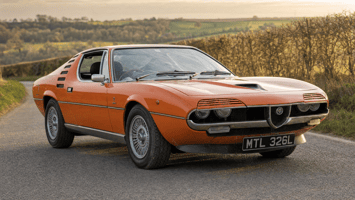
There are sensible classic cars, and then there is the Alfa Romeo Montreal. Sensible classic cars...