


.png?width=26&height=26&name=youtubemobile%20(Custom).png)
.png?width=26&height=26&name=instgrammobile%20(Custom).png)

There are Ferrari people, and then there are Ferrari people who get funny about the Mondial. The...
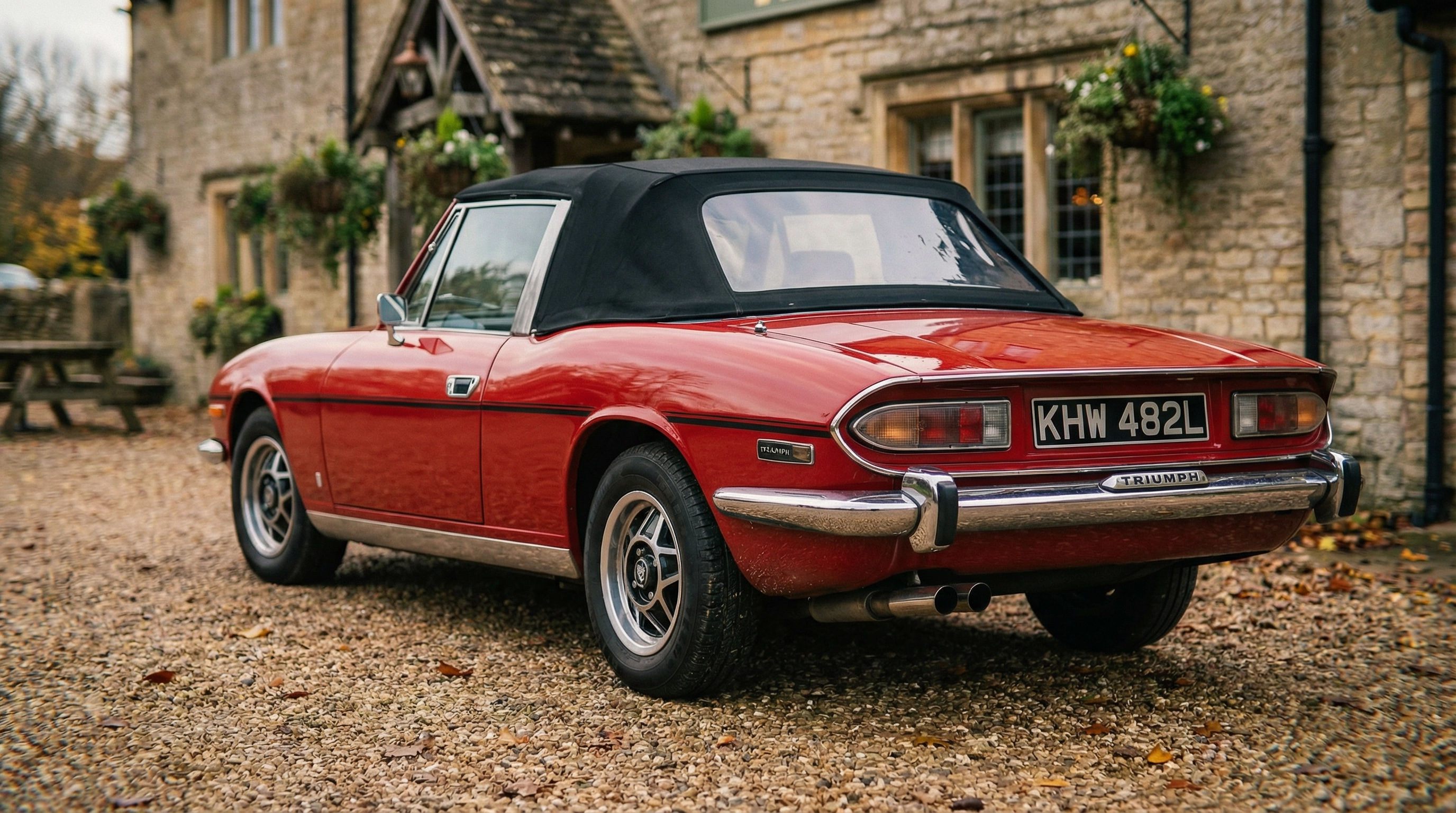



For a car with a reputation that precedes it like a storm warning, the Triumph Stag has a remarkable survival rate. Of the 25,939 built between 1970 and 1977, around 6,000 are still licensed on UK roads, with a further 2,300 or so sitting on SORN. That means nearly a third of all Stags ever made are still with us, which is a better survival rate than many of their contemporaries can claim. It tells you something important: people don't just own Stags, they look after them. They fight for them. And with good reason, because underneath that troubled reputation lies one of the most stylish and rewarding classic grand tourers you can buy.
But let's not pretend buying one is straightforward. The Stag's history of engine woes, rust, and British Leyland quality control means that a thorough inspection is absolutely essential. The good news is that the specialist knowledge and parts availability today is outstanding. The problems that dogged these cars in the 1970s have been well and truly solved. The trick is finding one where the previous owner has actually done the work, or budgeting correctly for the work that still needs doing.
A brief history
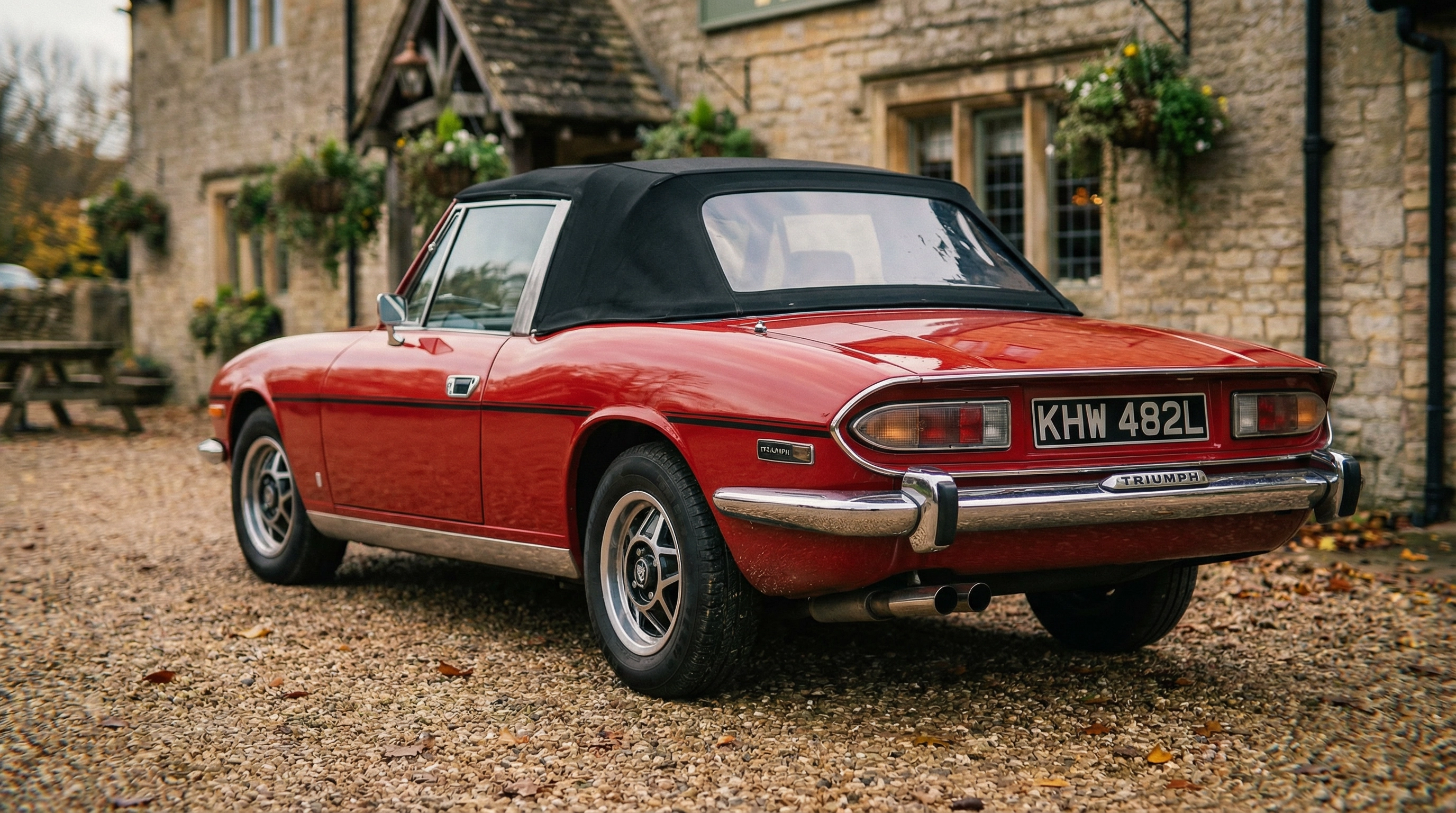
The Stag's origin story is one of the best in the classic car world. It begins in 1965, when the celebrated Italian designer Giovanni Michelotti asked Harry Webster, Triumph's Director of Engineering, for a used Triumph 2000 saloon. Michelotti wanted a base for a show car, and Webster agreed on one condition: if Triumph liked the result, they got first refusal. What came back from Turin was a stunning two door convertible that so impressed the Triumph board they pulled it straight off the show circuit and began developing it for production.
The car's internal code name, 'Stag', was never replaced because nobody could come up with anything better. Production was originally planned for 1968 but didn't begin until June 1970, by which time the car had gained its most distinctive feature: the T-bar roll hoop. This wasn't, as the marketing department would have you believe, primarily a safety feature. The open body was too structurally weak without it, and the hoop was the engineering solution to stop the door frames going out of square under acceleration. It wasn't strong enough to act as a proper roll cage, but it did the job of holding the car together, and it looked fantastic in the process.
The engine: reputation versus reality
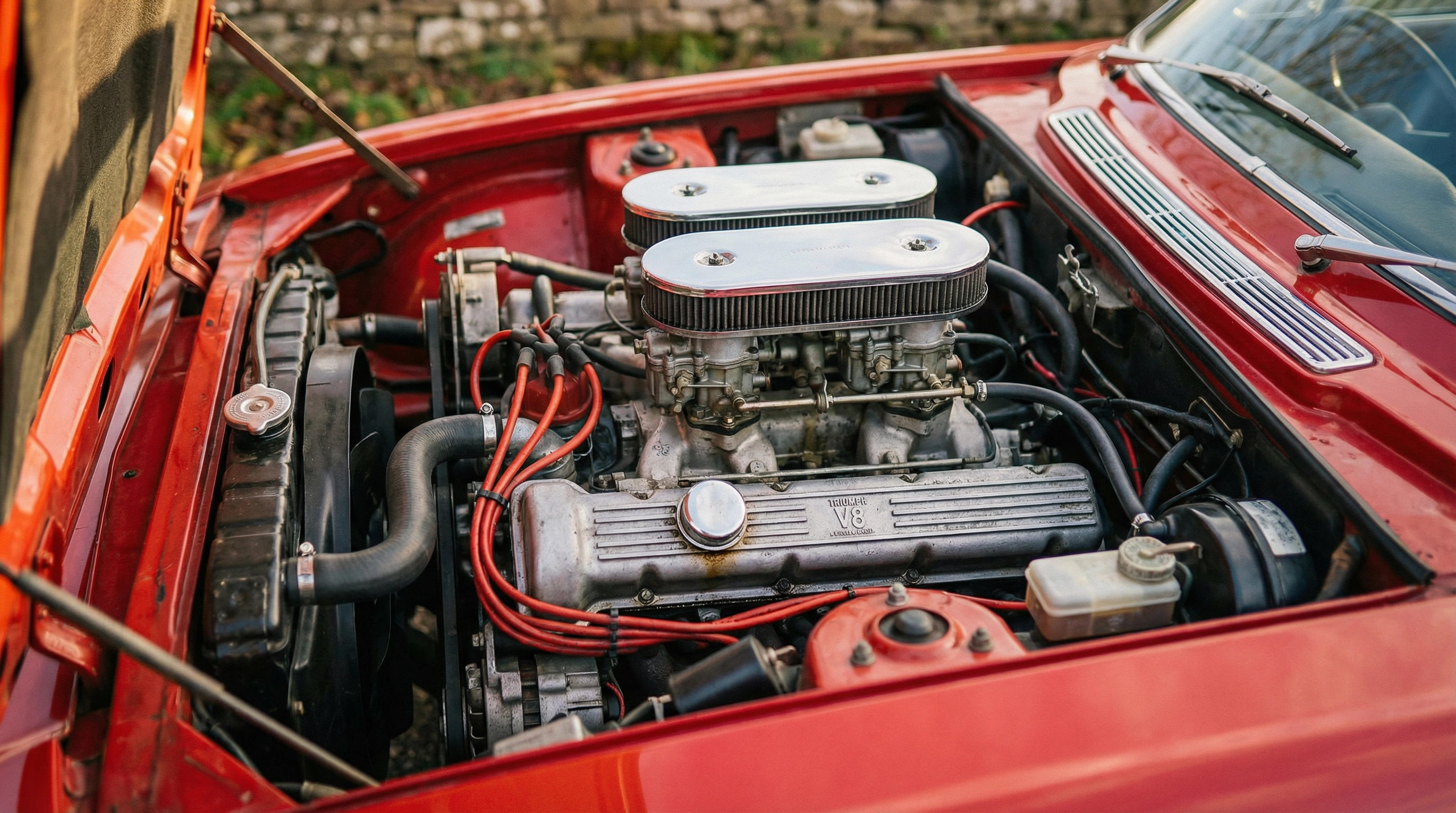
This is where most Stag conversations begin and end, so let's tackle it head on. The 2997cc V8 is, in essence, two Triumph slant four engines (the same unit used in the Dolomite and, in a different form, the Saab 99) joined together on a common crankcase. It produces 146bhp at 5700rpm and 167lb ft of torque at 3500rpm, which was enough for a top speed of 118mph and a 0 to 60 time of 9.3 seconds in manual form. Those are respectable figures even today, and the engine has a wonderful, characterful sound that's quite unlike anything else on the road.
The problems were real, though. Poor casting quality meant that sand was sometimes left in the waterways, restricting coolant flow. The combination of an iron block with alloy cylinder heads created an electrolytic reaction if the wrong coolant was used, causing internal corrosion and silting. The water pump, mounted high in the vee of the engine, was prone to cavitation. And the timing chains, if not replaced at the correct intervals, would stretch and eventually fail, with catastrophic results. All of this gave the Stag V8 a reputation for blowing head gaskets and overheating that, in the 1970s, was thoroughly deserved.
What the specialists have fixed
Today, every single one of those issues has a straightforward solution. A modern aluminium radiator, an electric water pump conversion, quality silicone hoses, and the correct OAT coolant will keep the engine running at the right temperature all day long. The timing chains should be replaced every 25,000 to 30,000 miles, a job that costs around £600 at a specialist. An annual coolant flush and an oil change every 3,000 miles are the other non-negotiable maintenance items. Do all of this and a Stag V8 can comfortably cover 150,000 miles before a rebuild is needed.
When inspecting a car, start the engine from cold and let it idle for at least 15 minutes. Watch the temperature gauge carefully; it should rise to the normal operating range and stay there. Check for bubbles in the expansion tank, which indicate a blown head gasket. Listen for rattling from the front of the engine, a sign that the timing chains are due for replacement. Check the oil for signs of coolant contamination (a creamy residue under the filler cap) and the coolant for signs of oil. A full engine rebuild, if needed, will cost upwards of £6,000, so these checks are worth taking seriously.
The Rover V8 question
You will come across Stags that have had their original engine replaced with a Rover 3.5 litre V8 or, less commonly, a Ford Essex V6. These conversions were popular in the 1980s and 1990s when the Stag V8's reputation was at its lowest and the cars were worth very little. The Rover V8 is a strong, well understood engine with plenty of tuning potential, and a well-executed conversion can make for a very usable car. However, and this is important, a Stag with its original engine is worth significantly more than one with a swap. The Triumph V8 is a large part of what makes a Stag a Stag, and the specialist community has spent decades proving it can be made reliable. If you're buying a Rover V8 car, check the quality of the conversion carefully. Look for oil leaks, a tired cooling system, and any signs of head gasket issues, because the Rover V8 has its own version of that particular problem.
If you want the best of both worlds for regular use, look for a car that has been fitted with a ZF four speed automatic gearbox. This conversion, developed by Clive Tate and Russell Lewis from the Stag Owners Club, is widely regarded as the best transmission option for the Stag and actually adds value to the car. It transforms the driving experience, giving the Stag the relaxed, effortless cruising ability that suits its character perfectly.
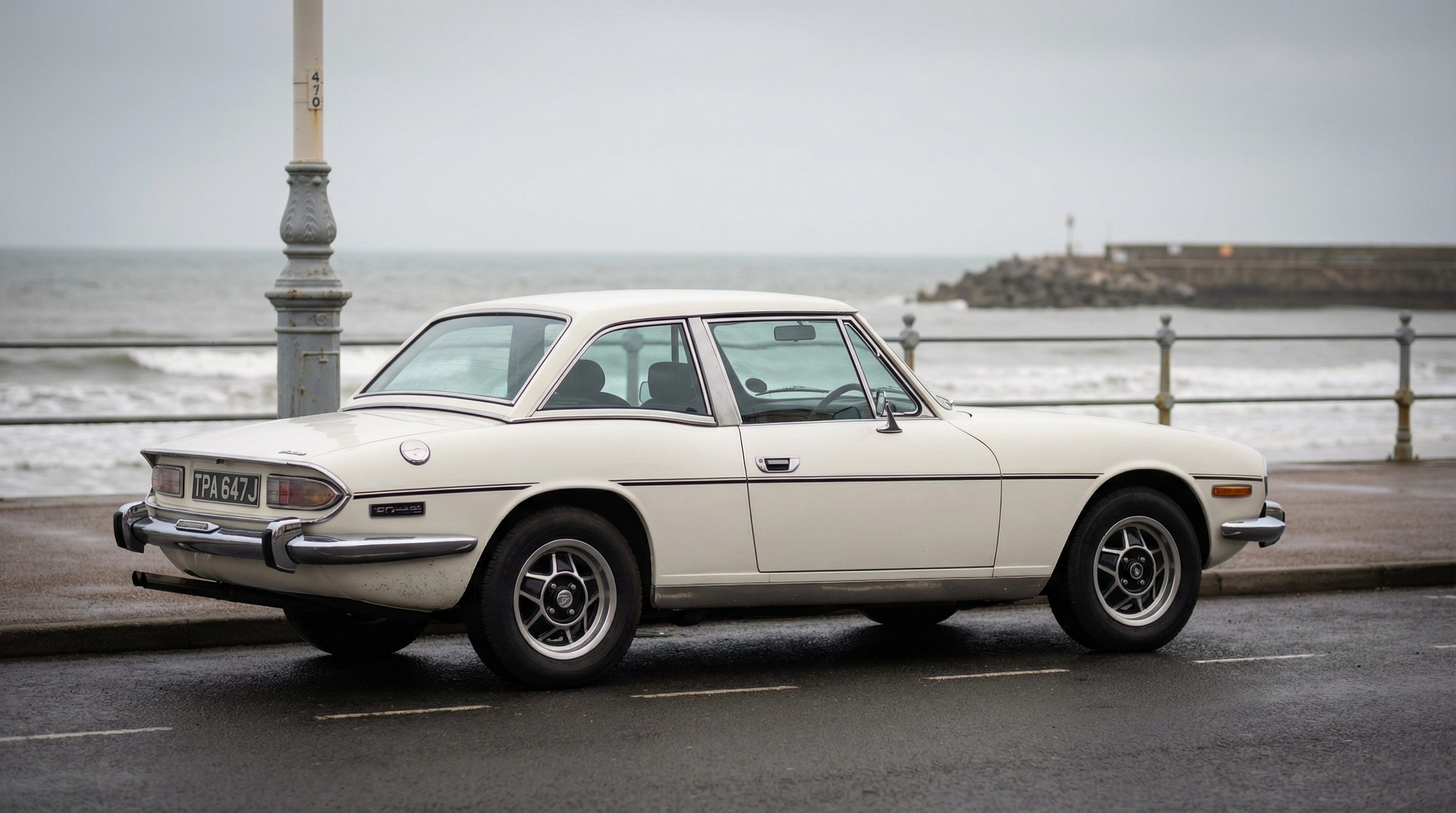
Bodywork: where the real money hides
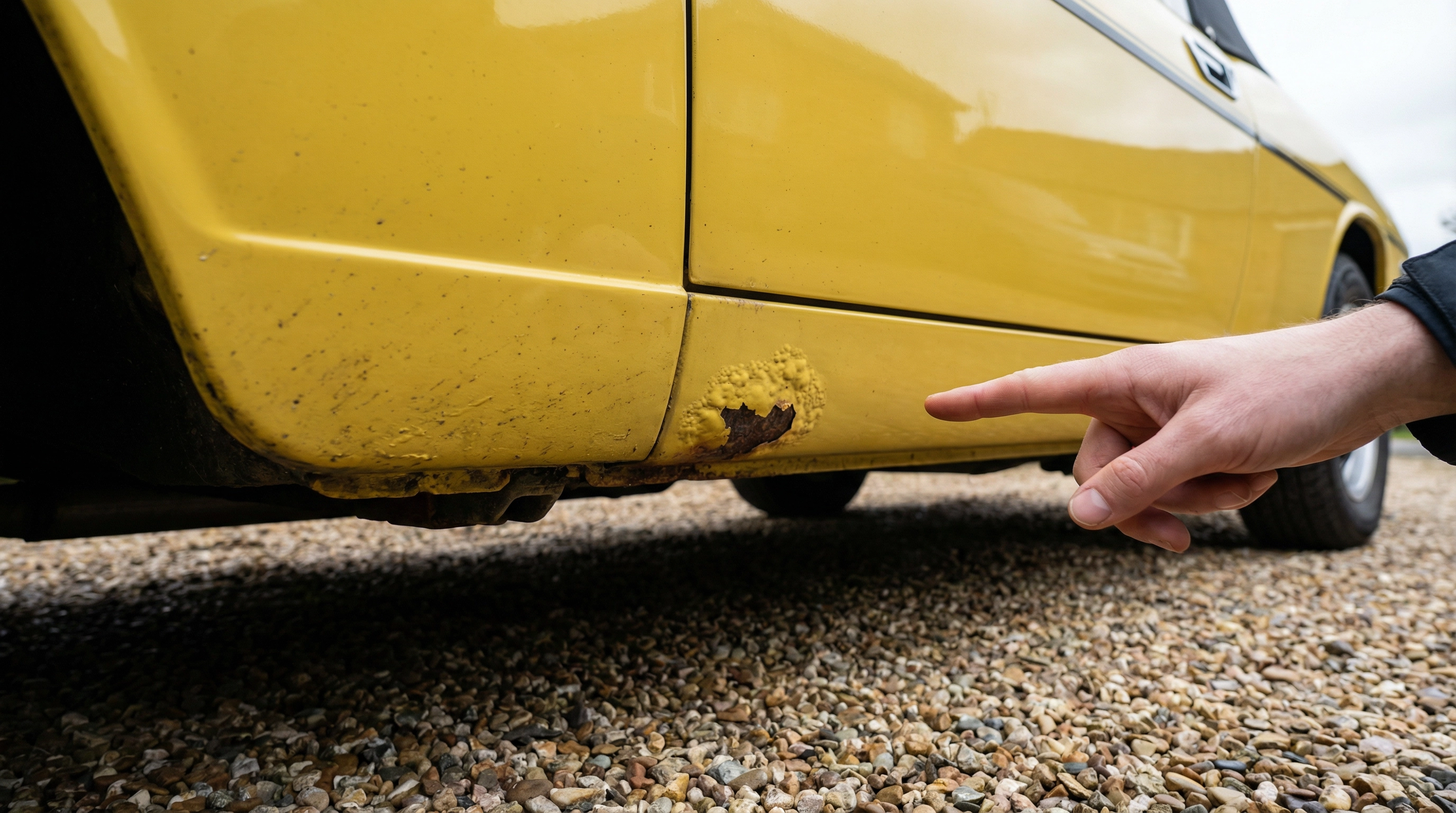
Rust is the Stag's other great enemy, and it can attack from almost anywhere. A thorough inspection is essential, and you should set aside a good couple of hours for it. Start with the sills, because this is where the most expensive problems lurk. The Stag has inner and outer sills, and replacing them properly is a skilled and time-consuming job. Budget up to £1,000 per side for a complete replacement, and be very wary of stainless steel covers or fresh underseal that might be hiding horrors underneath.
Move on to the A-posts and scuttle area, the front panel behind the headlights, the inner and outer wings, and the door bottoms. Check the boot floor, the boot lid trailing edge, and the rear valance. Lift the rear seat base and check the metalwork underneath; if it's corroded there, you can be fairly certain there's worse elsewhere. The chassis sections, floorpans, jacking points, and subframe mountings all need careful examination. The good news is that almost every panel and repair section is available, so a full restoration is technically feasible. The bad news is that it can cost a great deal more than the car will be worth when it's finished, so buy the best body you can afford.
Soft top and hardtop
The hood deserves its own section because it's a significant part of the Stag experience. A good quality mohair soft top in black is correct for most cars. If the hood is grey, it's likely a double duck material, which is less durable and less desirable. Check the condition of the fabric, the stitching, the frame mechanism, and the seals around the windscreen header rail and side windows. A new hood fitted by a specialist is not cheap, so factor this into your budget if the existing one is past its best.
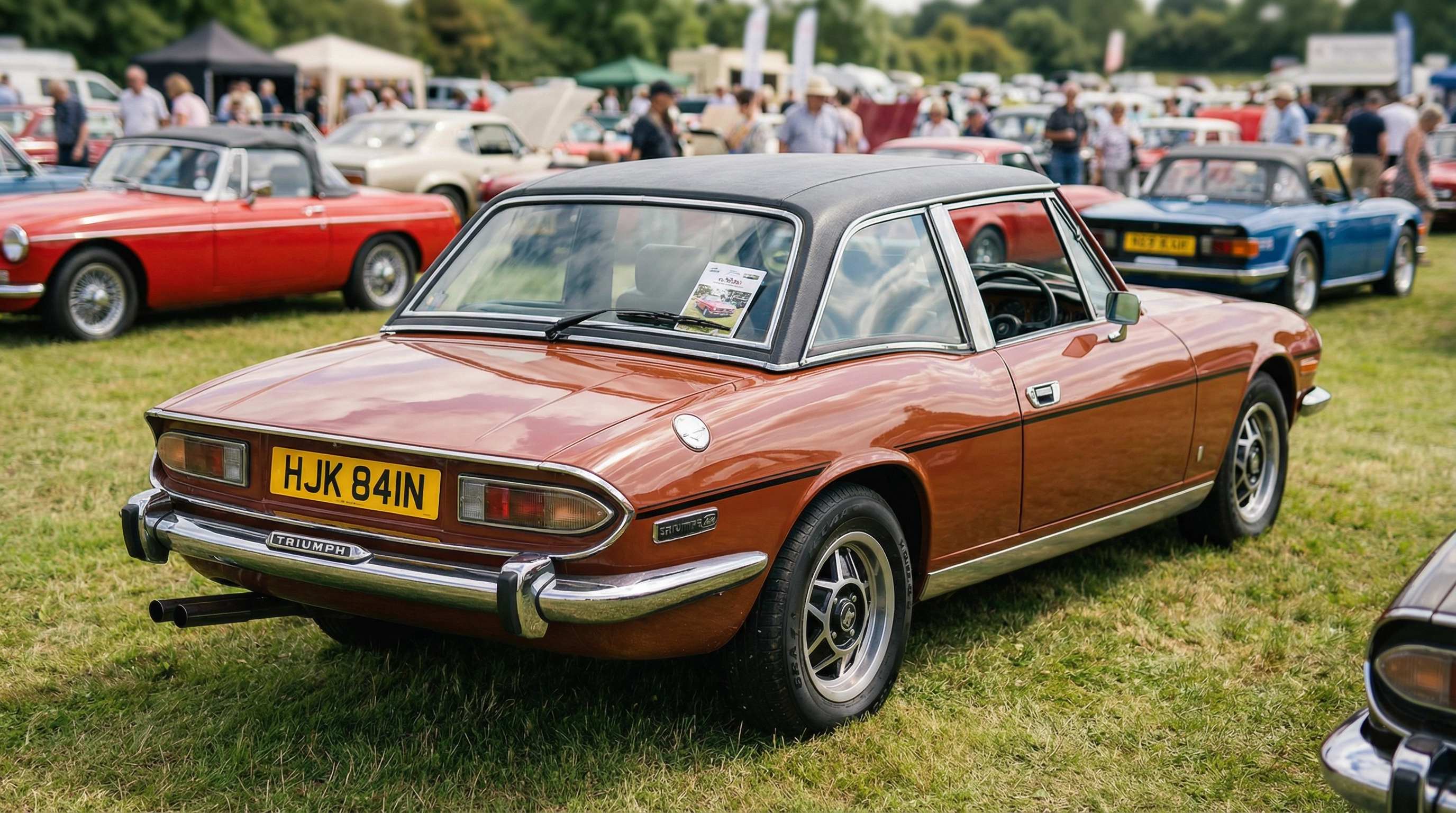
Most Stags were supplied with a factory hardtop as well, and having one adds to the car's desirability and value. Inspect it carefully for corrosion, particularly around the rear window surround and the mounting points. Check that it fits securely and that the seals are in good condition. A full hardtop refurbishment can run into four figures, so a good original is worth having. If the car doesn't come with a hardtop, sourcing one separately can be expensive, as demand consistently outstrips supply.
Transmission: manual or automatic?
The Stag was offered with two gearbox options. The four speed manual, usually fitted with overdrive (which became standard from 1973), is the more sought-after choice and commands a price premium. The gearbox itself is reasonably robust, but check for weak synchromesh on second and third gears and listen for a chattering from the layshaft bearings that disappears when you depress the clutch. If the overdrive doesn't engage, it could be something as simple as an electrical fault or low oil level, but a full rebuild costs £500 to £600.
The three speed Borg Warner automatic (Type 35 until late 1975, then Type 65) arguably suits the Stag's laid-back grand touring character rather well. Check for delayed or jerky shifts, inspect the fluid level and condition (it should be red, not brown or treacly), and check for leaks around the pan gasket and cooler lines. Automatics are less valuable than manuals, but they're also less likely to have been thrashed. The rear axle can develop a whine and may leak oil, so listen carefully on the test drive and check for wet patches underneath.
Suspension, steering, and brakes
The Stag uses double wishbone front suspension and semi-trailing arms at the rear, with coil springs all round. It's a well-sorted setup that gives a comfortable ride and reasonable handling. The main issue is wear in the 18 suspension bushes, which can introduce vagueness and a general feeling of looseness. Replacement bushes are cheap and readily available, and a full set of polybushes will tighten things up considerably. Check the dampers for leaks and the springs for sagging, particularly at the rear.
All Stags came with power-assisted rack and pinion steering, which should feel precise and well-weighted. If there's a wobble at speed that feels like a wheel balance issue, the steering rack mountings or the rack itself may be worn. Rebuilt racks are available and not difficult to fit. The brakes are discs at the front and drums at the rear, with a servo. Check for wear, corrosion, and correct servo operation. A vented brake disc conversion at around £1,000 is a worthwhile upgrade if you plan to use the car regularly, but a standard setup in good order is perfectly adequate for most driving.
Interior and electrics
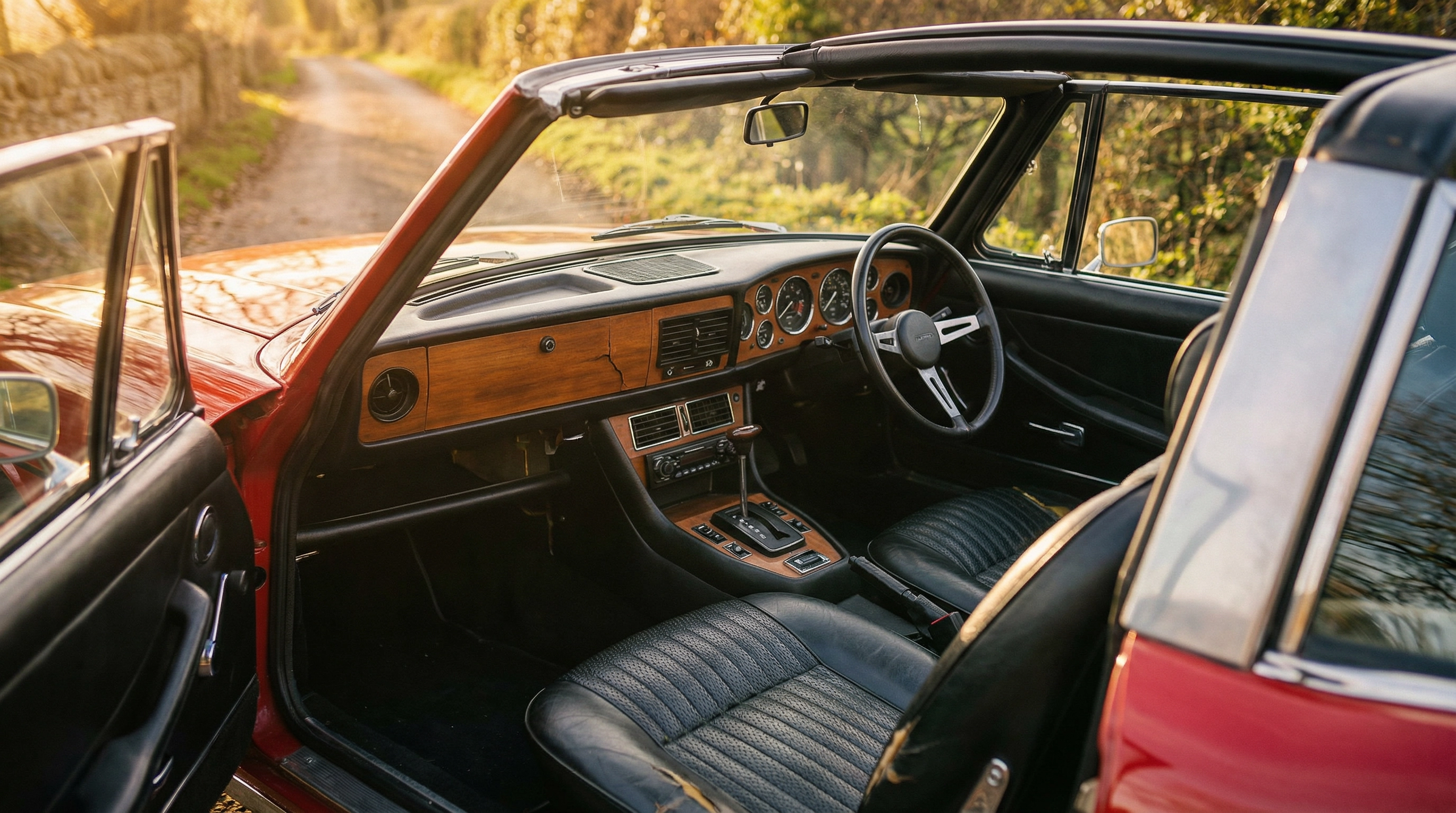
Contrary to what many people assume, the Stag's seats were trimmed in vinyl from the factory, not leather. The expanded knit pattern vinyl was chosen because it was more practical for a convertible in the British climate. Many cars have since been retrimmed in leather, which is a popular upgrade but shouldn't command a price premium. Check the seat condition, as the foam can collapse over time, and replacement covers and foam kits are available for both Mk1 and Mk2 seats. Be cautious of cars fitted with seats from other vehicles, such as the Rover 200 Coupe or Jaguar XJ-S, as these non-standard swaps can actually reduce the car's value.
The dashboard wood veneer can crack or lift, and replacement kits are available but not cheap. Check that all the stalk symbols are legible, and pay particular attention to the heater surround bezels, as new ones are no longer available and good originals are highly prized. Electric windows can be troublesome; the switches gum up and the mechanism may need lubricating. Systematically check every electrical item, from the lights and indicators to the dashboard instruments and heater controls. Most electrical issues are caused by aged wiring and poor connections rather than anything more fundamental, but a full rewire is a significant job if needed.
Mk1 or Mk2?
There are broadly three versions of the Stag to choose from, though only two official designations. The Mk1, produced from 1970 to 1973, has steel wheels with Rostyle trims, is fully colour-coded, and has no coach lines. It's the purist's choice, but parts for the earlier cars can occasionally be harder to source. The Mk2 arrived in 1973 and brought a black rear panel, clearer instrument gauges, a coach line, the well-known GKN alloy wheels, revised seats, a new hood design, and a slightly smaller steering wheel. Overdrive became standard on manual cars.
In 1975, the Mk2 was revised again (still called Mk2) with body-colour sills and rear panel replacing the black finish, plus aluminium sill trims. The later cars are generally considered slightly better built, but the differences are largely cosmetic. Buy on condition rather than specification, and don't get hung up on finding a specific variant. There are enough Stags around that you can afford to be patient and wait for the right car.
What should you pay?
The Stag market has been on a steady upward trajectory. At the bottom end, project cars start at around £1,500 to £3,000, but be realistic about what you're taking on. A car at this price will likely need a full restoration, and the costs can easily exceed the finished car's value. The sweet spot for a usable, enjoyable Stag is between £7,000 and £12,000. At this level, you should find a car that's been well maintained, has a solid body, and is ready to drive and enjoy.
Good to excellent cars range from £12,000 to £25,000, and the very best concours examples can fetch over £30,000. Recent auction results show a 1972 Stag selling for £12,870 and a 1974 example making £11,440, both in March 2026. Manual overdrive cars are worth more than automatics, and original Triumph V8 cars are worth more than those with engine swaps. Colour matters too; traditional shades like red, green, and white are the easiest to sell, while the more adventurous 1970s colours like magenta, topaz, and lime green can be harder to move on.
The verdict
The Triumph Stag is one of those rare classics that genuinely works as everyday transport. It's comfortable, it's quick enough, it sounds wonderful, and it seats four adults. The specialist support network is outstanding, parts availability is excellent, and the Stag Owners Club is one of the best single-model clubs in the country. The car's troubled reputation, while historically justified, is now firmly in the past for any well-maintained example.
If I were buying one, I'd look for a Mk2 in a strong, traditional colour with the original Triumph V8 engine and either a manual overdrive gearbox or the ZF four speed automatic conversion. I'd prioritise the body condition above everything else, because that's where the most expensive surprises hide. And I'd join the Stag Owners Club before I even started looking, because the knowledge and contacts you'll gain are worth far more than the membership fee. Get it right, and you'll have a genuinely usable, endlessly characterful British classic that will put a smile on your face every time you turn the key.
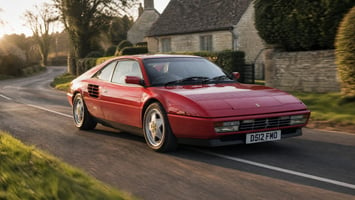
There are Ferrari people, and then there are Ferrari people who get funny about the Mondial. The...
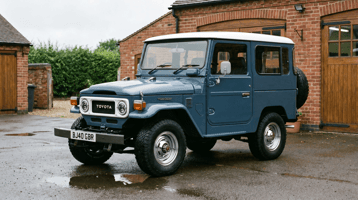
The Toyota Land Cruiser BJ40 and FJ40 are proof that a vehicle does not need leather, mood lighting...
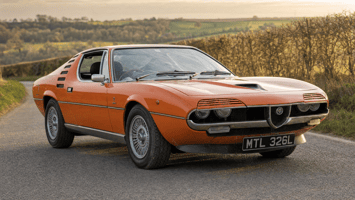
There are sensible classic cars, and then there is the Alfa Romeo Montreal. Sensible classic cars...
