


.png?width=26&height=26&name=youtubemobile%20(Custom).png)
.png?width=26&height=26&name=instgrammobile%20(Custom).png)


Ahh, the Chevrolet Corvette… with its sleek design, powerful performance and rich history, this...



Look beneath a vintage British sports car and you might assume progress followed a tidy route. First came crude cart springs and beam axles, then engineers discovered wishbones, and eventually everyone arrived at fully independent suspension. It is a comforting story, but it is not how engineering works. Suspension developed through a rolling series of compromises involving weight, cost, packaging, tyre behaviour, manufacturing, and the important matter of whether the average owner could repair it without remortgaging the house.
A suspension system has several jobs that are not always natural companions. It must carry the car, allow the wheels to move over bumps, control the angle of each tyre, resist braking and acceleration forces, and keep the body from lurching about like furniture in a removal van. Most importantly, it must keep the tyres in useful contact with the road. A design can provide a soft ride yet poor wheel control, or feel wonderfully sharp on smooth tarmac while becoming thoroughly confused by the first broken B road.
A spring is not a damper
The spring carries the weight and allows movement. Compress a coil spring, bend a leaf spring, or twist a torsion bar and it stores energy. Release it and that energy comes back. Without anything to control it, the body and wheel continue oscillating after every bump. This is why a car with failed dampers can bounce several times after one firm push on a wing. The spring has not forgotten its job. It is doing it with rather too much enthusiasm.
The damper controls the speed of that movement by forcing oil through restricted passages and turning kinetic energy into heat. A telescopic damper does this in a straight cylinder, while the Armstrong units found on many MGs use a lever to operate a hydraulic mechanism inside a compact body. The lever arm design is not a primitive imitation of a real damper. It is a real damper, and in some front suspensions its arm also forms part of the wheel locating arrangement. Poorly rebuilt examples can be dreadful, but that is a condition problem rather than proof that the original idea was nonsense.
The enduring appeal of the leaf spring
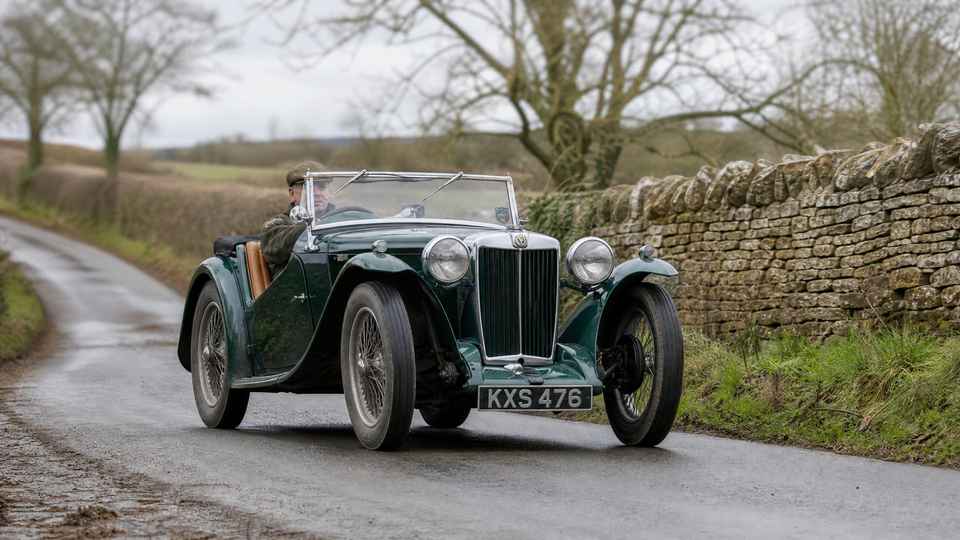
The semi elliptic leaf spring is regularly dismissed as horse drawn technology, usually by somebody standing near a car that still uses it. Its long survival was not an accident. A stack of curved steel leaves can carry the vehicle, allow vertical movement, locate an axle from front to rear, and resist the axle twisting under power or braking. In the MG TC, introduced in 1945 from a pre war design, half elliptic springs supported a beam front axle and a live rear axle. The arrangement was simple, strong, inexpensive, and understood by every garage in the country.
That admirable economy brought compromises. The leaves slide against one another as they flex, creating friction that adds some useful damping but can also make the suspension reluctant to respond to tiny bumps. Under hard acceleration the rear axle can try to wind the springs into an S shape before they release, producing axle tramp. A rigid beam also gives both wheels a shared fate. When one wheel rises, the mass and geometry of the entire axle become involved, and the dampers must control a considerable lump of metal that the springs do not support.
The sliding pillar compromise
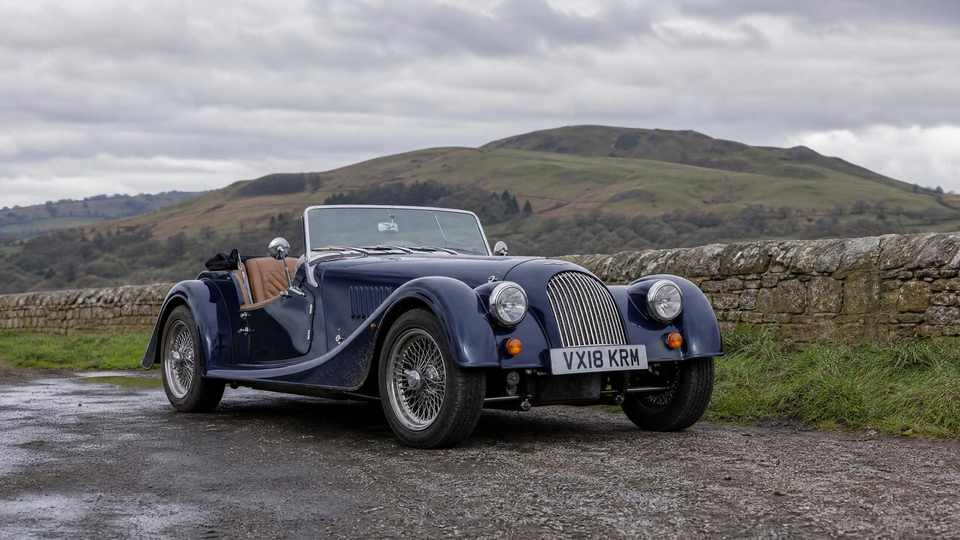
Independent front suspension appeared surprisingly early. The first Morgan of 1909 used H. F. S. Morgan's sliding axle arrangement, patented the following year and usually known as sliding pillar suspension. A pillar is fixed to the chassis and the stub axle assembly slides vertically along it, with coil springs providing the springing. Each front wheel can move without dragging the opposite wheel through the same motion, and the system avoids the unsprung weight of a complete beam axle.
Its limitation lies in that strict vertical path. The wheel cannot follow a carefully designed arc because it must travel along the pillar. As the body rolls, the tyre tends to lean with it, rather than gaining the negative camber that can keep the outside tyre flatter on the road. Wear and lubrication of the sliding surfaces also matter enormously. Morgan retained the arrangement for more than a century because it was compact, distinctive, and part of the car's character, not because suspension development had stopped in Malvern.
Why wishbones changed everything
A double wishbone system locates the wheel with upper and lower arms, allowing the designer to choose the path it follows. If the upper arm is shorter than the lower one, the top of the wheel can move inward as the suspension compresses. This negative camber gain helps compensate for body roll and keeps more of the outside tyre working during a corner. The positions and angles of the arms also influence the roll centre, steering feel, and the way braking forces pass into the chassis. Suddenly, wheel movement was something engineers could shape rather than merely permit.
The MG TD demonstrated this change neatly in 1949. Its front wheels used coil springs and wishbones, while the rear retained a live axle on semi elliptic leaves. The later MGB followed the same broad philosophy, pairing coil and wishbone front suspension with a leaf sprung live rear axle throughout its long production life. A coil spring is compact and has little internal friction, but unlike a leaf spring it cannot locate an axle by itself. Separate arms, joints, and bushes must tell the wheel where to go, which improves control while adding parts and cost.
The Chapman strut and the search for lightness
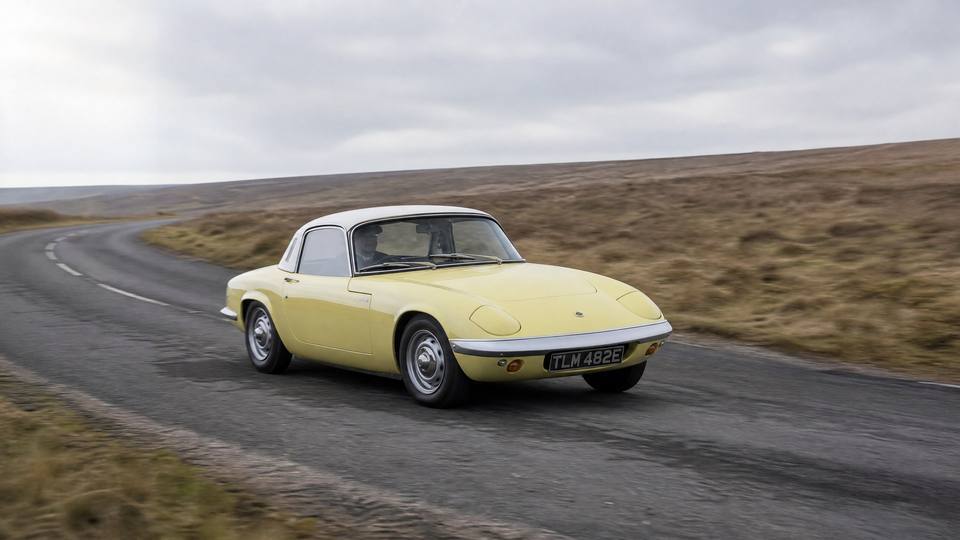
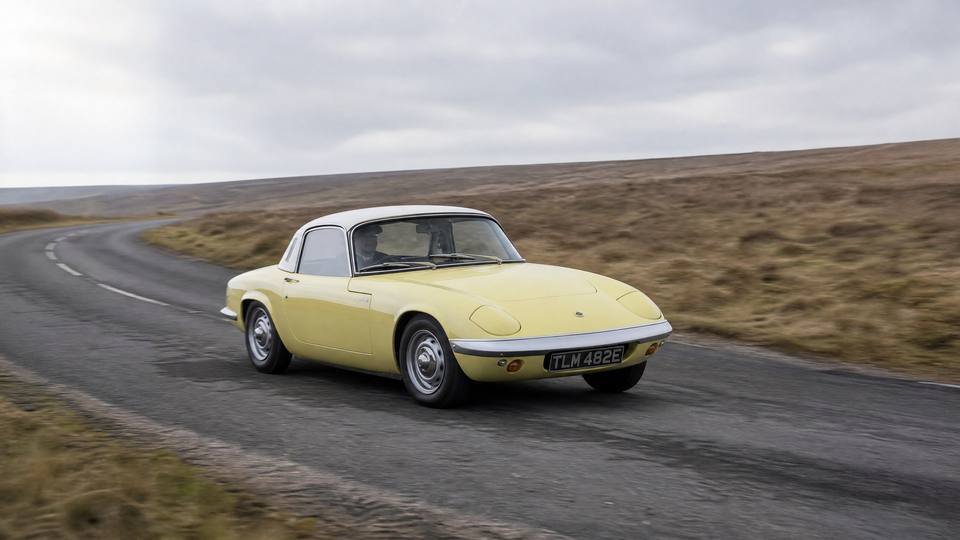
Lotus approached independent suspension with Colin Chapman's usual suspicion of any component enjoying an easy life. The Elan, introduced in 1962, combined a light fibreglass body with a steel backbone chassis, double wishbones at the front, and Chapman struts at the rear. Each rear strut combined a coil spring and damper in a long wheel locating assembly, while the articulated driveshaft doubled as the upper transverse suspension link.
Making the driveshaft transmit power and help locate the wheel saved the weight of a separate upper arm. It also meant that wear in a universal joint, wheel bearing, strut insert, or mounting could affect more than one aspect of the car's behaviour. When everything was correct, the Elan showed how a very light car could be softly enough sprung to breathe with the road yet precisely enough controlled to feel immediate. The cleverness was not simply independence. It was making each part earn its place.
Jaguar's integrated rear suspension
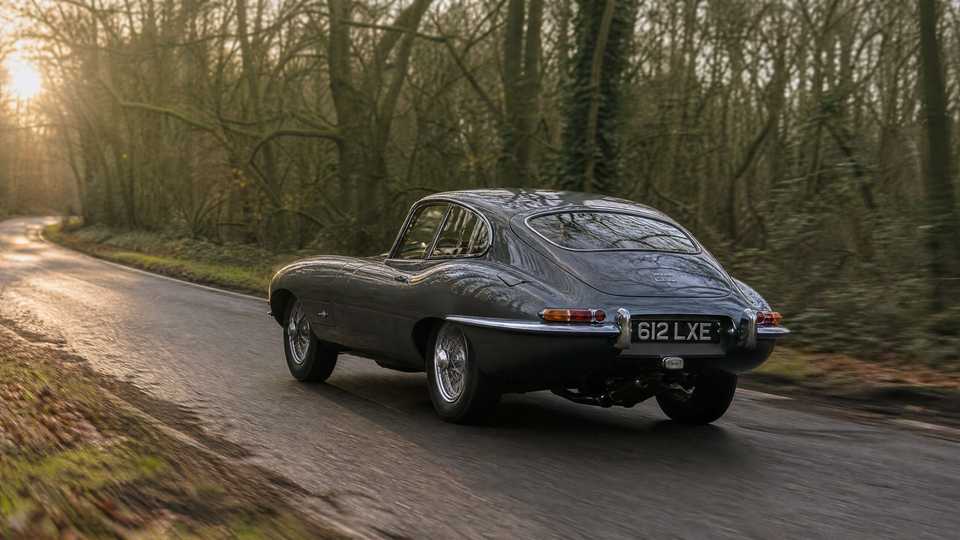
Jaguar took a more substantial route with the E Type in 1961. At the front, unequal length wishbones worked with longitudinal torsion bars. A torsion bar is simply a straight spring that works by twisting rather than bending or compressing, allowing Jaguar to package the springing along the structure instead of placing large coils beside the engine. Telescopic dampers controlled the movement and an anti roll bar connected the lower wishbones.
The rear was a compact independent assembly mounted in a fabricated subframe. A lower transverse link controlled each hub, a radius arm handled forces from acceleration and braking, and the half shaft acted as the upper link. Jaguar fitted two coil spring and damper units on each side, placed the disc brakes inboard beside the differential, and isolated the assembly from the body with rubber mounts. Moving the brakes inboard reduced unsprung mass, while the rubber mounting kept much of the mechanical noise out of the cabin. It was suspension, final drive, braking, and refinement designed as one system.
Why independent does not always mean better
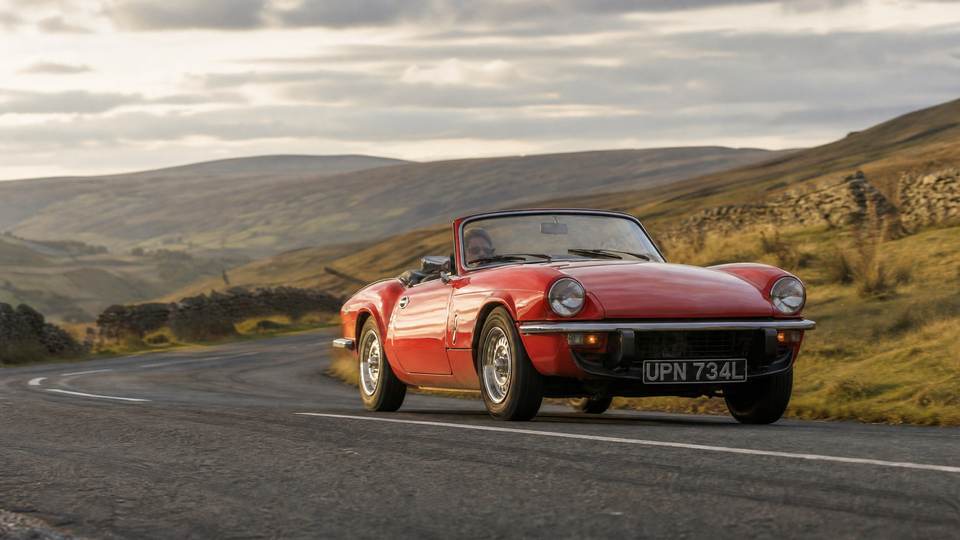
The word independent only tells us that one wheel can move without being rigidly tied to the other. It says nothing about whether the resulting geometry is sensible. Early Triumph Spitfires used swing axles, with each driveshaft pivoting from an inboard joint. As the shaft swung through its arc, wheel camber changed dramatically. Under heavy cornering loads, the geometry could generate a jacking force that raised the body and pushed the outside rear wheel towards positive camber, reducing grip just when the driver was becoming most interested in having some.
For the Spitfire Mk IV, Triumph allowed the transverse rear leaf spring to pivot at its centre mounting. This swing spring greatly reduced the rear spring's contribution to roll stiffness, while a stronger front anti roll bar took on more of the work. The behaviour became less abrupt without requiring an entirely new car. It also delivered a useful lesson: a well located live axle can be more predictable than a badly controlled independent system. Sophistication should be judged by what the tyre does, not by how impressive the parts look in a brochure.
The anti roll bar is a tuning tool
An anti roll bar is a torsion spring linking the left and right sides of an axle. If both wheels rise together over a broad bump, the bar rotates in its bushes with little twist and adds little resistance. During cornering, one side compresses while the other extends, so the bar twists and resists the difference. This allows relatively compliant main springs to absorb ordinary road surfaces while the bar supplies extra stiffness when the body tries to roll.
It also changes handling balance. Increasing front roll stiffness generally asks the outside front tyre to accept a larger share of the cornering load transfer, which can encourage understeer. Increasing rear roll stiffness can move the balance towards oversteer. The exact result depends on tyres, geometry, dampers, weight distribution, and many other details, but one rule is dependable: fitting the thickest bar available is not engineering. It is shopping followed by consequences.
What the driver actually feels
Unsprung mass is a large part of the difference between these systems. The wheel, tyre, hub, and much of the brake move with the road, as does a complete live axle. The heavier that moving assembly becomes, the harder it is for the spring and damper to keep it following a rough surface. A light independent hub can change direction more readily, maintaining more consistent contact. This is why a sophisticated car can feel both more comfortable and more secure, rather than simply softer.
Geometry supplies the other half of the sensation. Good camber control lets the tyres build cornering force progressively. Stable toe settings make the car feel calm as the suspension moves. Correct damping settles the body after a crest and stops the wheels hopping over ripples. Drivers describe the result as confidence, delicacy, or communication, but those impressions come from measurable movements beneath the car. The magic is mainly metal, rubber, oil, and some very careful angles.
Old suspension is not automatically bad suspension
Condition matters more than fashion. A fresh live axle car with correct springs, sound bushes, working dampers, sensible tyres, and accurate alignment can feel vastly better than a neglected independent car full of worn joints. Equally, replacing original parts with harder springs, rigid bushes, and modern telescopic dampers can remove compliance faster than it adds control. A conversion may improve a real weakness, but only if its spring rates, damping, travel, and geometry have been developed as a complete package.
The evolution of the British sports car suspension was therefore not a journey from foolishness to enlightenment. Leaf springs offered rugged economy, sliding pillars delivered early independence, wishbones gave engineers control over wheel geometry, and designs from Lotus and Jaguar integrated several jobs with remarkable ingenuity. Each system reflected the car, the roads, and the budget around it. The cleverest classic is not always the one with the greatest number of links. It is the one whose links, springs, dampers, structure, and tyres all agree on what the car is trying to do.
Ahh, the Chevrolet Corvette… with its sleek design, powerful performance and rich history, this...
If you are doing the usual tyre checks on your classic car, it’s important not to forget one more -...

Let's be honest, when you think of 1970s sports cars, your mind probably wanders to the likes of...
