


.png?width=26&height=26&name=youtubemobile%20(Custom).png)
.png?width=26&height=26&name=instgrammobile%20(Custom).png)


The 1980s were a bit of a golden era for British motoring. It was a decade of Rubik’s Cubes,...
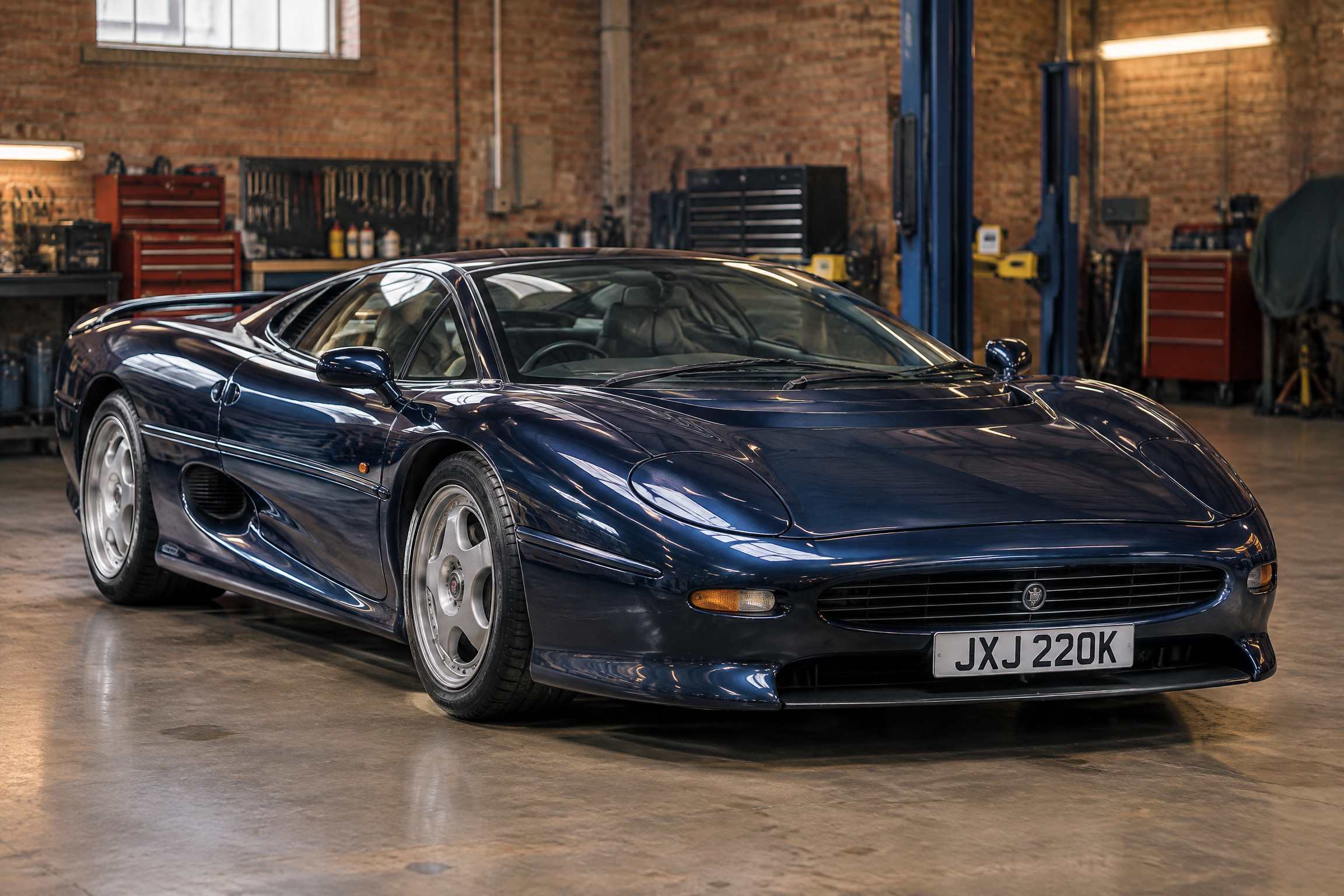



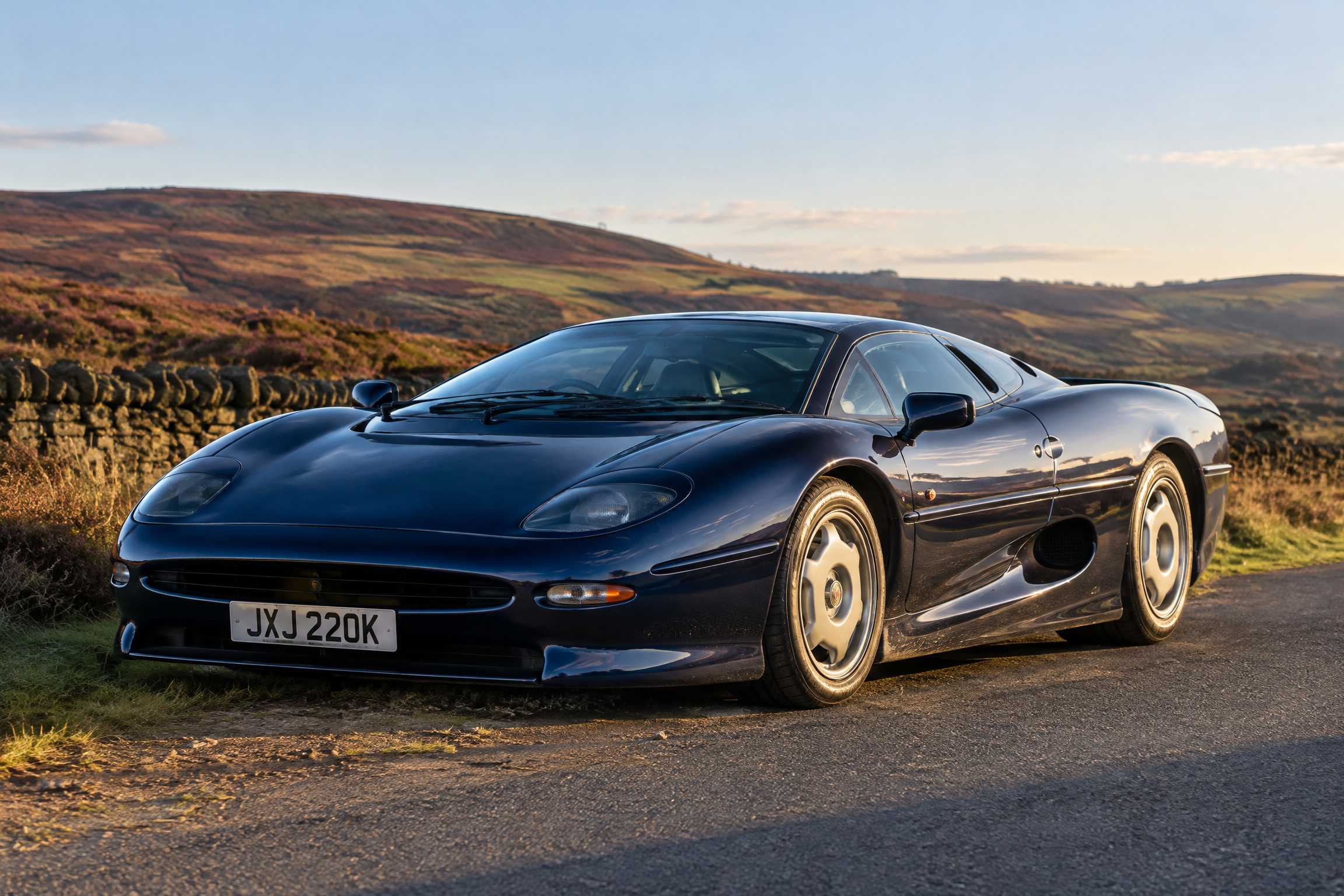
There are supercars that look fabulous in a poster tube, and then there is the Jaguar XJ220. It is so long, so low and so determinedly dramatic that it feels less like a car and more like a point made in aluminium. Park one beside an ordinary saloon and it seems to have landed from another postcode, possibly another decade.
It is also one of those cars that starts an argument before anyone has even opened the door. Mention the XJ220 to a room full of car people and somebody will say “but it was supposed to have a V12” before they have finished their tea. They are not wrong, exactly. They are just missing the far more entertaining bit of the story.
The car that caused a queue in a field
The XJ220 began as a brilliant bit of after hours mischief. A small group of Jaguar engineers and designers, later known as the Saturday Club, built the concept in their own time with support from suppliers. When it appeared at the 1988 Birmingham Motor Show, it was the sort of thing that stopped people mid sentence. Low, wide and gloriously excessive, it looked like Jaguar had remembered it had once made racing cars and decided to make everyone else worry about it.
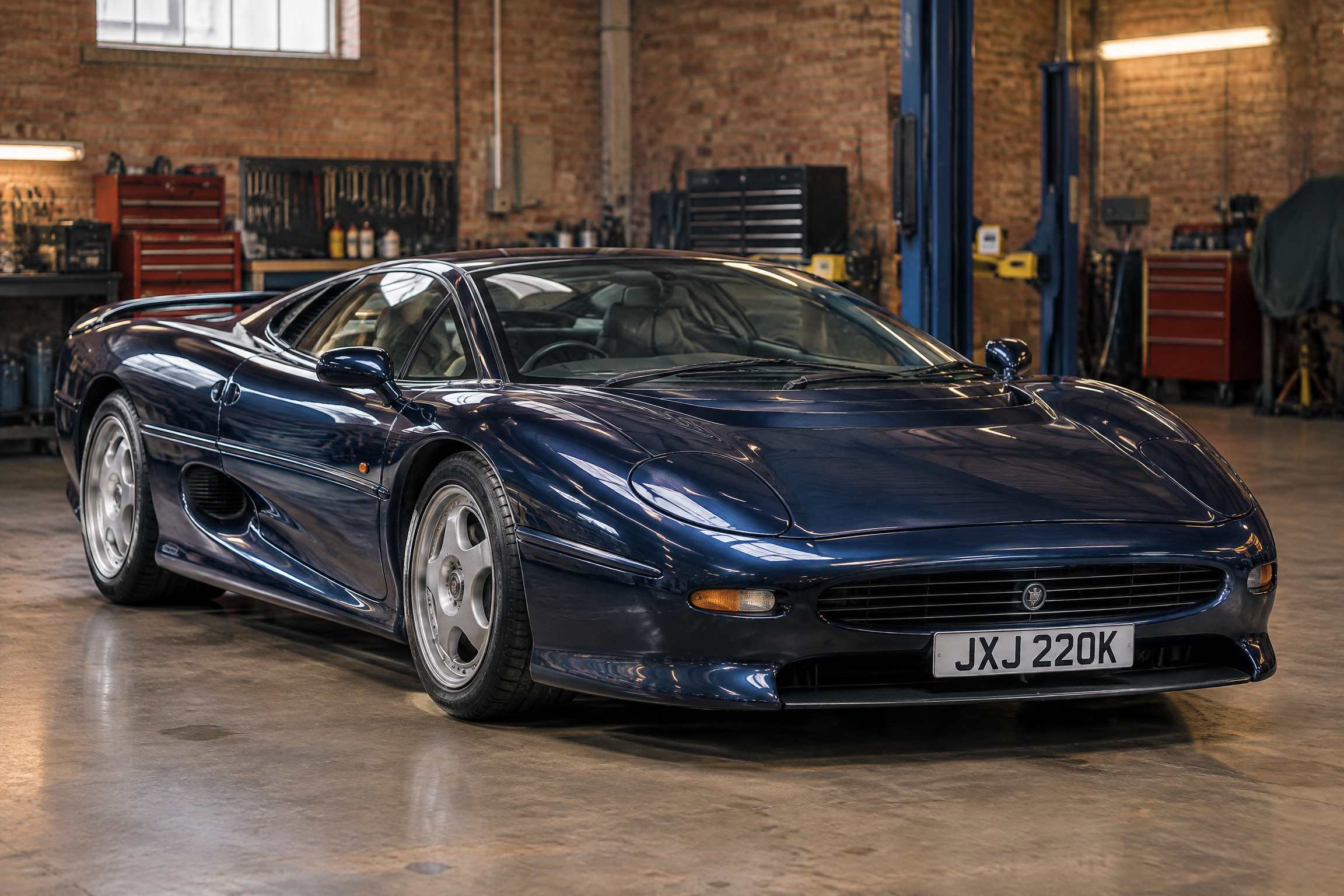
That show car promised a 6.2 litre V12, four wheel drive and a body made from beautifully shaped aluminium. The production car approved in 1989 took a more practical route. It lost the V12 and four wheel drive, gaining a 3.5 litre twin turbo V6 and rear wheel drive instead. This was not the version many people had imagined pinning above their desk, but it was lighter, simpler and, importantly, possible to build.
The V6 row
Demand was enormous at first. Jaguar received about 1,450 applications for an intended run of 350 cars, and buyers had to queue at the Bloxham production site to hand over a £50,000 deposit. Then the early 1990s recession arrived, the price climbed and the reality of the production specification settled in. Some buyers tried to get out of their contracts, while Jaguar tried very hard to make them stay in them. It was not the glamorous part of the supercar dream.
Here is the point that usually gets swept under the garage carpet. The disappointment about the missing V12 was genuine, and completely understandable after that 1988 concept. But Jaguar's 1990 production brochure did make clear that the car would use a race developed twin turbo 3.5 litre V6. The XJ220 was not a simple case of everyone being quietly duped. It was a messier mix of changed expectations, a rapidly worsening economy and a very expensive car arriving just when a lot of people had stopped feeling quite so brave.
What you got in return
What nobody sensible can dispute is that the production XJ220 was seriously quick. The 3.5 litre V6 made around 540 bhp, sent through a five speed manual gearbox to the rear wheels. Jaguar claimed 0 to 60 mph in 3.5 seconds, while Martin Brundle recorded 217.1 mph at Nardò in 1992. Guinness recognised the run as the fastest official speed achieved by a production road car at the time. That is not an apology for a missing V12. That is a proper performance figure.
Period road tests suggest it was less of a delicate Italian prima donna than its shape implies. The clutch was heavy, the gear change wanted a firm hand and neither steering nor brakes had power assistance. At walking pace, it probably felt like taking a particularly reluctant sofa around a corner. Once rolling, though, contemporary testers praised its balance, high speed stability, ride quality and surprisingly civilised cabin. It could be intimidating, but it was not merely a fragile trophy with headlights.
Too big to be pretty?
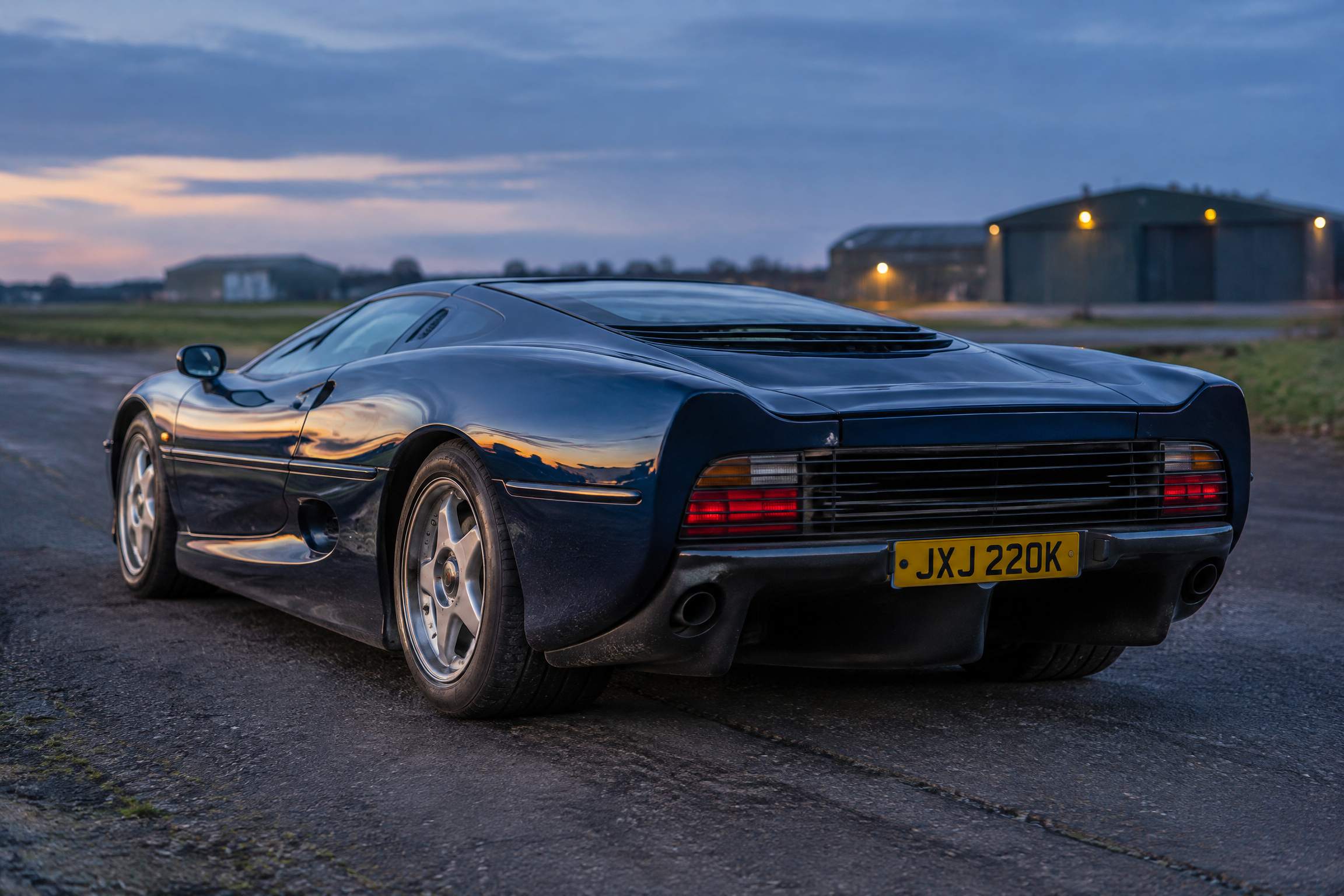
The XJ220 has never been pretty in the easy E Type sense. It is long enough to make a Ferrari F40 look compact and its broad rear end has all the delicacy of a bouncer in a dinner jacket. But that is why it works. The body was drawn around a serious aerodynamic purpose, not a mood board full of retro flourishes. Even standing still, it looks impatient.
The cabin is more Jaguar than you might expect. There is leather, proper space and air conditioning, all of which sound obvious until you remember what some early 1990s supercars asked their owners to tolerate. There is very little luggage room, so a week in the south of France would require either disciplined packing or a second car following behind with the jumpers. Still, the XJ220 had enough real world manners to surprise road testers, which makes it more interesting than a car built purely to frighten people at petrol stations.
Living with a very expensive decision
Nobody buys an XJ220 by accident, and nobody should buy one on the strength of a heroic auction catalogue. Jaguar Classic says annual servicing takes around 12 hours. Every six years, the motorsport style fuel cell needs replacement, which turns the visit into a much bigger job. The good news is that Jaguar Classic still supports the cars and can source parts. The less good news is that this is not a classic you leave with the local garage because they once rebuilt an XJS.
If you are lucky enough to be shopping for one, condition and history matter more than a lovely speech from the seller. Look for evidence that the fuel cell work and regular servicing have been done properly, and use a specialist who understands the car. The XJ220 was complicated when new and it has not become less complicated simply because the number on the odometer has barely moved.
The verdict
The Jaguar XJ220 is not the car people expected in 1988. That is the source of its strange reputation, but it should not be the whole verdict. It is a proper British supercar with a huge turn of speed, a fascinatingly awkward birth story and an appearance that has aged far better than the criticism thrown at it. The V6 does not sing like a V12, but the numbers and the driving impressions say it did an awful lot of other things exceptionally well.
Would we all have preferred the mad V12, four wheel drive concept to have reached production unchanged? Of course we would. It would have been glorious, ruinously expensive and probably rather late. But the car Jaguar actually built was extraordinary in its own right. The XJ220 deserves to be remembered not as the supercar that disappointed everyone, but as the one that went 217 mph while everyone was still arguing.
The 1980s were a bit of a golden era for British motoring. It was a decade of Rubik’s Cubes,...
If you were looking for the ultimate blend of executive luxury and V6 power in the late 1970s and...
Thanks to your amazing response, we've created a dedicated website to help you explore Britain's...
