


.png?width=26&height=26&name=youtubemobile%20(Custom).png)
.png?width=26&height=26&name=instgrammobile%20(Custom).png)


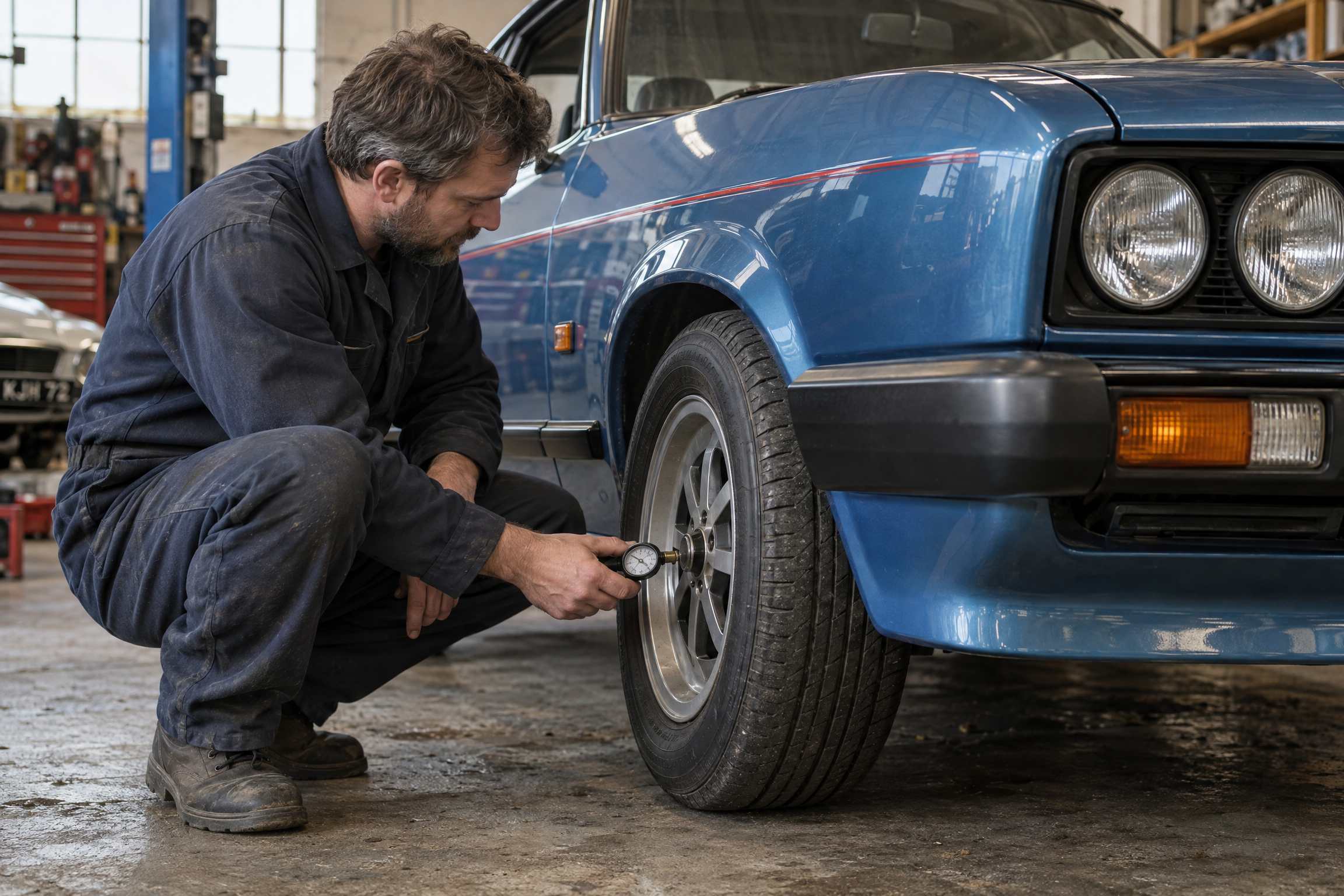
Most old cars need a little more attention on the road than a modern hatchback. They may have a larger steering wheel, less assistance and tyres with taller sidewalls. A car that follows cambers a little or needs a calm hand on a rough B road is not automatically broken. It may simply be doing what it was designed to do.
Wander is different. It is the feeling that the car will not settle in a lane without repeated small corrections. The wheel may feel vague around the straight ahead position, the car may react too keenly to ruts or it may need one correction followed by another. Treat that as a symptom, not a diagnosis. The cause can be a tyre, a steering box, an alignment setting or a suspension part that moves only once the car is under load.
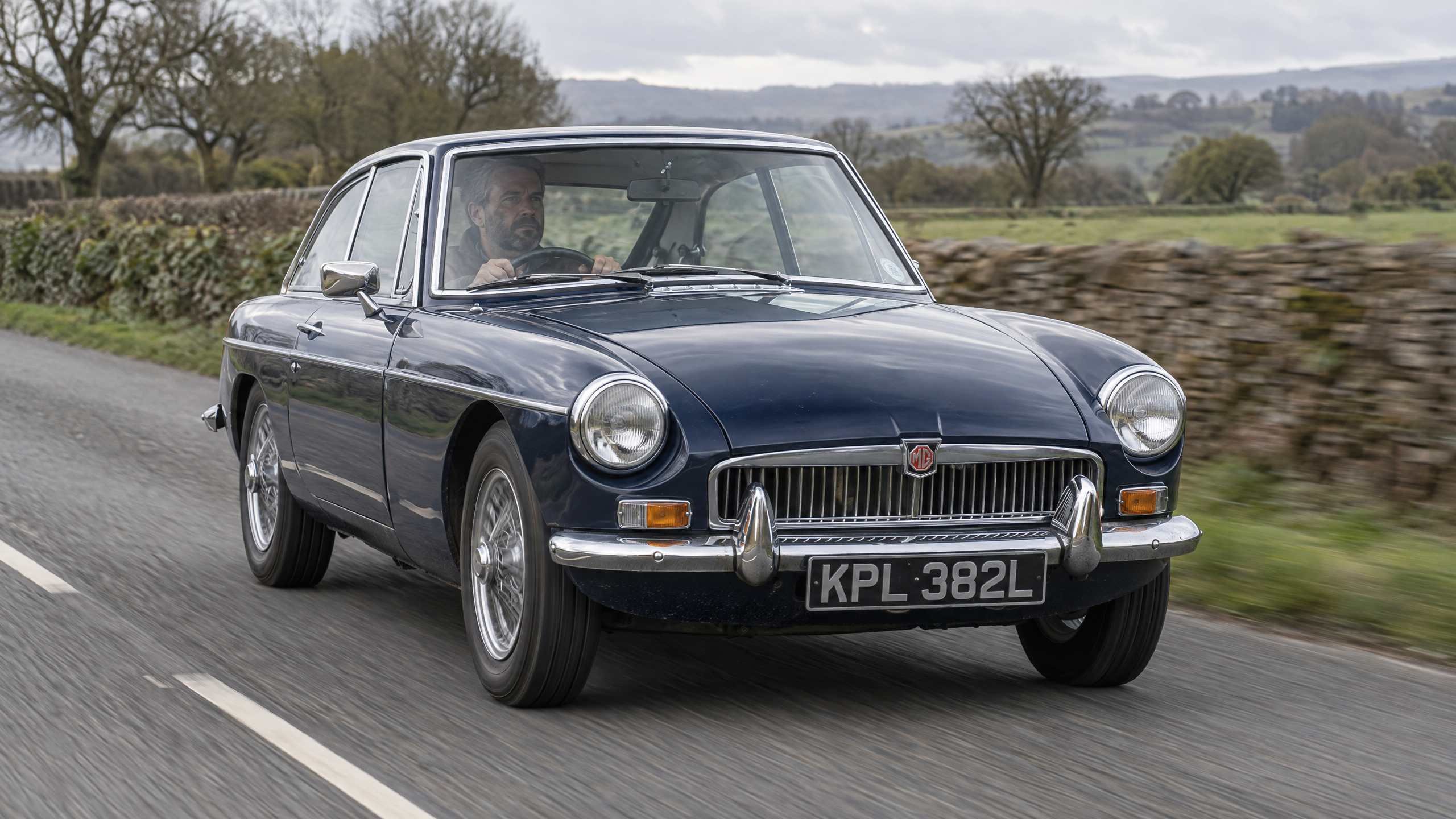
An old car can ask more of the driver without asking them to keep rescuing it.
First, separate wander from a pull
A pull is usually more consistent. On a reasonably level road, the car tends to head one way. Wander is less predictable. It may be worse on a rutted lane, in a side wind or when a lorry passes, and the driver ends up making frequent small corrections. Road camber can make any car drift slightly, because roads are built to shed water. A different result on a flat road is more useful than judging it on one sloping lane.
Make a note of when it happens. Does the car feel loose at every speed, only after a long run or mainly under braking? Does the steering return towards centre after a bend? Has the behaviour arrived suddenly? Those details matter because a true steering fault, a tyre problem and a worn bush do not always announce themselves in the same way.
Start with tyres and wheels
Tyres are the first check because they are the only parts touching the road. Set the pressures when cold, using the figures for the tyre size and load that your car is actually carrying. A substantial pressure difference across one axle can make the car feel vague or encourage it to drift. So can old tyres with hardened sidewalls, a damaged casing or a mixture of tyre types that flex differently.
Look closely at the tread rather than just checking that there is some left. Feathering, uneven wear across the tread or a scalloped pattern may point to an alignment, damper or suspension problem. A bent wheel can contribute to an unsettled feel even when there is no dramatic vibration through the steering wheel. Do not fit new tyres and declare victory until you understand why the old ones wore the way they did.
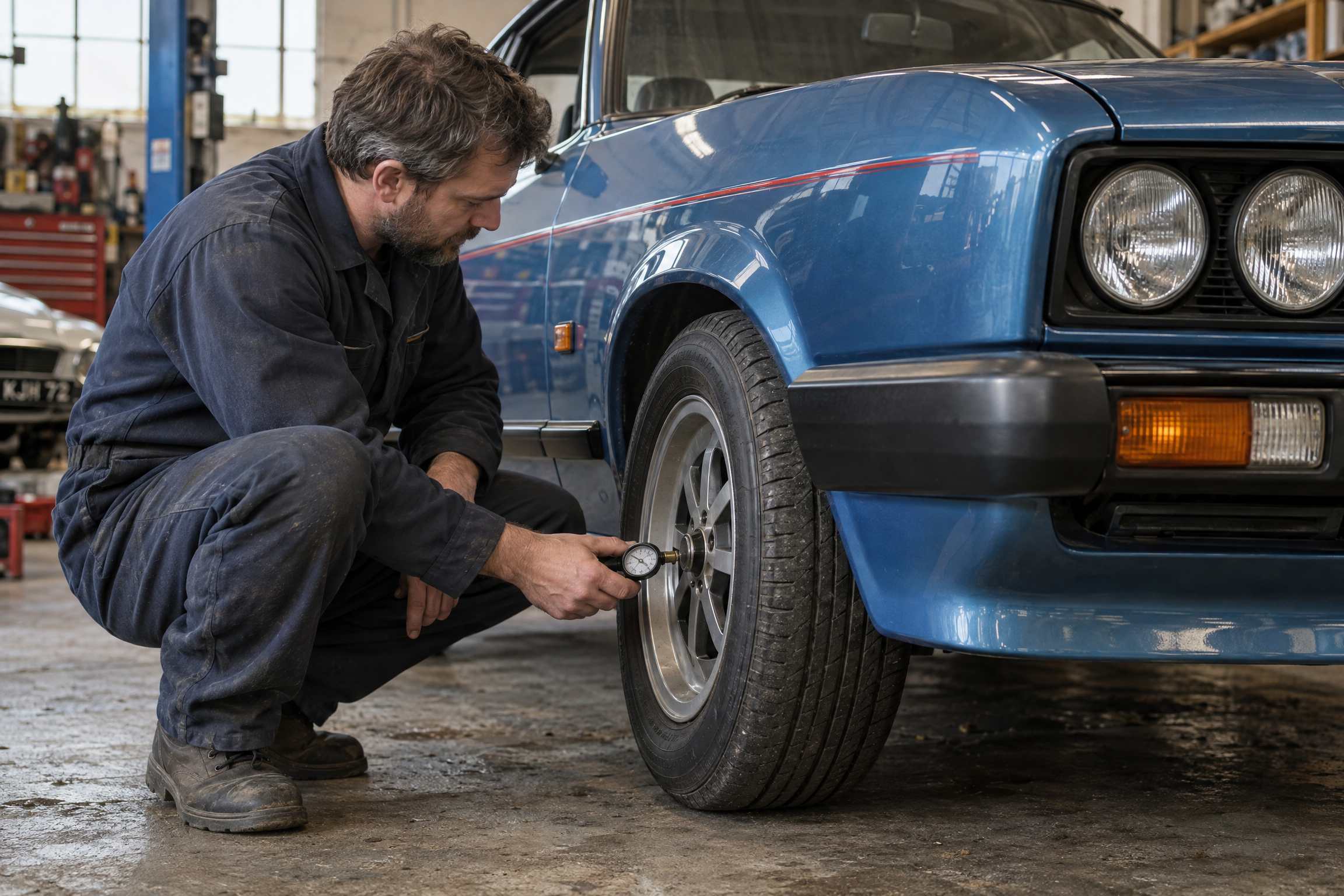
The tyre is often reporting the fault long before the driver has named it.
Alignment is more than tracking
People often use “tracking” to mean every part of wheel alignment. In reality, toe is only one angle. Toe describes whether the fronts of the wheels point slightly towards or away from one another. Too much toe out can make a car feel nervous and keen to wander. Incorrect toe in can take away precision and wear tyres quickly.
Caster and camber matter too. Caster is part of what helps the steering self centre and keeps a car settled in a straight line. Camber changes the angle at which the tyre meets the road. A good alignment check looks at the whole picture, including the rear thrust direction where the car has an adjustable or independent rear arrangement. If the figures cannot be brought into specification, the sensible question is not “can it be made green on the screen?” but “what is bent, worn or sitting in the wrong place?”
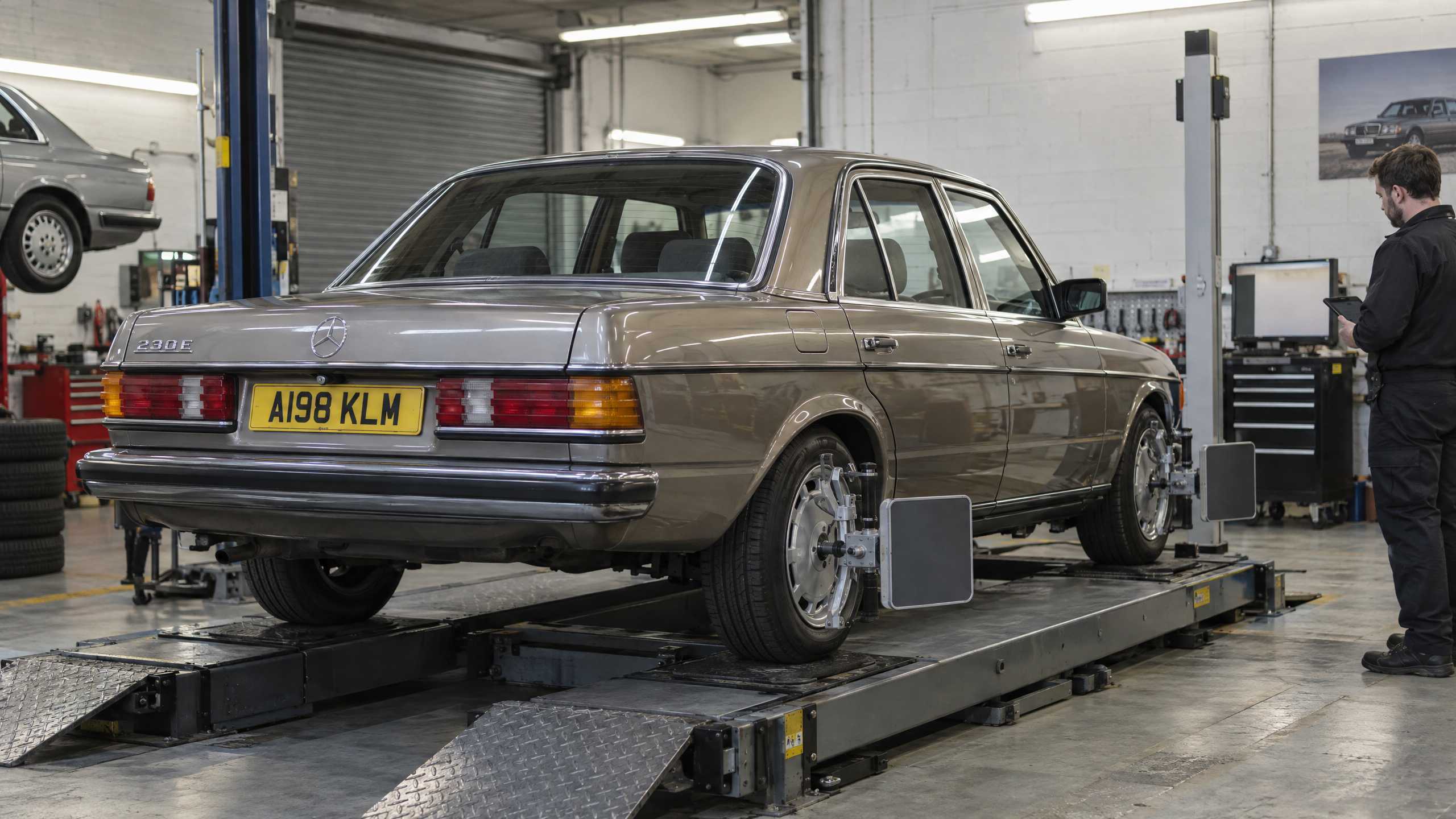
An alignment printout is useful only when the suspension holds those angles on the road.
Where lost movement hides
A classic with a steering box may have a little more free movement at the wheel than a modern rack and pinion car. That is not permission for the wheel to turn while the front tyres are still considering the request. Have someone gently rock the steering wheel while a competent technician watches each part of the system. The aim is to find where the movement stops being passed along.
On a steering box system, that may be in the box itself, its mountings, the column coupling, the idler or the links. On a rack system, look at the rack mountings, inner joints, track rod ends and column joints. Several small clearances add together. For a standard 380mm steering wheel, the MOT limits are no more than 13mm of free play for a rack and pinion system, or 48mm where several joints sit between wheel and rack. A non rack and pinion system allows 75mm. Those are roadworthiness limits, not a target for a well sorted car.
Do not cure a loose steering box with optimism
Many steering boxes have an adjustment, which makes it tempting to reach for a spanner and a heroic expression. That is not a diagnosis. The adjustment is intended to set the box correctly around its centre position. It cannot restore worn gears, a worn shaft or tired linkage parts. Over tightening it to disguise play can leave the steering stiff and reluctant to self centre.
A good inspection looks at the box and every component around it before any adjustment is considered. It also checks the steering gear is firmly mounted and that its surrounding structure is sound. A loose box or worn joint is not period charm. It is lost control between your hands and the tyres, and it needs a proper repair.
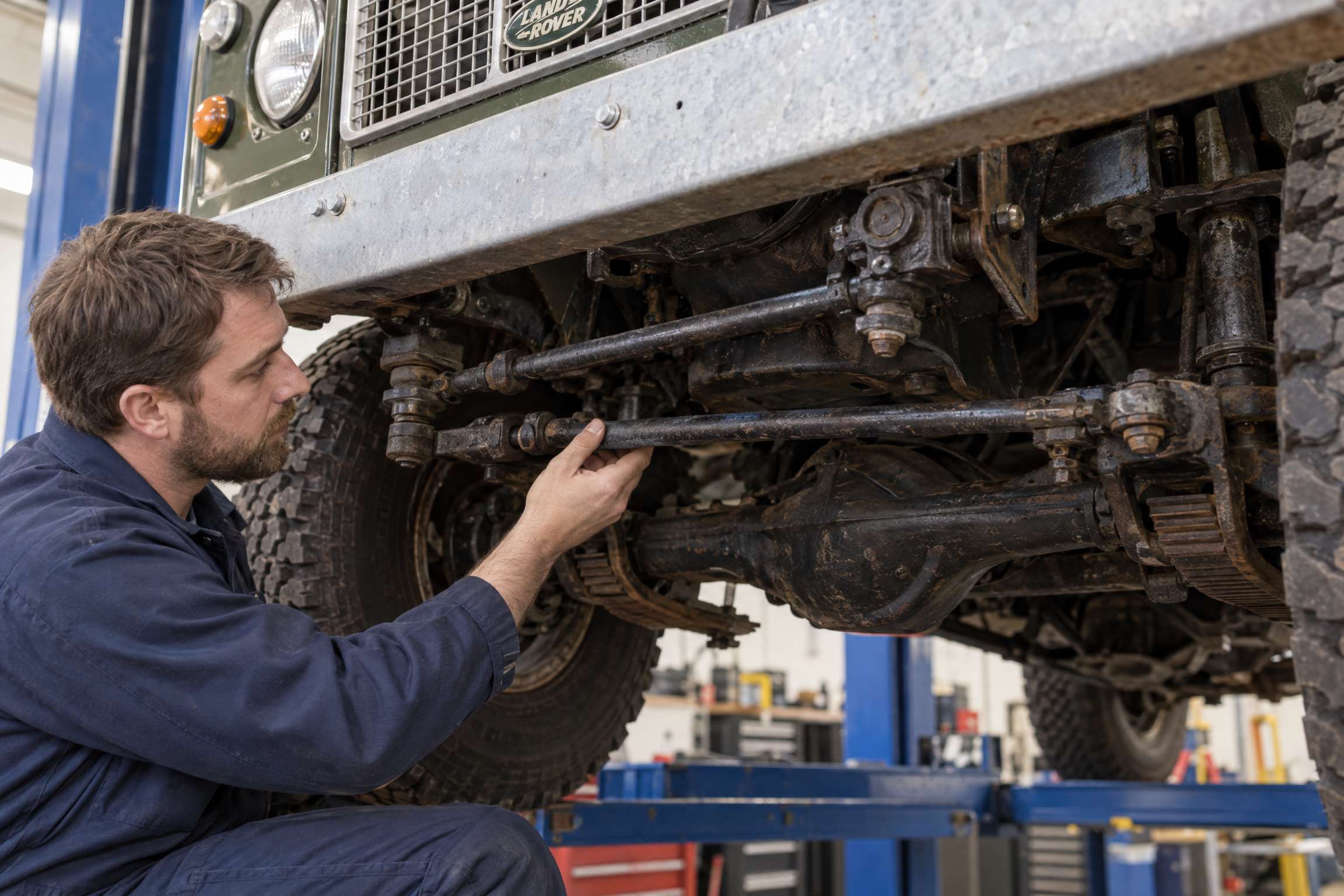
The important question is where the movement begins, not which part looks oldest.
Bushes can change the alignment while you drive
Bushes, ball joints, top mounts and suspension arms locate the wheels. When they are healthy, the alignment angles measured on a ramp remain close to those angles on the road. When they are tired, the wheel can move rearward, sideways or through its travel under braking, acceleration and cornering. The car may look acceptable while parked, then feel as though it has its own ideas once it is moving.
This is why a fresh alignment alone does not always cure wander. A soft or split wishbone bush can allow the toe setting to change under load. A worn ball joint can do the same more suddenly. Tired dampers and springs add to the problem by letting the body move more than it should. Rear suspension matters as much as the front. If the rear axle or rear suspension is moving around, the driver feels it through the steering wheel even though the fault began behind them.
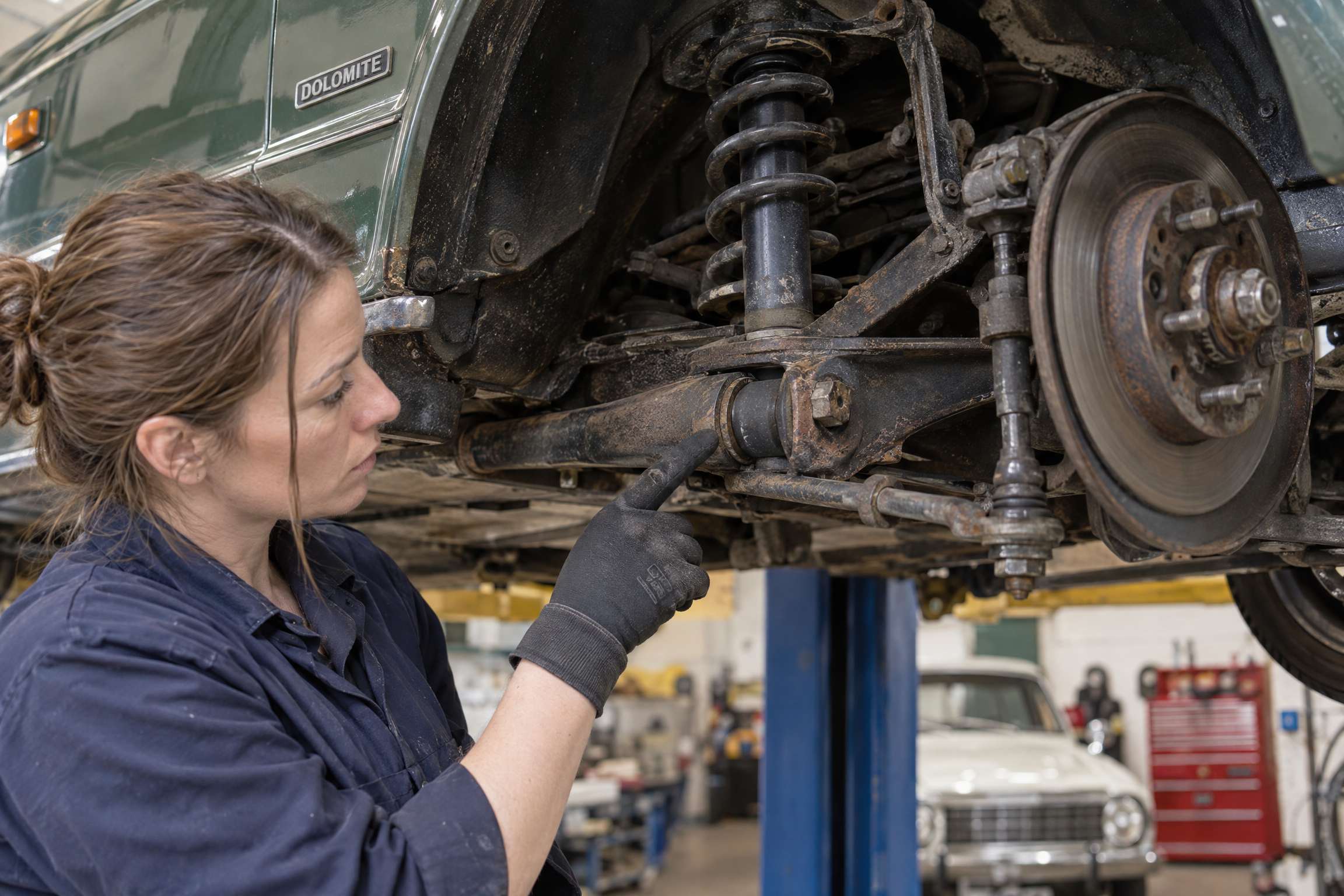
If the bush is no longer holding the wheel where it belongs, the alignment cannot stay honest for long.
Period character and a genuine fault
A sound old car may have heavier steering at parking speed, more feel through the wheel and a greater reaction to poor road surfaces than a current car. Some steering boxes also have a gentler response around the straight ahead position than a modern rack. Learn what is normal for your model by driving another good example or asking a model specialist to assess it.
What is not normal is a new or worsening need to correct the car, a steering wheel that will not return sensibly after a bend, a knock when you change direction or a car that changes course under braking. Uneven tyre wear, a sudden pull, vibration, a fluid leak from the steering gear or visible movement in a joint all deserve attention. An MOT pass does not make a poor driving feel disappear, and a car can feel wrong before a defect becomes obvious on an annual test.
When to stop and investigate
If a car begins to dart, pulls hard, changes direction when braking or has a steering wheel with obvious free play, arrange a proper steering and suspension inspection before using it normally. The same applies if a tyre has a bulge, deep cut, exposed structure or rapidly worsening uneven wear. Those are not jobs to delay until the next sunny weekend.
The right repair sequence is simple, even if the work is not. Confirm the tyre and wheel condition. Inspect steering and suspension movement under load. Repair worn or damaged components. Set the ride height where the model requires it. Then align the car to the correct specification and road test it. When the cause is fixed, a classic will still feel like a classic. It will simply go where you point it.