


.png?width=26&height=26&name=youtubemobile%20(Custom).png)
.png?width=26&height=26&name=instgrammobile%20(Custom).png)


Classic cars are meant to be the opposite of modern chaos. You open the garage, see a bit of...
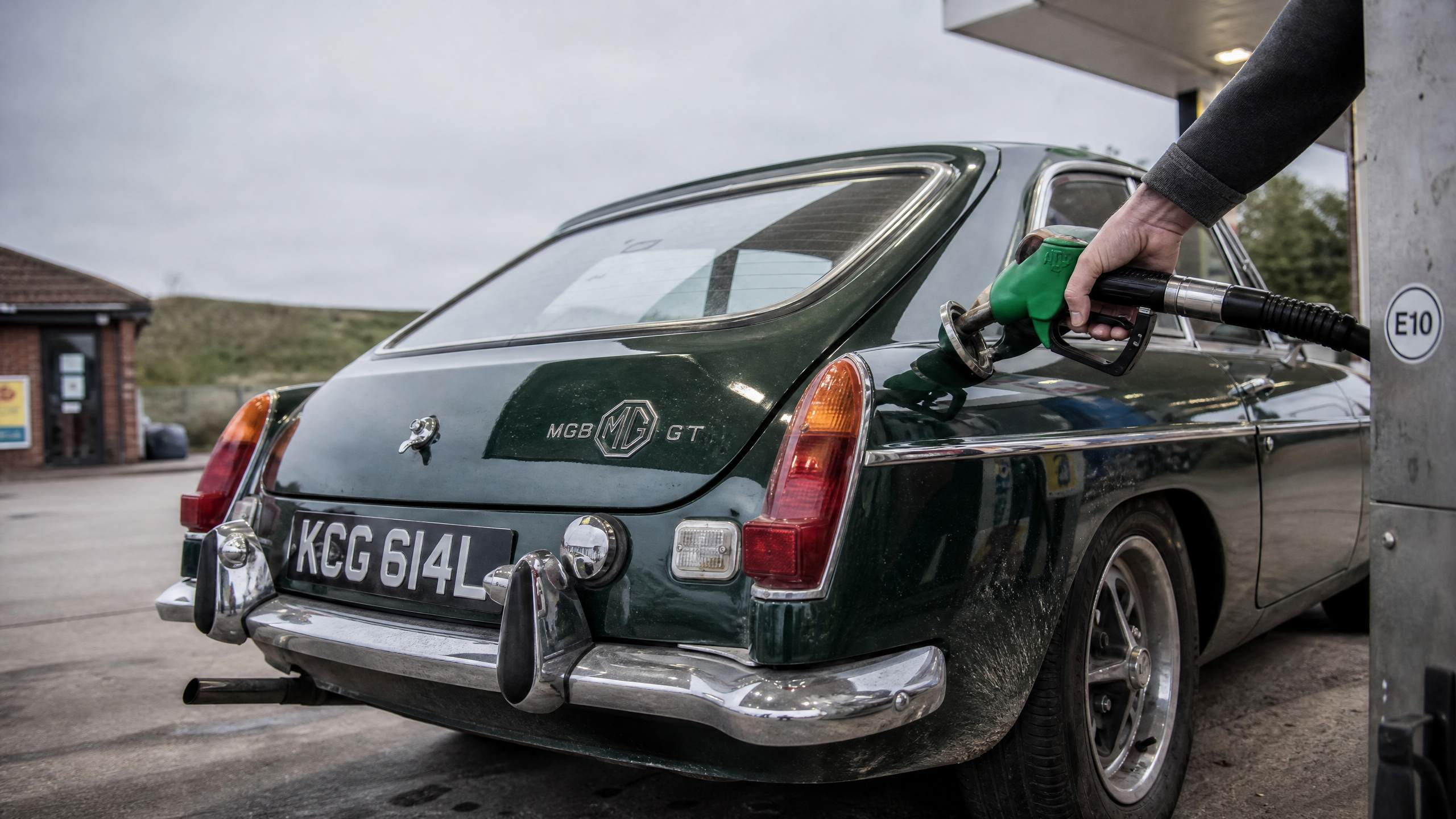




Separating the pub myths from the chemistry. A detailed breakdown of ethanol's impact on classic fuel systems and how to properly protect them.
Mention E10 in a pub full of classic car owners and you will soon hear that it dissolves fuel hose on contact, drinks water from the atmosphere and turns an innocent float chamber into something recovered from the Titanic. At the other end of the bar, somebody will point out that millions of modern cars run on it and conclude that the whole fuss is nonsense. Both positions are wonderfully confident. Neither is especially useful.
E10 is not an instant mechanical assassin, but it is not simply old petrol wearing a greener badge either. The extra ethanol changes the fuel's solvent behaviour, its attraction to water and the way it interacts with some metals, plastics and elastomers. That last word means the flexible compounds used for hoses, seals and diaphragms. In a classic fuel system designed decades before ethanol became a normal blending component, those differences deserve attention rather than panic.
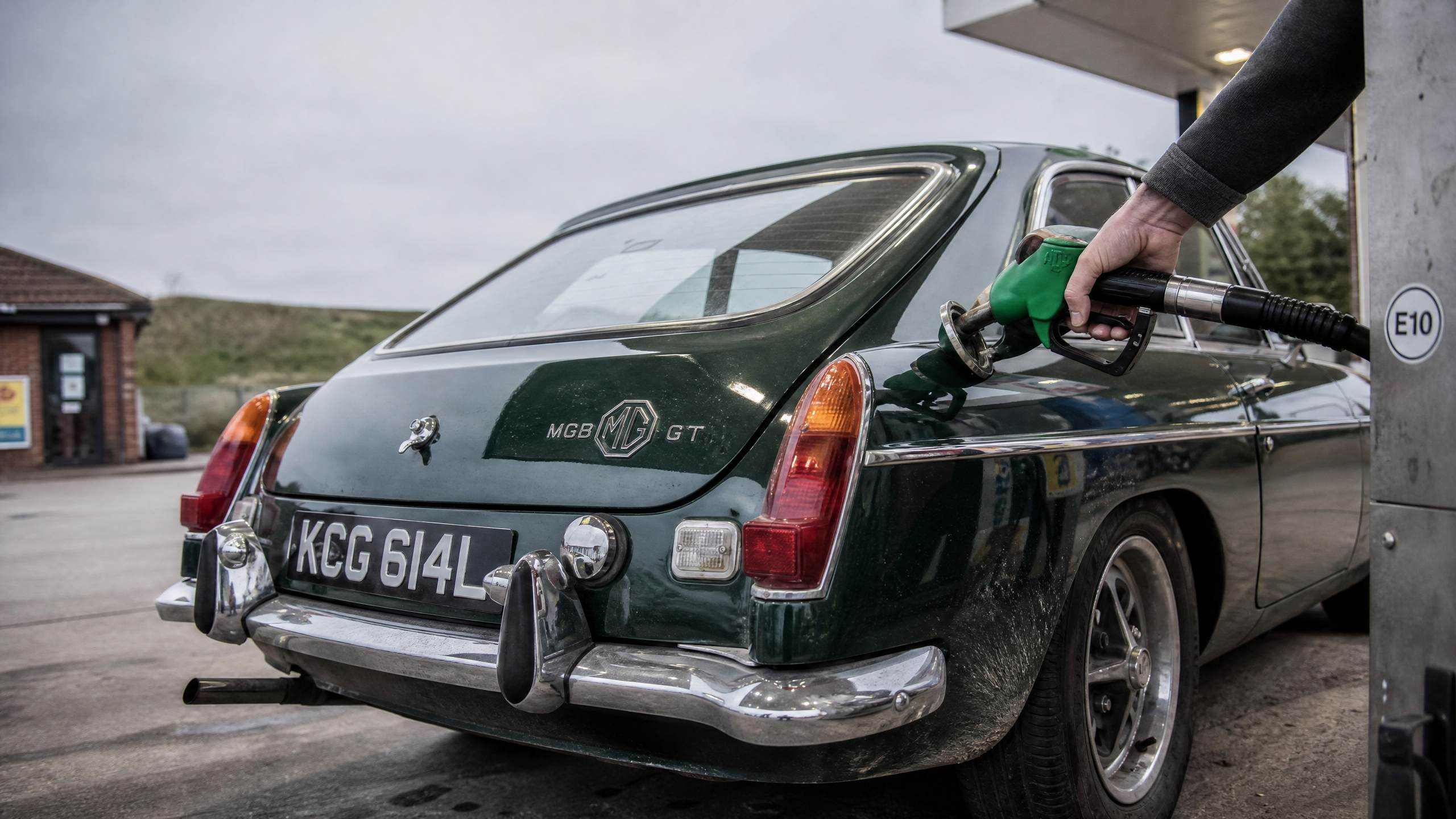
What the E10 label actually tells you
E10 petrol contains up to ten percent ethanol by volume. E5 contains up to five percent, so the number on the pump is a limit rather than a promise that every batch contains exactly that amount. Most petrol cars made since the late 1990s are approved for E10, and all cars manufactured since 2011 are compatible. A classic with an unknown mixture of original parts and later replacements is a much less certain proposition.
One accidental tankful is not normally a catastrophe. Current UK government advice says an incompatible petrol vehicle does not usually need to be drained after a single mistaken fill. Use E5 at the next opportunity and avoid making E10 the regular diet. The risk is mainly prolonged exposure of unsuitable components, not a dramatic cloud of smoke before you leave the forecourt.
The problem starts with the word rubber
Owners often ask whether rubber is safe with ethanol, as if rubber were one recipe. It is not. Nitrile, neoprene, natural rubber and fluoroelastomer are different material families, and each family contains numerous formulations. Two black hoses can look identical while behaving very differently in the same fuel. The compound recipe, age, temperature, pressure and previous exposure all matter.
Petrol is mostly a mixture of non polar hydrocarbons. Ethanol has a polar hydroxyl group at one end of its molecule and a small hydrocarbon section at the other, so it can mix with petrol while also associating with water. This makes the blend a different solvent system from petrol alone. Inside an elastomer, which is a network of long polymer chains supported by ingredients that control flexibility and strength, that blend can cause swelling or softening and carry away smaller ingredients such as plasticisers. The hose has not literally melted, but its dimensions and mechanical properties may have changed, which is quite enough to create trouble.
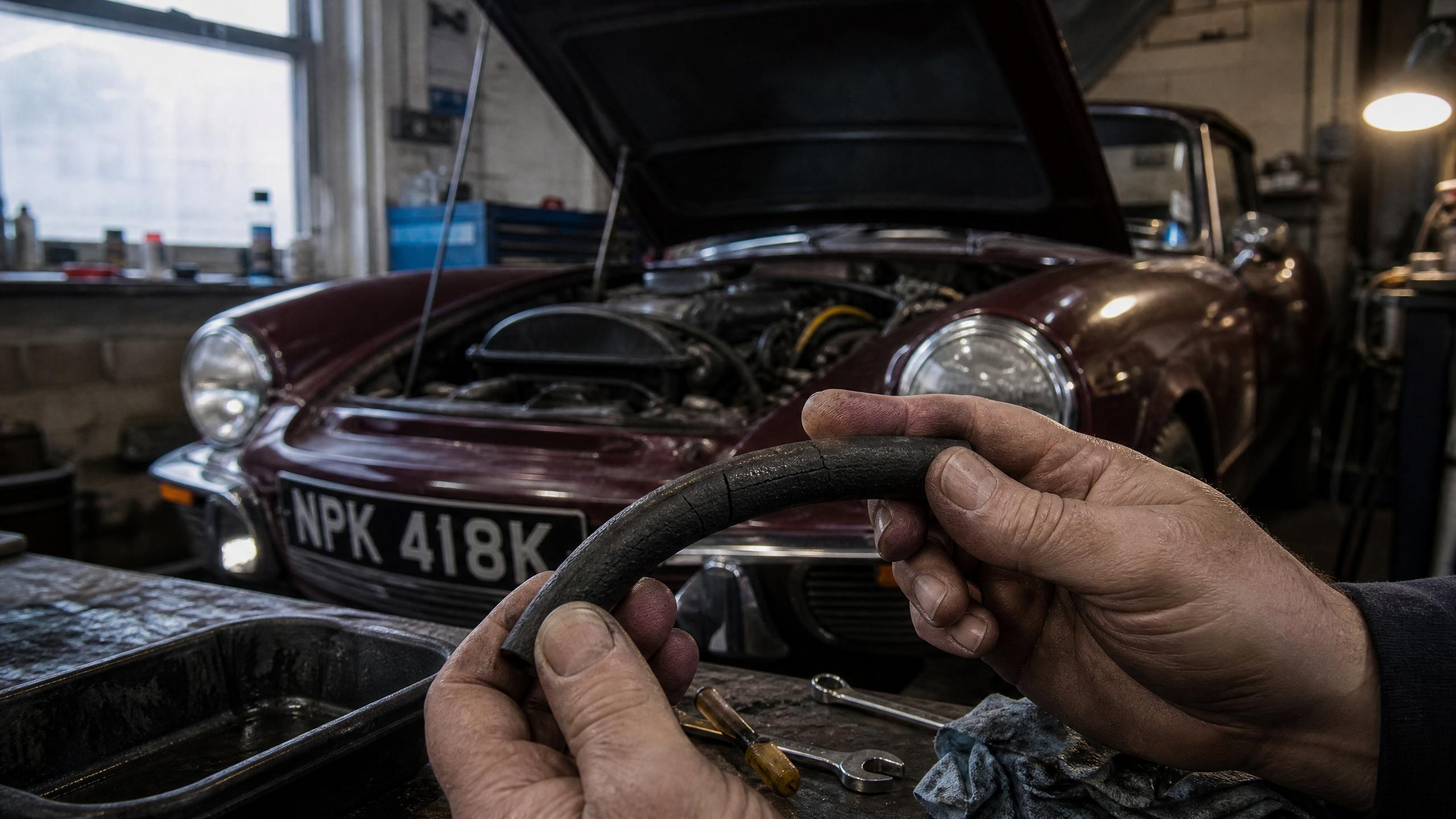
Why a hose can fail after the fuel has gone
The awkward part comes when the hose dries. Laboratory testing of fuel system elastomers has shown that some nitrile and neoprene formulations swell while immersed, then lose mass, shrink and harden after the test fuel evaporates. That pattern is consistent with soluble ingredients being extracted from the compound. A hose may therefore feel unusually soft while wet and become stiff or cracked later.
This helps explain why a marginal hose can reveal itself after a period of storage, although ethanol is not responsible for every elderly fuel line that fails. Heat, ozone, engine movement, tight bends, poor clips and simple old age were ruining hoses long before E10 arrived. Ethanol can accelerate or expose a weakness in an unsuitable compound, but blaming it for every crack beneath the bonnet is chemistry by guesswork.
Permeation is not the same as a leak
Fuel does not always need a visible hole to escape. Permeation occurs when individual fuel molecules move through the wall of a hose and emerge as vapour. An old hose may look dry yet produce a persistent petrol smell in a closed garage. Modern low permeation hose uses a resistant inner layer, often made from a fluoroelastomer known as FKM, to slow that movement dramatically.
Swelling creates a different problem. If a hose changes size or loses stiffness, its grip on a metal pipe can weaken and a once dry joint can begin to weep. Internal deterioration may also release fragments that travel towards a pump, filter, needle valve or carburettor jet. The outer cover can still look respectable, which is why a glance from three feet away does not count as an inspection.
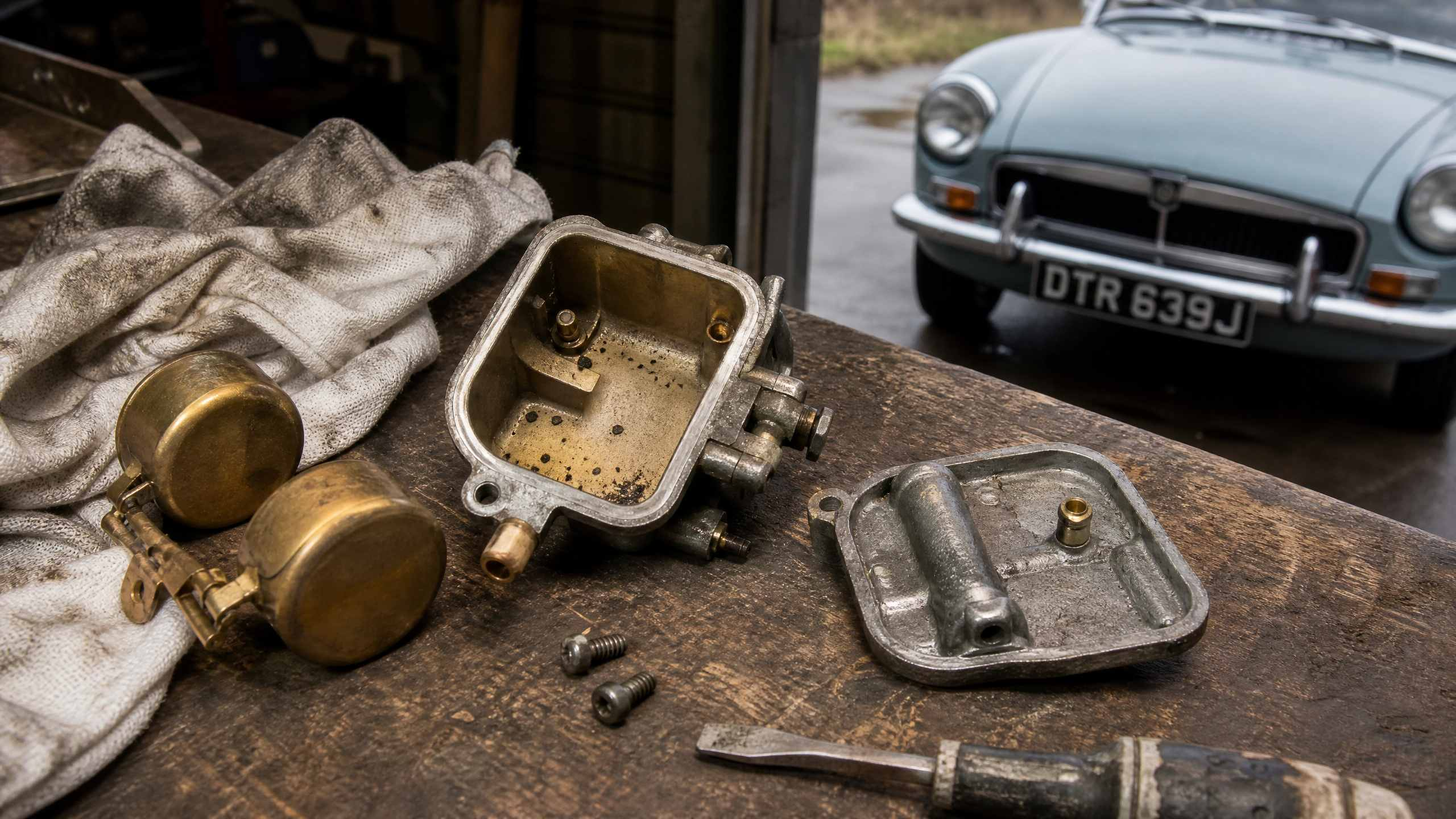
The truth about water and phase separation
Ethanol has an affinity for water. If enough water enters an ethanol petrol blend, the mixture can separate into a petrol rich upper layer and a water and ethanol rich lower layer. That lower layer is poor fuel and can be much more corrosive to susceptible components. The chemistry is real; the popular timetable is not.
A Department for Transport commissioned review concluded that serious phase separation in a vehicle was possible but rare. It calculated that normal water vapour in the air would take years to saturate a small volume of fuel under the conditions considered. A substantial water entry, perhaps through a damaged filler seal or contaminated storage tank, is the more credible route. Storage still matters because stale fuel can oxidise and susceptible metals remain exposed for longer, but an overnight change in the weather does not usually create a layer of pond water in the tank.
Which parts should you inspect
Start with every flexible line you can see, then look for the ones manufacturers hid as a practical joke. Check the short hose beside the tank, the filler neck, vent lines, the connection beneath the boot floor and any section passing close to heat or a moving component. On cars with an electric pump or later modifications, establish whether any hose is actually submerged inside the tank.
Look for surface cracks, damp joints, staining, bulges, unusual softness, a rock hard texture and clips sinking into the cover. Check the fuel filter for dark particles and investigate any new petrol smell. If a line is wet with fuel or actively leaking, do not start the engine or operate nearby electrical equipment. The car stays put until the fault has been repaired safely.
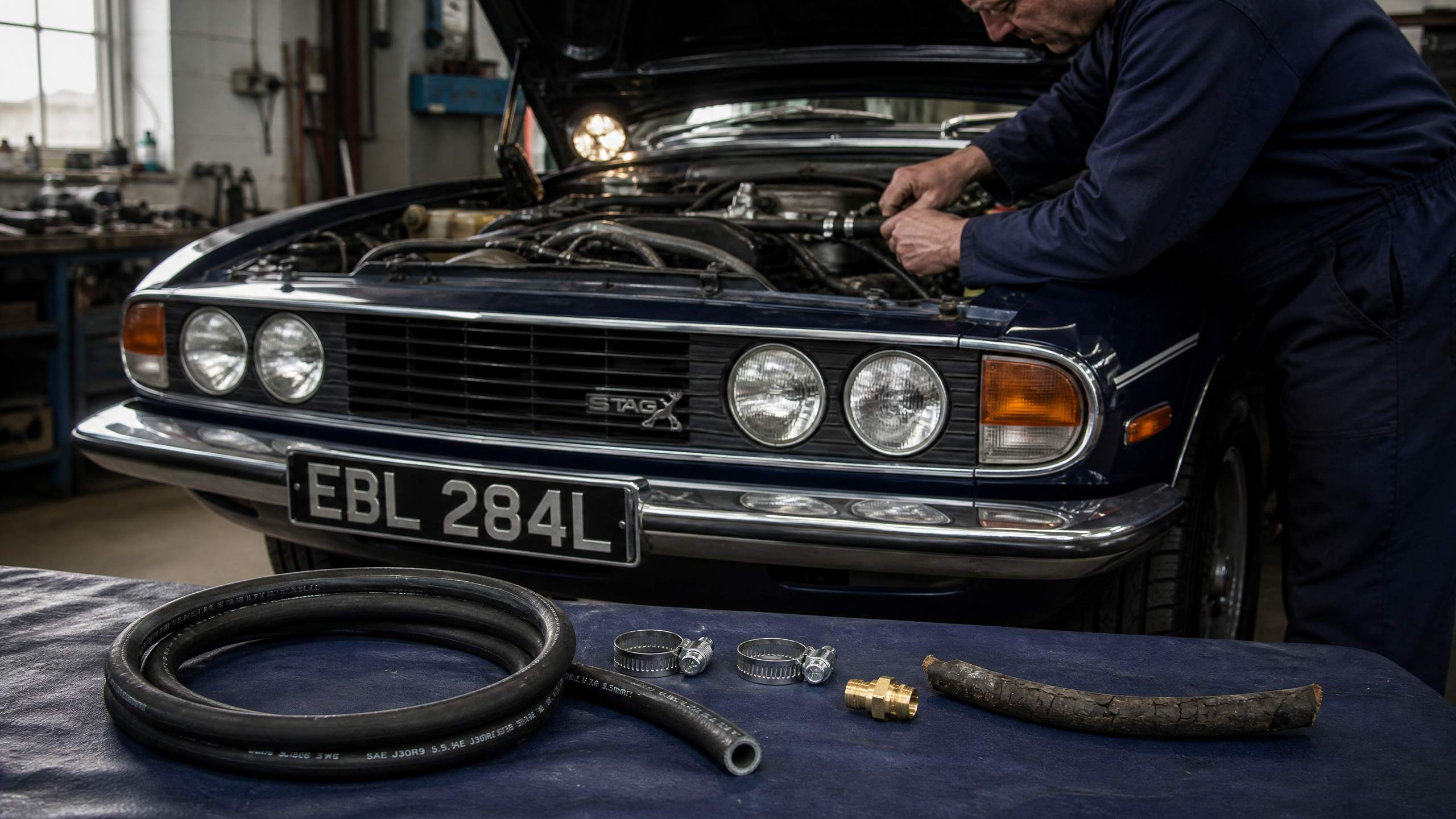
Choosing hose that is genuinely suitable
Buy hose from a reputable manufacturer or specialist who states in writing that it is suitable for E10, the operating pressure and the intended installation. SAE J30 R9 is a common specification for external fuel injection hose, and quality examples use a low permeation fluoroelastomer inner tube approved for ethanol extended petrol. The marking is useful, but it is not an invitation to buy an anonymous length from an online seller whose quality control department may be a rubber stamp in both senses.
External hose is not automatically safe for use inside a tank. A hose submerged in fuel is exposed on both surfaces, so it needs a product made for continuous immersion. SAE J30 R10 is the commonly cited specification for this application. Confirm the correct internal diameter, pressure and temperature ratings, use properly sized fuel hose clips, and route the line away from sharp edges, exhaust heat and strain.
Do not stop at the flexible lines
A hose upgrade is important, but a classic fuel system contains other vulnerable parts. Pump diaphragms, carburettor gaskets, accelerator pump seals, needle valve tips, O rings, tank sealants and flexible filler components may all see the same fuel. Some older zinc, brass, aluminium and plated parts can also suffer corrosion under the wrong conditions. Replacing the obvious hose while ignoring the rest is rather like repairing the roof and leaving the windows open.
If the manufacturer cannot confirm that your car is compatible, super unleaded E5 is the sensible fuel choice and the official UK fallback. Remember that E5 can still contain up to five percent ethanol, so it is a reduction in exposure rather than bottled petrol from 1972. The durable answer is to identify uncertain materials and replace them with components whose makers explicitly approve them for modern petrol.
What additives can and cannot do
A suitable fuel stabiliser can slow oxidation during storage, while a corrosion inhibitor may reduce attack on vulnerable metals. Those are useful jobs, but they are specific jobs. An additive does not put extracted plasticiser back into a tired hose, change an unsuitable polymer into FKM or make an unapproved tank sealant suddenly compatible.
The Federation of British Historic Vehicle Clubs has said it is not aware of an additive proven to provide complete protection for incompatible elastomers and gaskets in E10. Read that sentence before reading the front of a bottle promising universal salvation. Additives may support a sound fuel system; they are not a substitute for one.

A sensible protection plan
Treat the car to a proper baseline inspection. Replace any flexible hose of unknown origin or age, check the less obvious seals and diaphragms, record what was fitted and keep the supplier's compatibility information. Inspect the new installation after its first few heat cycles, then include the fuel system in routine servicing. There is no honest universal lifespan for a hose because material, routing, temperature and use vary, so condition and provenance matter more than a date pulled from the air.
The truth about E10 is reassuringly untheatrical. It will not dissolve a healthy, compatible fuel system on the way home from the filling station, but repeated exposure can swell, soften, extract ingredients from and eventually embrittle unsuitable vintage materials. Replace guesswork with known components, use E5 while compatibility remains uncertain and treat any petrol smell as a warning rather than part of the car's personality. That is not panic. It is simply good maintenance with a little chemistry behind it.
Classic cars are meant to be the opposite of modern chaos. You open the garage, see a bit of...

The pub argument that refuses to die

For many of us, reaching 70 is a milestone that brings more freedom, not less. It's a time for...