




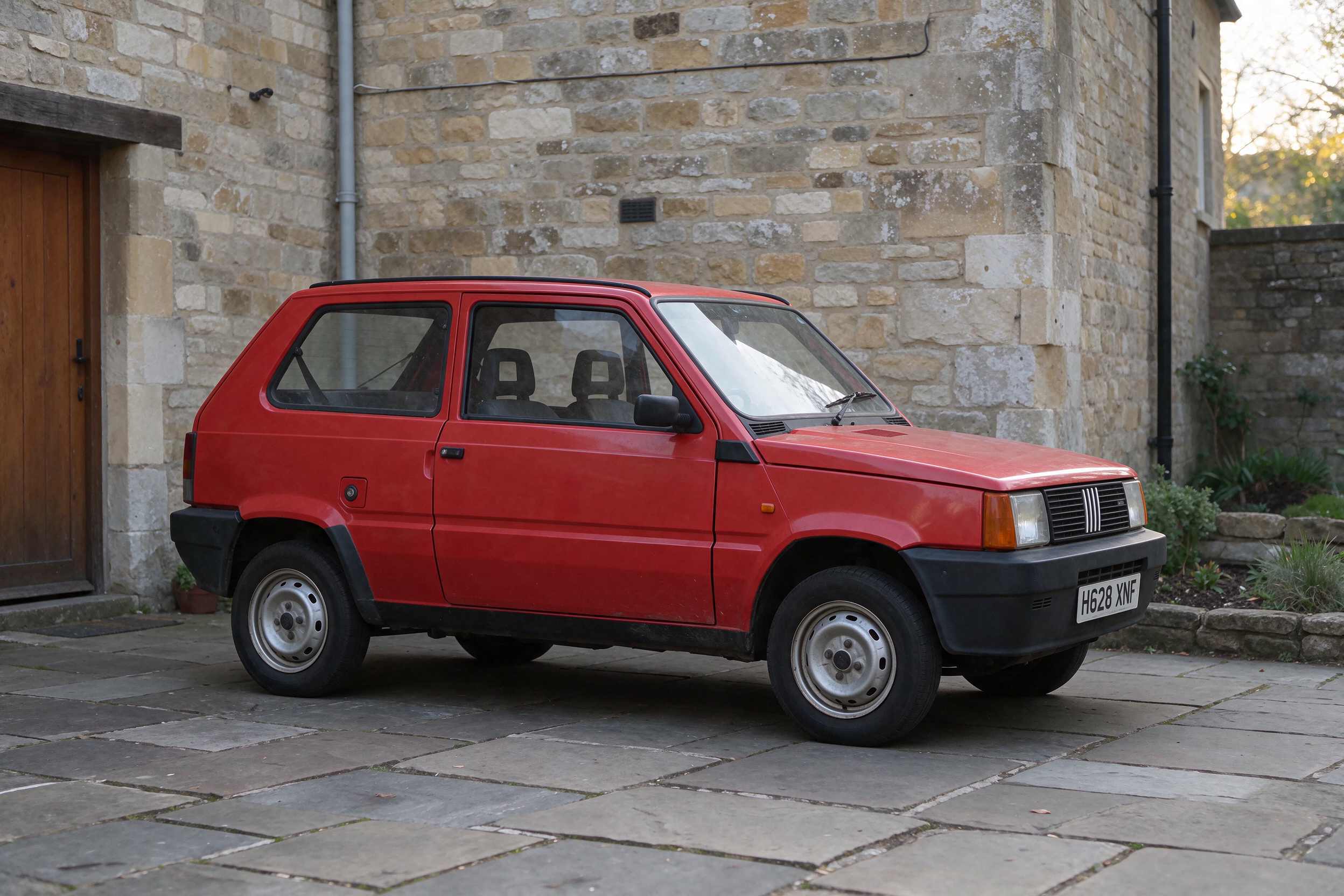
The original Fiat Panda 4x4 does not look especially intimidating. Park one beside a large modern SUV and it resembles the little car that has come to collect the driver's lunch order. Yet underneath that cheerful square body is genuine four wheel drive. The Panda has a useful talent for making a much bigger car seem rather unnecessary.
This is the original generation Panda 4x4, introduced in 1983, rather than one of its later namesakes. It is a small, simple classic with real rough ground ability, modest performance and very little interest in flattering you. That last quality is part of the appeal. It gives you a job to do, lets you get on with it and looks wonderfully pleased with itself afterwards.
Small because somebody thought about it
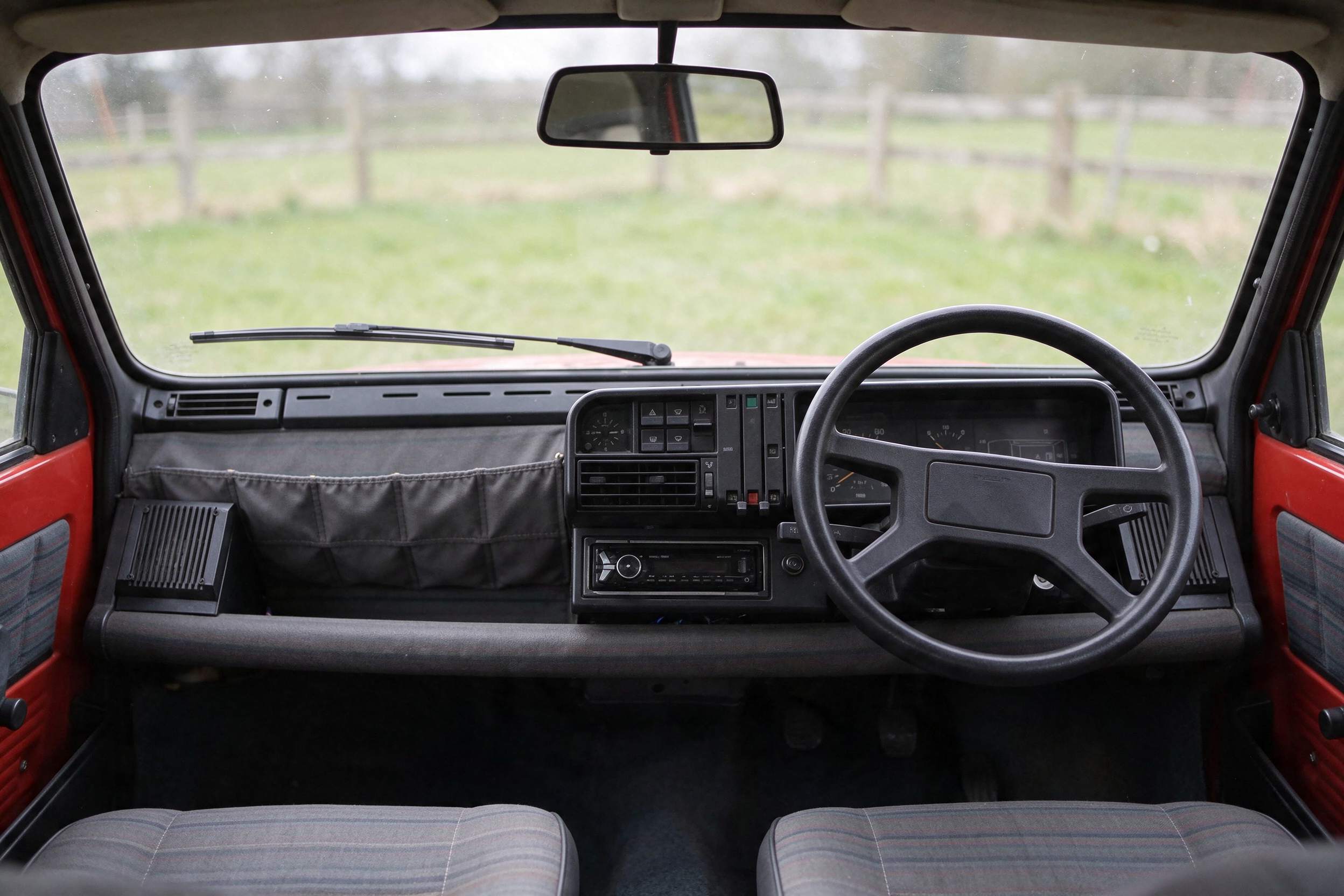
The Panda's basic shape came from Giorgetto Giugiaro, and there is a lot more thought in it than its plain appearance suggests. The upright body and flat glass make good use of a small footprint. The original cabin was deliberately simple and adaptable. Early cars are particularly appealing if you enjoy the sight of a designer solving a problem without first ordering several metres of polished trim.
Later versions changed the details, so do not expect every Panda to have exactly the same seats, dashboard or fittings. What remains is the useful sense that you can see out, judge the car's corners and put it somewhere without needing a committee. The cabin is practical rather than luxurious. You may find that refreshing, especially if your modern car has recently required three menu screens to change something that used to have a knob.
The extra lever does a proper job
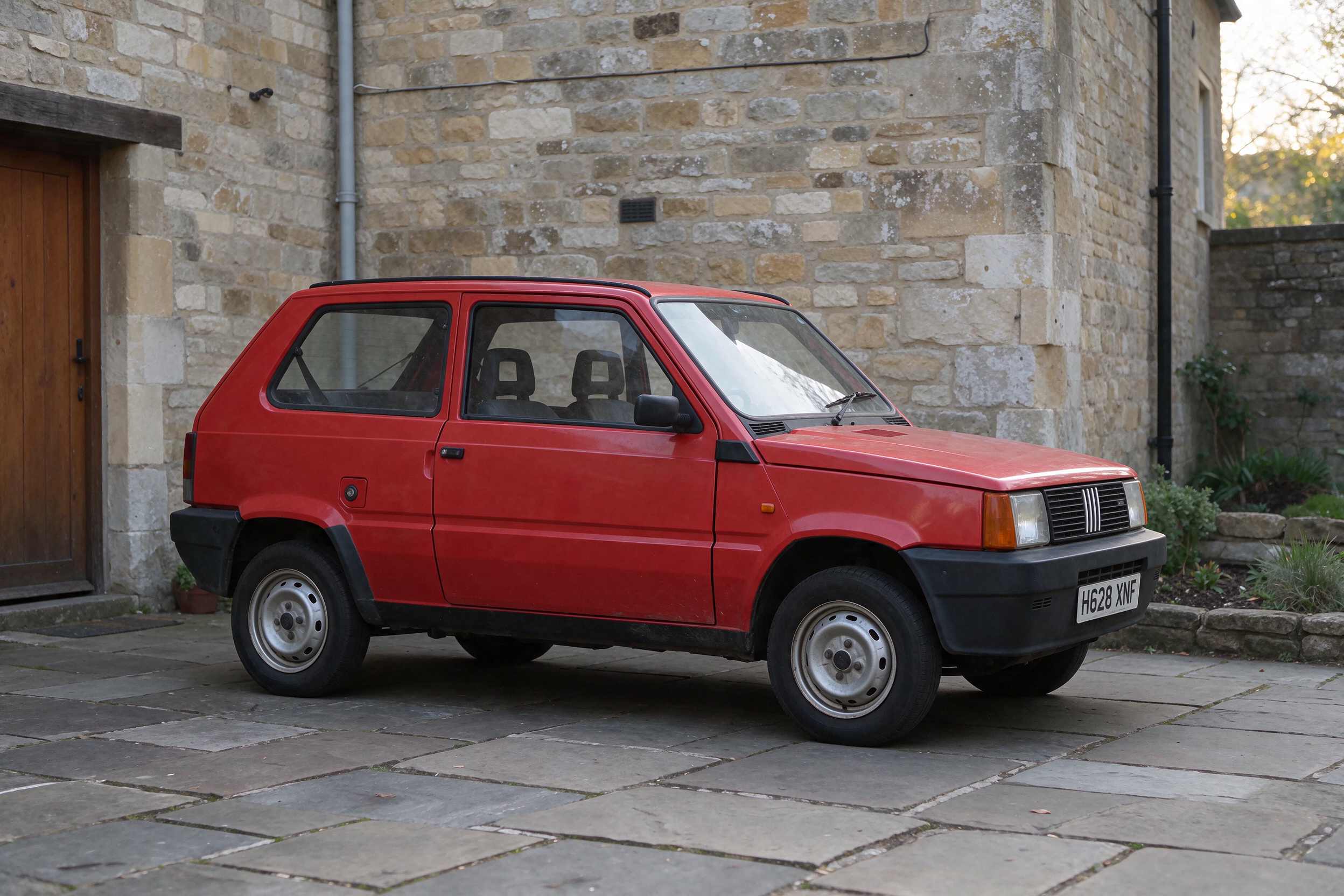
Fiat developed the original 4x4 with Austrian specialist Steyr Puch. In normal use it drives the front wheels. A separate cabin lever brings the rear wheels into play when extra traction is needed. The five speed gearbox has a very low first gear for slow, steep or awkward going. It does not have a separate low range gearbox, and that lever is not a high and low range selector.
There is an important limitation. The system has no centre differential, so four wheel drive should be left disengaged on dry, high grip tarmac. Fiat recommends using it on low grip surfaces and at low speed. Leaving it engaged for ordinary dry road driving can wind up the transmission. This is clever, straightforward machinery, but it expects the driver to understand it. Merely pulling the exciting lever and hoping for the best is not quite the idea.
Much happier on a lane than in a hurry
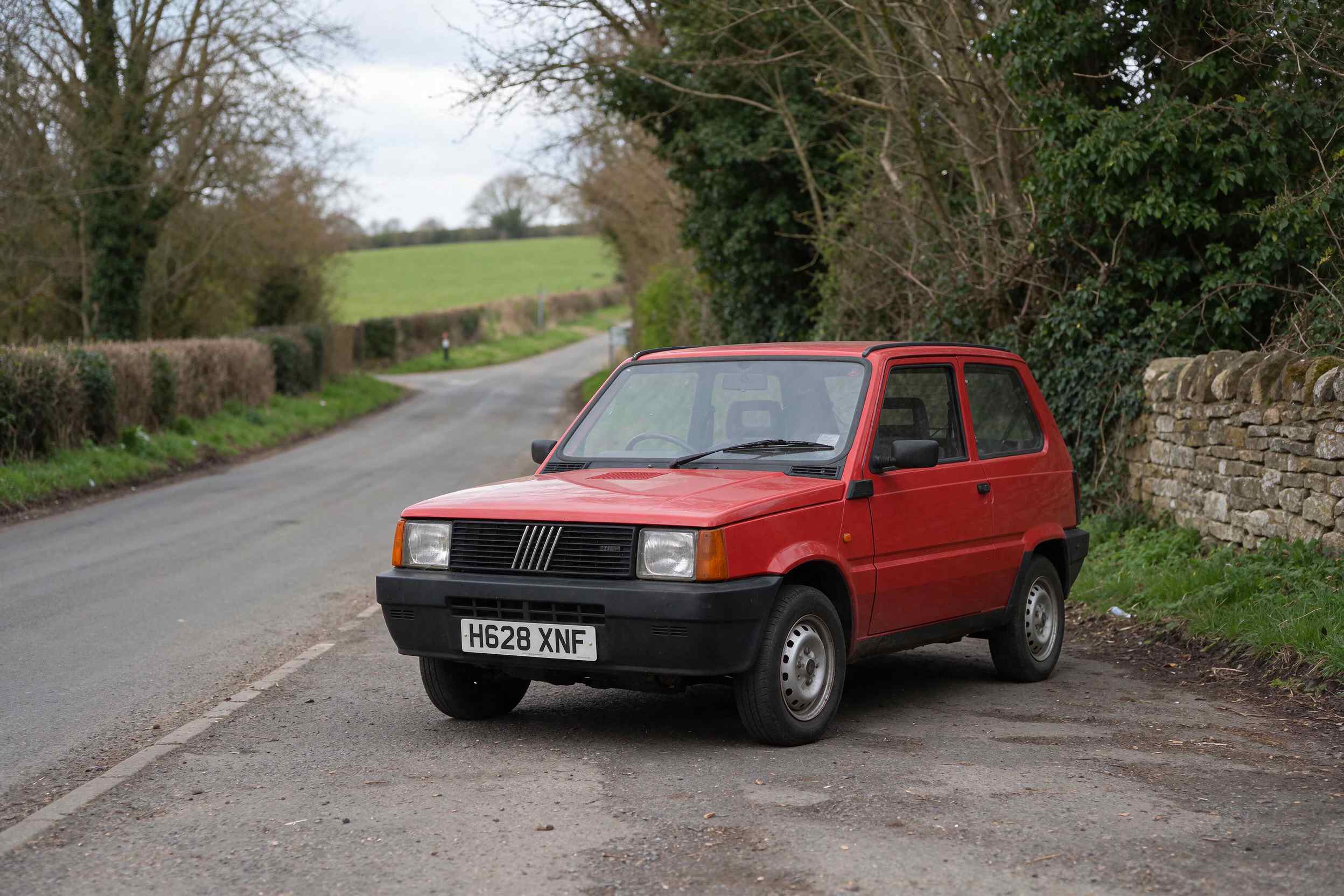
Light steering and compact dimensions make the original Panda an easy sort of car to place on a narrow road. Its modest power gives you a reason to work with the gears and plan ahead. There is body roll, and the experience is more lively little utility car than miniature sports hatchback. You can enjoy the journey without needing to travel particularly quickly, which is a useful quality in a classic.
Long motorway trips are a less convincing part of the proposition. An early 4x4 can feel busy and stretched when asked to keep up a sustained fast pace. Different engines and years alter the details, but none turns the basic car into a quiet modern cruiser. I would choose one for local journeys and country outings, rather than buy it while insisting that refinement is overrated. Refinement tends to recover its popularity halfway through a long journey home.
The muddy reputation has some substance
Small dimensions and low weight are useful on rough ground, and the short first gear helps the driver make slow progress. The Panda's appeal is that this ability comes in something still small enough to be convenient in ordinary life. You do not have to spend the rest of the week manoeuvring a very large vehicle just because one part of your route is awkward.
That does not mean every old Panda can go anywhere. Tyres, clearance, the condition of the car and the surface beneath it all matter. Four wheel drive helps with traction. It does not make braking on a slippery surface magically better, or turn a flooded road into a sensible route. Enjoy its capability where you are allowed to drive, but keep some judgement in reserve. The badge is not permission to audition for a rescue programme.
Practical, provided you remember its size
There is useful space inside for such a little car, and the hatchback layout makes it a handy companion for shopping or a day out. It is also worth trying the seats and driving position before buying. The simple furnishings that look delightful in a photograph may feel less delightful to your particular back. Rear passengers should have their say too. A small car does not acquire limousine accommodation just because everybody likes it.
Access to the rear is through the front doors, so think about who will travel with you and how often. Check the actual seating arrangements, seat belts and folding mechanisms rather than relying on a general description of the model. Where a car has the folding fabric roof panels, inspect their condition and look for water ingress. An airy little cabin is lovely. One that provides a personal weather report through the roof is less useful.
Rust is the least charming feature
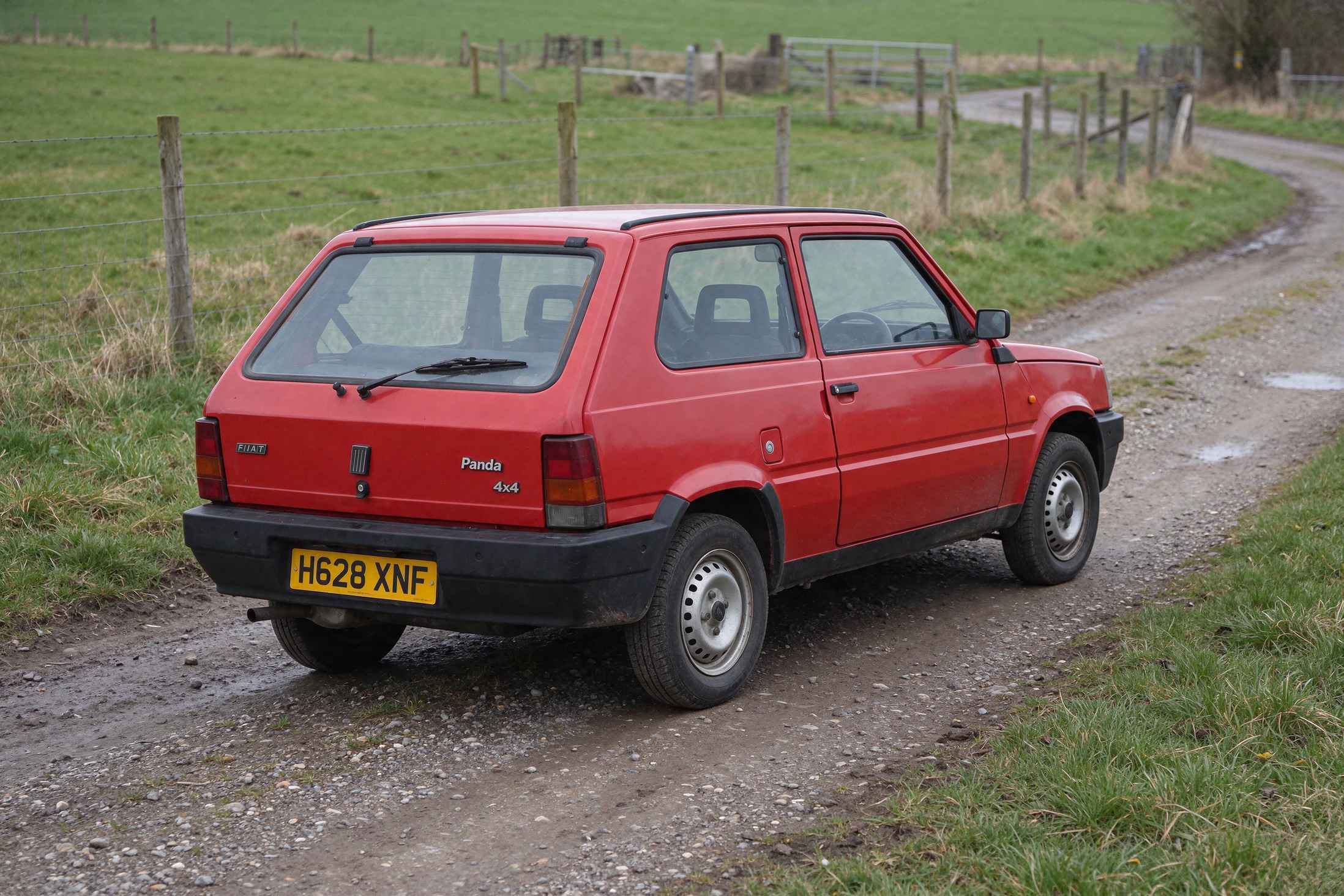
The body deserves a serious inspection before you become distracted by its cuteness. Look closely at the sills and their joins with the floor, the rear chassis rails and the leaf spring mounting areas. The boot floor, crossmember and front inner wings also need checking. Scuttle and screen surround corrosion can be more extensive than it first appears. A few appealingly weathered panels are no substitute for a sound structure underneath.
The original 4x4 retained its leaf sprung rear axle even after the ordinary Panda's rear suspension changed. Have the springs and their mounting points inspected, along with previous repairs. This is where knowledge of the particular version matters. I would much rather buy a tidy, honestly repaired car with photographs of the work than a shiny one whose underside is apparently too inconvenient to examine.
Simple does not mean everything is cheap to fix
Small petrol engines and straightforward controls are part of the attraction, but the service history still matters. Check for smoke, rough running, leaks and a neglected cooling system. On a later FIRE engined car, look for timing belt maintenance. The early engine uses a chain, so one rule does not cover the whole range. Have the gearbox checked for noisy bearings, poor changes and excessive play in the linkage.
The four wheel drive hardware deserves its own assessment. Check the propshaft joints and supports, the rear drivetrain and whether rear drive actually engages and disengages on a suitable loose surface. A dashboard light is not proof that everything works. Nor should you assume ordinary Panda parts will fit throughout. Fuel tanks, drivetrain components and other details vary. Establish what the particular car needs and whether you can obtain it before deciding the repair will be easy.
What I would buy, and why
I would look for a sound, substantially standard example with a demonstrably healthy drivetrain and evidence of regular care. A Sisley special edition has obvious appeal, but a good ordinary 4x4 would not feel like a consolation prize. Complete trim and a usable interior matter too. Someone else's ambitious modifications or a long list of jobs would make me pause, however attractively the car had been photographed beside a mountain.
The Panda 4x4 makes most sense when you actually want what it does. It is a compact, engaging classic that can manage useful rough ground work without taking over the driveway. It is not the best answer for quiet motorway commuting, and buying a neglected one because the mechanics look simple can be a mistake. Find a sound car, learn its limits and use it. The little Panda is far too useful to spend its life pretending to be an ornament.