


.png?width=26&height=26&name=youtubemobile%20(Custom).png)
.png?width=26&height=26&name=instgrammobile%20(Custom).png)


It’s a scenario that will be familiar to many of us. It’s the dead of night, the house is quiet,...
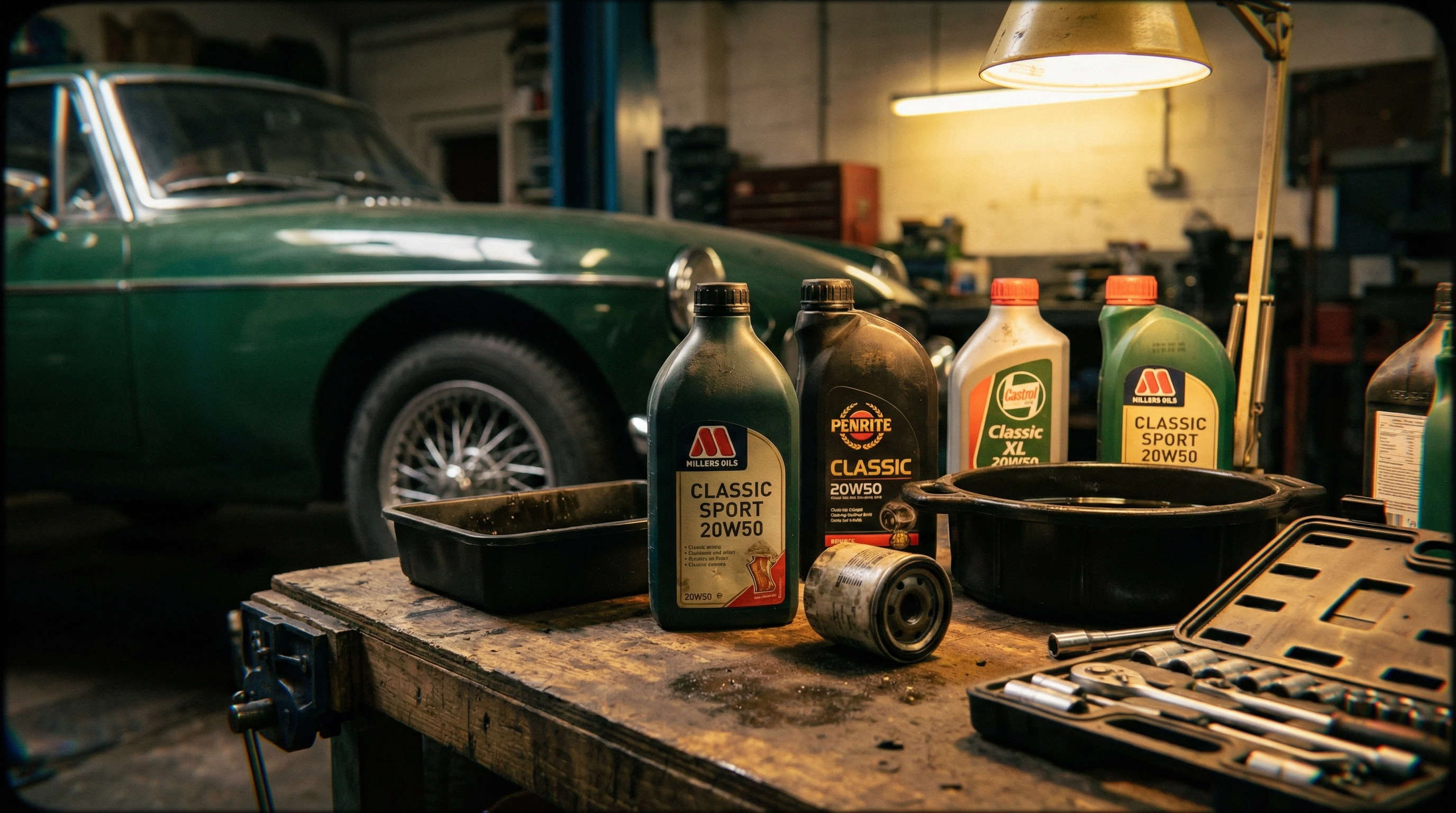




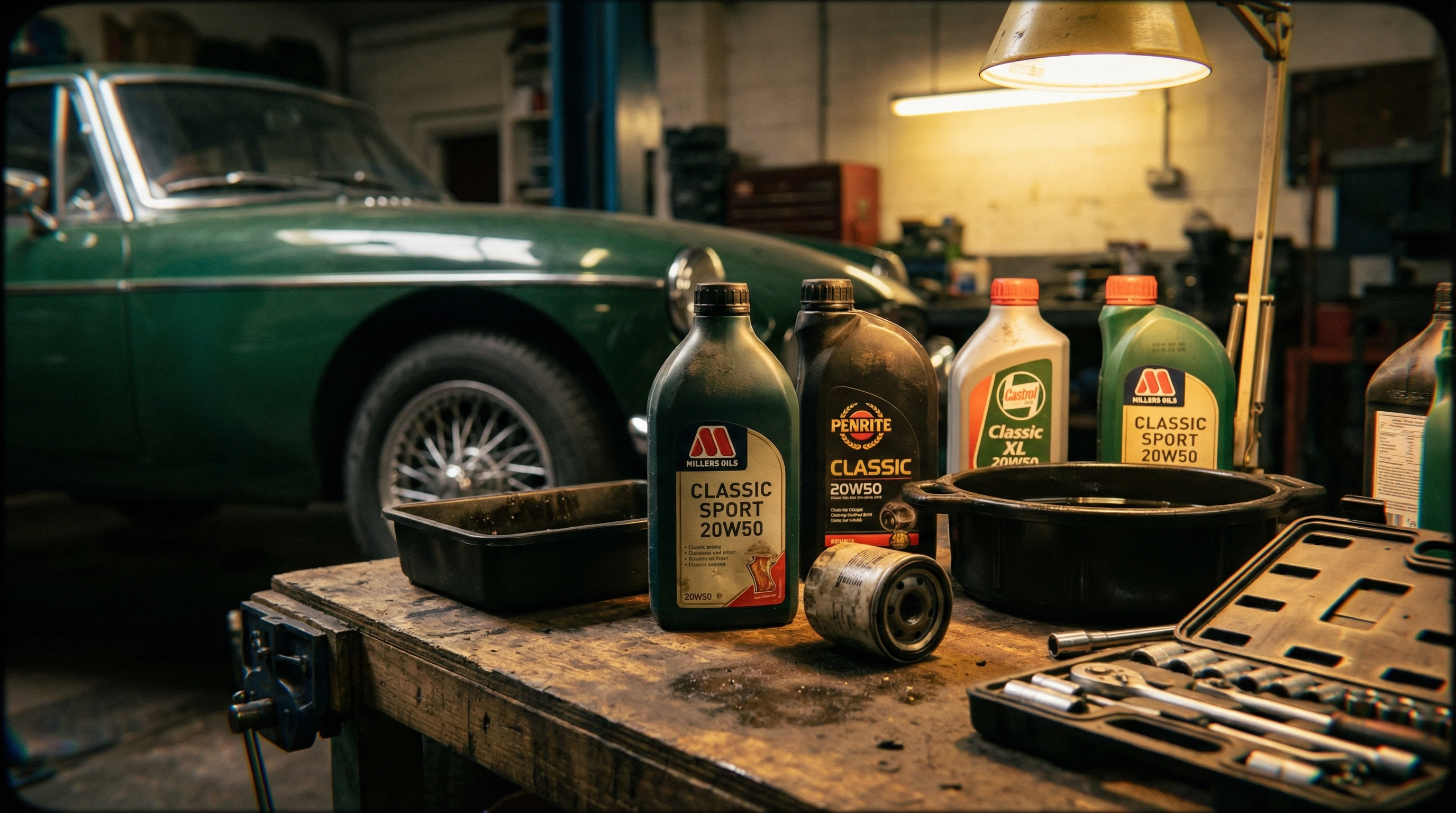
Choosing the correct engine oil for your classic car is not just a matter of picking the cheapest bottle off the shelf. It is the lifeblood of your engine, responsible for lubricating moving parts, cooling the system, and preventing a catastrophic failure while you are enjoying a weekend drive. Understanding what the numbers and letters on the bottle actually mean will save you a lot of money and stress in the long run. Many owners simply pour in whatever they have to hand, but vintage engines are highly sensitive machines that require very specific fluids to operate correctly.
The primary function of engine oil is to create a microscopic film between metal components that are moving past each other at thousands of revolutions per minute. Without this protective layer, the friction would generate enough heat to weld the engine solid within seconds. Beyond lubrication, the oil also cleans away microscopic metal shavings and soot, suspending them in the fluid until they are trapped by the oil filter. It also helps to seal the piston rings and prevents internal corrosion, which is especially important for classic cars that spend long periods in storage.
Decoding viscosity and grades
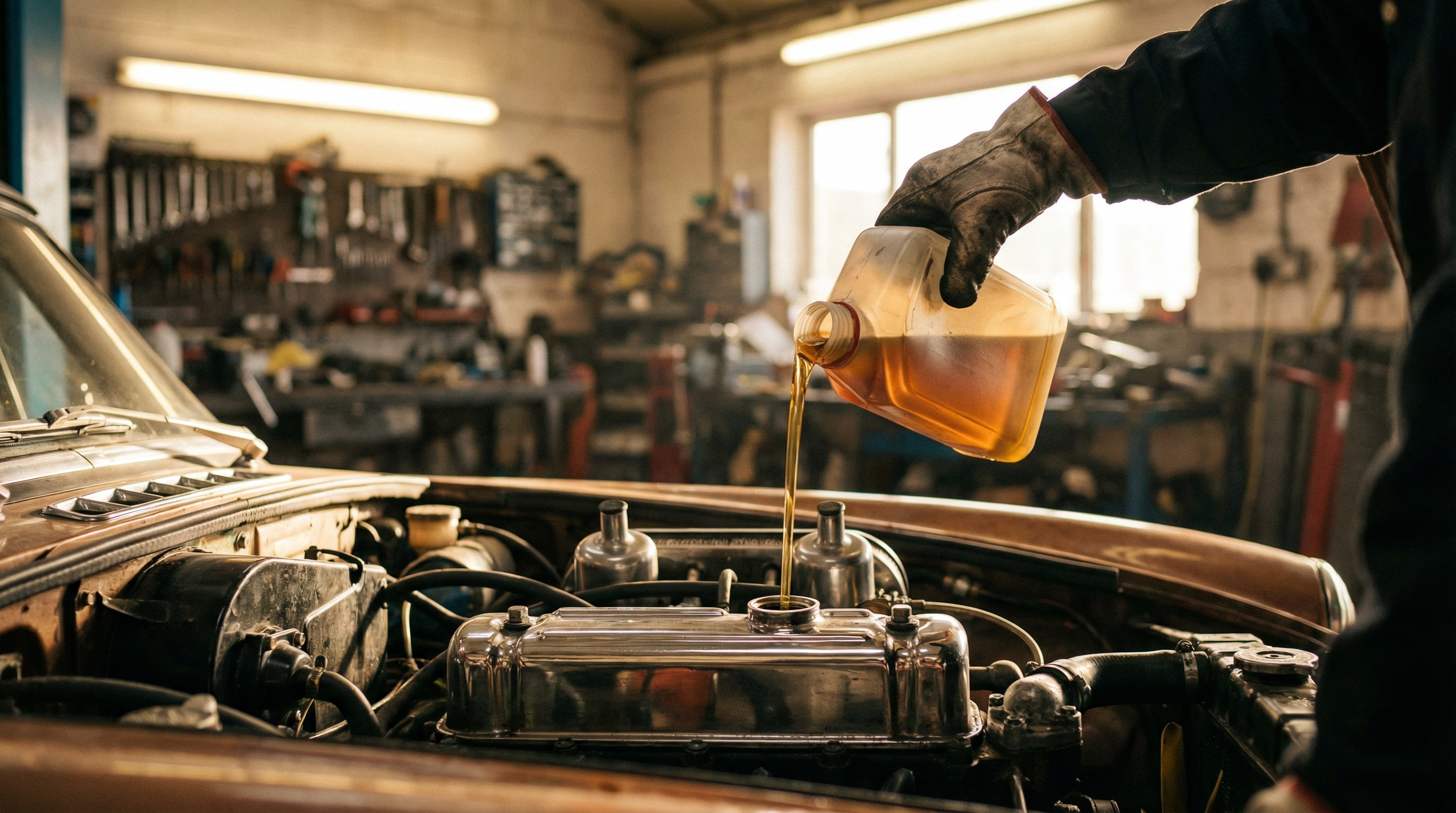
When you look at a bottle of oil, the most prominent feature will be a sequence of numbers and letters, such as 20W50 or 10W40. This is the SAE viscosity grade, which tells you how thick the oil is at different temperatures. Viscosity is simply a measure of a fluids resistance to flow. A high viscosity fluid like treacle flows slowly, while a low viscosity fluid like water flows quickly. In a classic engine, you need an oil that is thin enough to flow quickly when the engine is cold, but thick enough to maintain a protective film when the engine is hot, considering the wider manufacturing tolerances of older vehicles.
The "W" in these grades stands for Winter, not weight as many people assume. The number preceding the W indicates the oils viscosity at low temperatures. A lower number means the oil will remain relatively thin in freezing conditions, allowing the oil pump to circulate it quickly to the top of the engine immediately after starting. The second number indicates the viscosity at operating temperature, usually around 100 degrees Celsius. A 50 rating means the oil will not thin out too much when hot, ensuring it still provides adequate protection under load for older engines like those found in an MGB or Jaguar E-Type.
Mineral versus synthetic oils
The base oil used to create the lubricant falls into three main categories: mineral, semi synthetic, and fully synthetic. Mineral oil is refined directly from crude oil and is the oldest technology, making it the perfect match for classic vehicles. It contains the right properties to condition older rubber and cork seals, preventing them from shrinking and causing significant oil leaks. Modern synthetic oils are chemically engineered to be highly detergent, which can wash away beneficial deposits in an older engine and expose worn seals, leading to weeping gaskets and a messy driveway.
While fully synthetic oil provides the highest level of performance for modern cars, it lacks the essential additives required by vintage engines. Classic car engines, particularly those with flat tappet camshafts, rely heavily on an additive called ZDDP (Zinc Dialkyldithiophosphate). Modern emissions regulations have forced manufacturers to drastically reduce ZDDP levels in contemporary oils to protect catalytic converters. Using a modern synthetic oil in a classic engine can lead to rapid and severe wear of the camshaft lobes and followers. Therefore, a high quality classic mineral oil formulated with the correct levels of ZDDP is essential for the longevity of your vintage engine.
The dangers of underfilling
Running an engine with too little oil is one of the fastest ways to destroy it. The oil pump sits at the bottom of the sump, drawing oil up and distributing it throughout the engine. If the level drops too low, the pump may draw in air instead of oil, especially when cornering or driving up a steep hill. This momentary loss of oil pressure means metal components are suddenly rubbing against each other without lubrication. The resulting friction generates immense heat, causing rapid wear to the crankshaft bearings, camshafts, and piston rings.
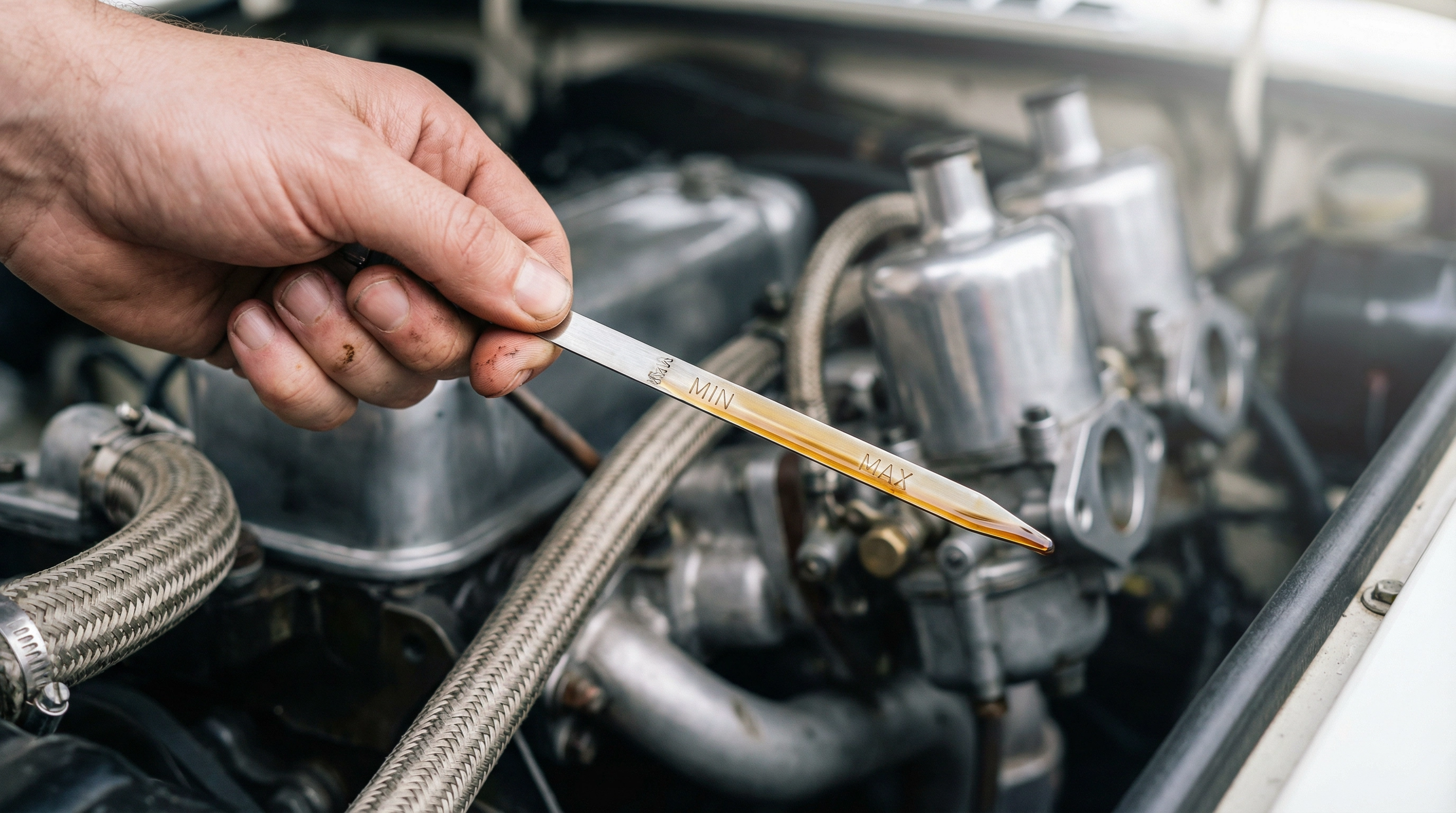
If you hear a ticking or knocking sound from the engine, or if the red oil pressure warning light illuminates on the dashboard, you must stop the vehicle immediately. Continuing to drive, even for a short distance, will almost certainly result in catastrophic engine failure. Even if the level is only slightly low, the remaining oil has to work harder, running hotter and degrading faster. It is essential to check the level regularly using the dipstick, ensuring the vehicle is parked on level ground and the engine has been switched off for at least five minutes to allow the oil to drain back into the sump.
Why overfilling is just as bad
While underfilling is obviously dangerous, many people incorrectly assume that adding a little extra oil will provide better protection. In reality, overfilling can be just as destructive. The crankshaft sits just above the oil level in the sump, spinning at high speed. If the oil level is too high, the crankshaft will strike the surface of the oil, whipping it into a foam. This aerated oil is full of tiny air bubbles, which are compressible and provide terrible lubrication. The oil pump will circulate this foam through the engine, leading to the same friction and wear problems as having too little oil.
Furthermore, the excess oil increases the pressure inside the crankcase. This pressure will find the weakest point to escape, which usually means blowing out the main engine seals, resulting in significant oil leaks that classic cars are already prone to. The excess pressure can also force oil up past the piston rings and into the combustion chamber, where it will be burned. This produces thick blue smoke from the exhaust and fouls the spark plugs. If you accidentally overfill your engine, do not start it. You must drain the excess oil from the sump plug before driving.
Choosing the right oil for your vehicle
The only reliable way to know which oil your classic car needs is to consult the original owners handbook or a trusted marque specialist. You cannot guess the correct specification based purely on the age of the vehicle. For example, a 1960s Triumph TR6 typically requires a high quality 20W50 mineral oil with adequate ZDDP, whereas a pre war vintage car might require a single grade SAE 30 oil. Using a modern 5W30 synthetic oil in these engines will almost certainly lead to internal damage and significant oil leaks.
It is always wise to carry a spare litre of the correct classic oil in your boot when travelling. Finding the exact specification you need, such as a specialist 20W50 mineral oil, at a rural petrol station or modern supermarket can be incredibly difficult, and mixing different types of oil should be avoided unless it is an absolute emergency. By understanding what your vintage engine needs and checking the level regularly, you ensure your classic car remains reliable for years of motoring enjoyment.

It’s a scenario that will be familiar to many of us. It’s the dead of night, the house is quiet,...

Classic cars possess an undeniable allure, capturing the essence of a bygone era and delighting car...

Well, what a year 2026 is shaping up to be for us classic car nuts. After a long, cold winter of...
