


Thanks to your amazing response, we've created a dedicated website to help you explore Britain's...
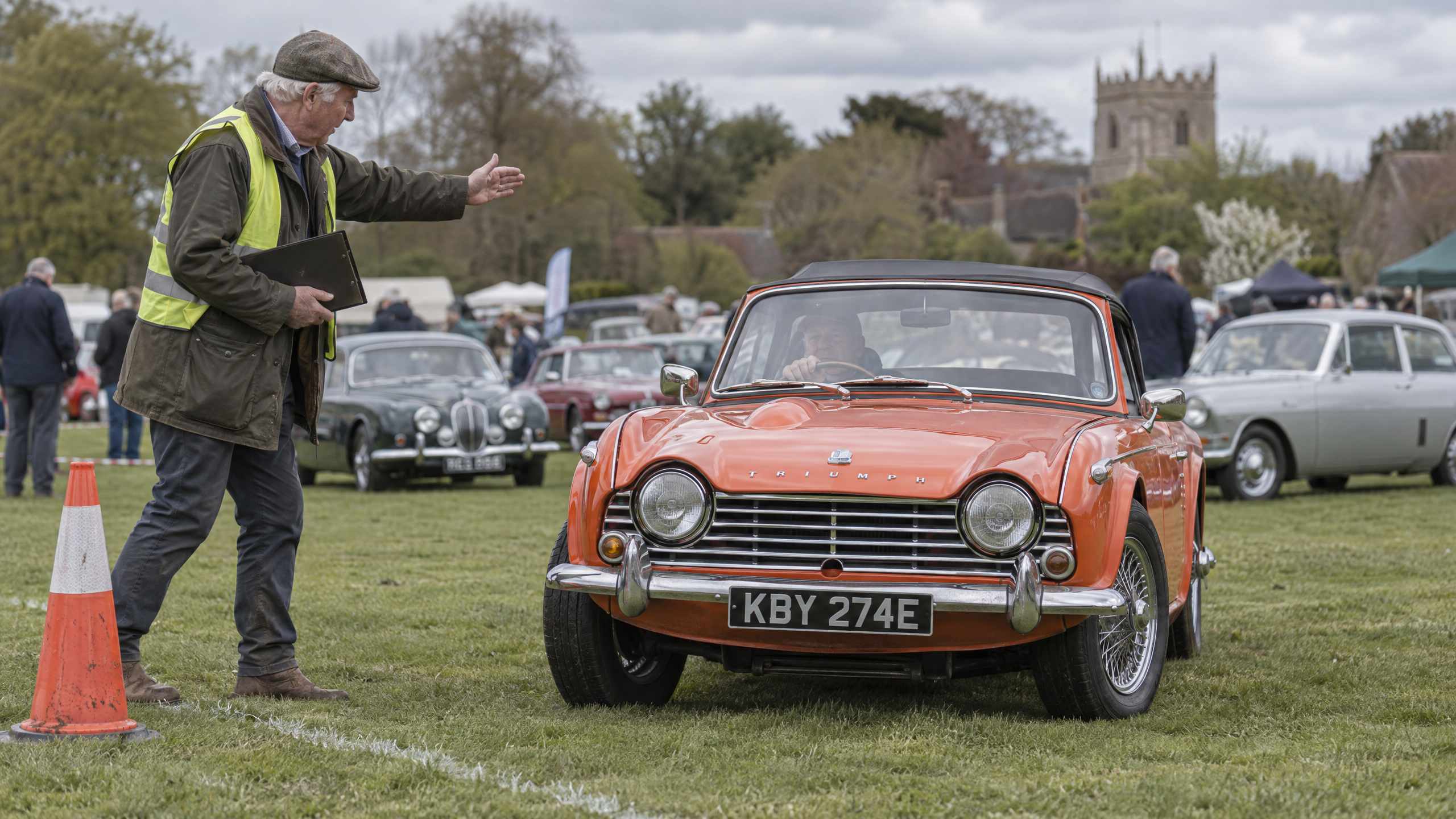




A classic car show is not just a gathering of cars. It is a temporary village built from folding chairs, damp grass, half a bacon roll and the unspoken fear that someone may put a cup of tea on the wing. By ten in the morning, the field has its own social order. By two, somebody is explaining why fuel injection ruined everything.
This is not criticism. It is wildlife observation, carried out from a safe distance behind a Rover P6 and with a sensible escape route to the autojumble. Every classic car show person is essential. Remove any one of them and the day collapses into a car park with fewer biscuits.
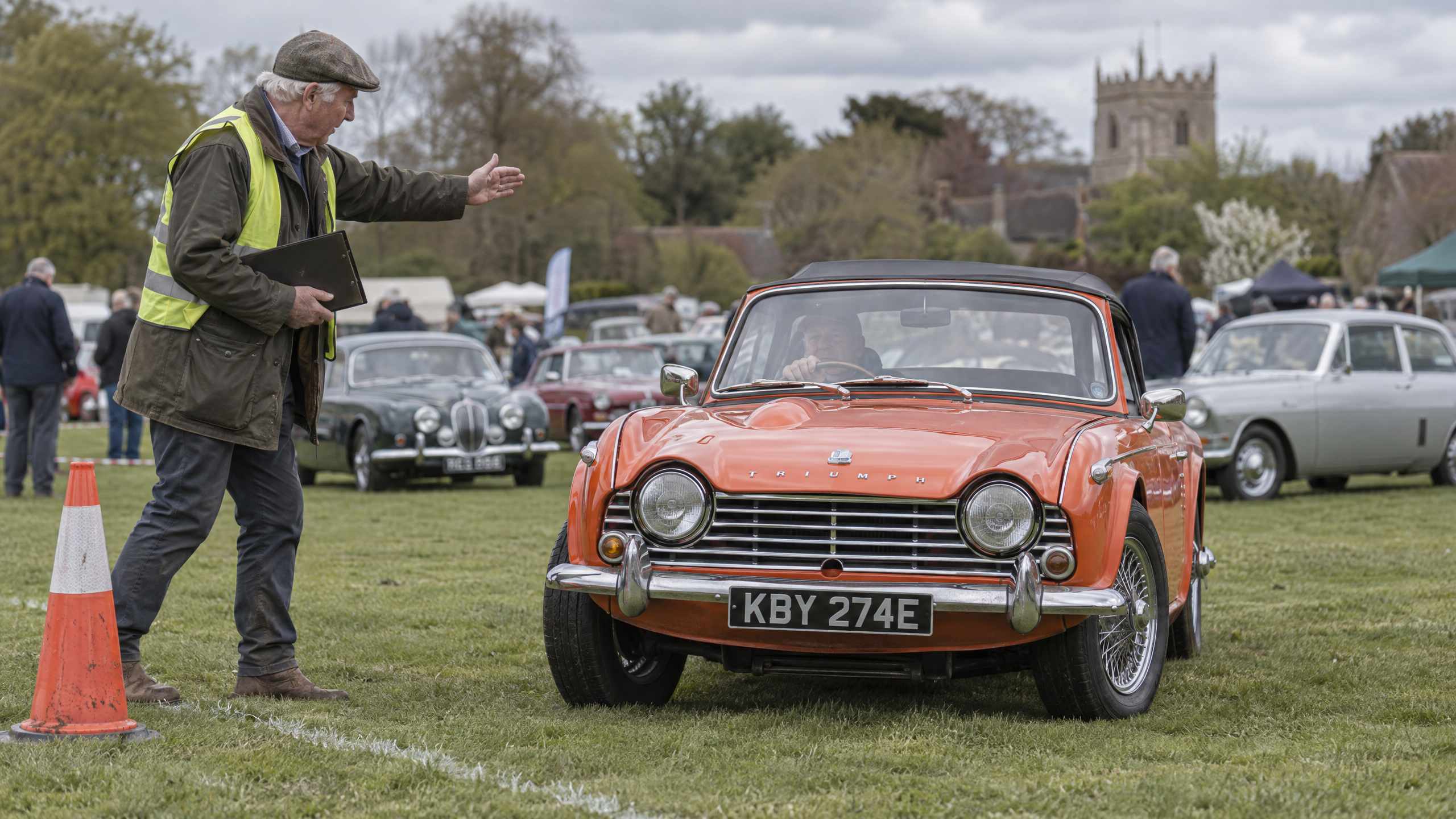
The clipboard marshal. He does not park cars. He restores order to a lawless world.
The clipboard marshal
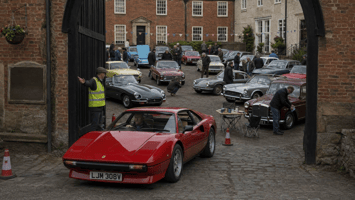
You will meet him before you see a single car. He is standing in the entrance, often beside a cone, holding a clipboard with the focused expression of a man directing aircraft into Heathrow. You may think this is a village hall field with room for 300 cars. He knows it is a delicate arrangement of sight lines, fire exits and a Morris Minor owner who will otherwise park on the cricket square.
The clipboard marshal speaks a special dialect made entirely of hand signals. “Keep coming” means keep coming. “A little more” means three feet. “Stop” means you have disappointed a man who has been awake since half five. He is the reason your Triumph is neatly between two Austin Sevens rather than facing a hedge with its nose in a puddle. Respect him. He has seen things.
The concours perfectionist
The concours perfectionist arrives with a car so clean that it appears to have been delivered in a separate atmosphere. He brings a cloth for the paint, a cloth for the chrome and a cloth that appears to be for the cloths. By half past nine, he has removed a speck of dust from a wheel centre with the concentration of a bomb disposal expert.
Nobody knows whether he enjoys the show. It is hard to tell through the tension. A child approaches with an ice cream and an adult is quietly moved between them. A pigeon lands within six metres of the bonnet and three people look up at the sky. Still, we should be grateful. Without the concours perfectionist, some of us would never know what the inside of an engine bay could look like if it had never experienced weather, oil or joy.
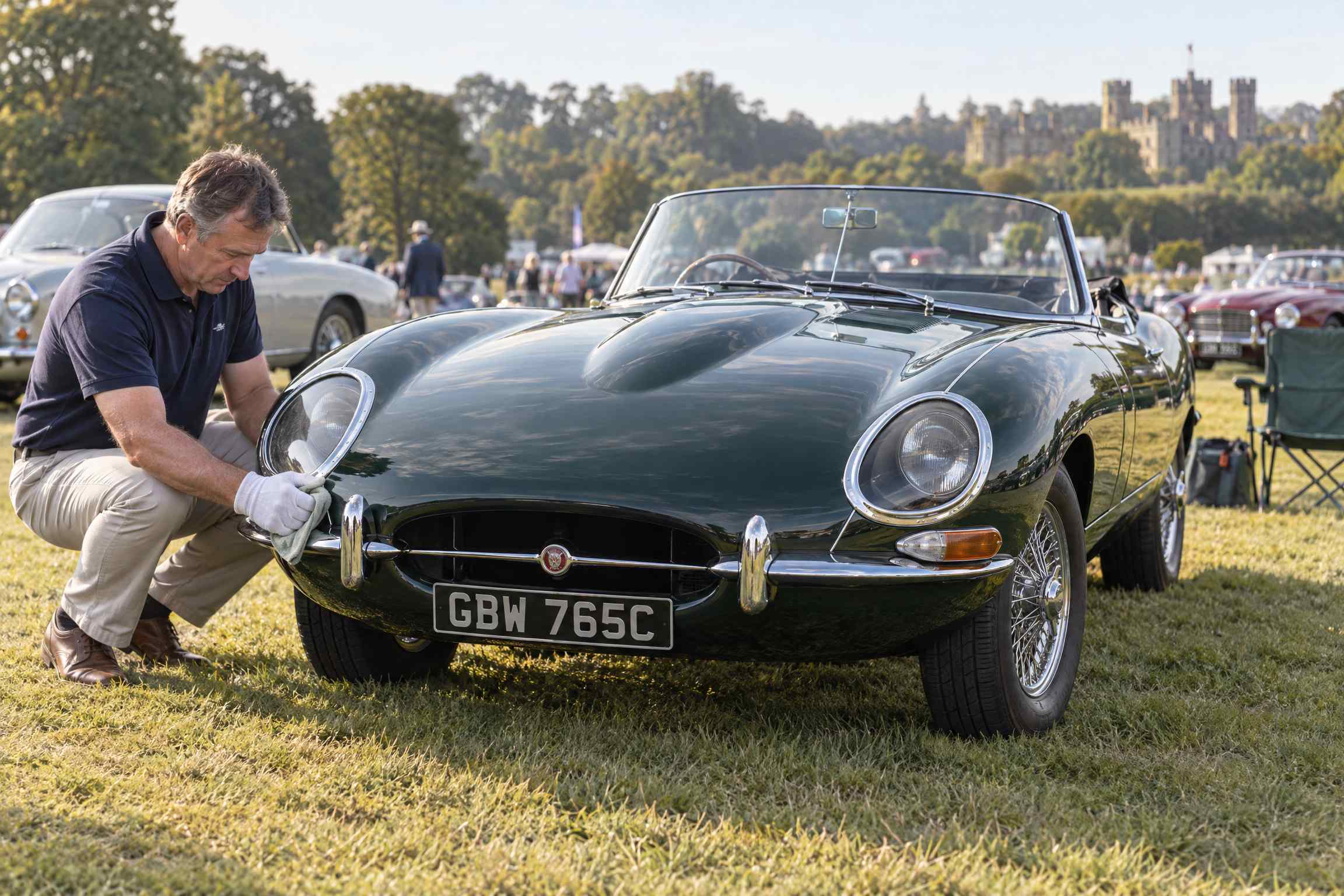
The concours perfectionist has not cleaned the car. He has negotiated a diplomatic settlement with dust.
The tea queue philosopher
The tea queue philosopher is easy to locate. Follow the sound of a sentence beginning, “The trouble is, they do not make them like they used to.” He will be holding a paper cup, wearing a hat that has survived every form of rain since 1974 and considering the state of the nation through the lens of a carburettor.
His conversation covers tyre compounds, council planning decisions, the correct price of a pork pie and why his uncle’s Marina was better than people remember. You will nod. You will agree with at least half of it. Then he will say something unexpectedly wise about buying the best car you can afford, before leaving to join another queue and save the country one cup of tea at a time.
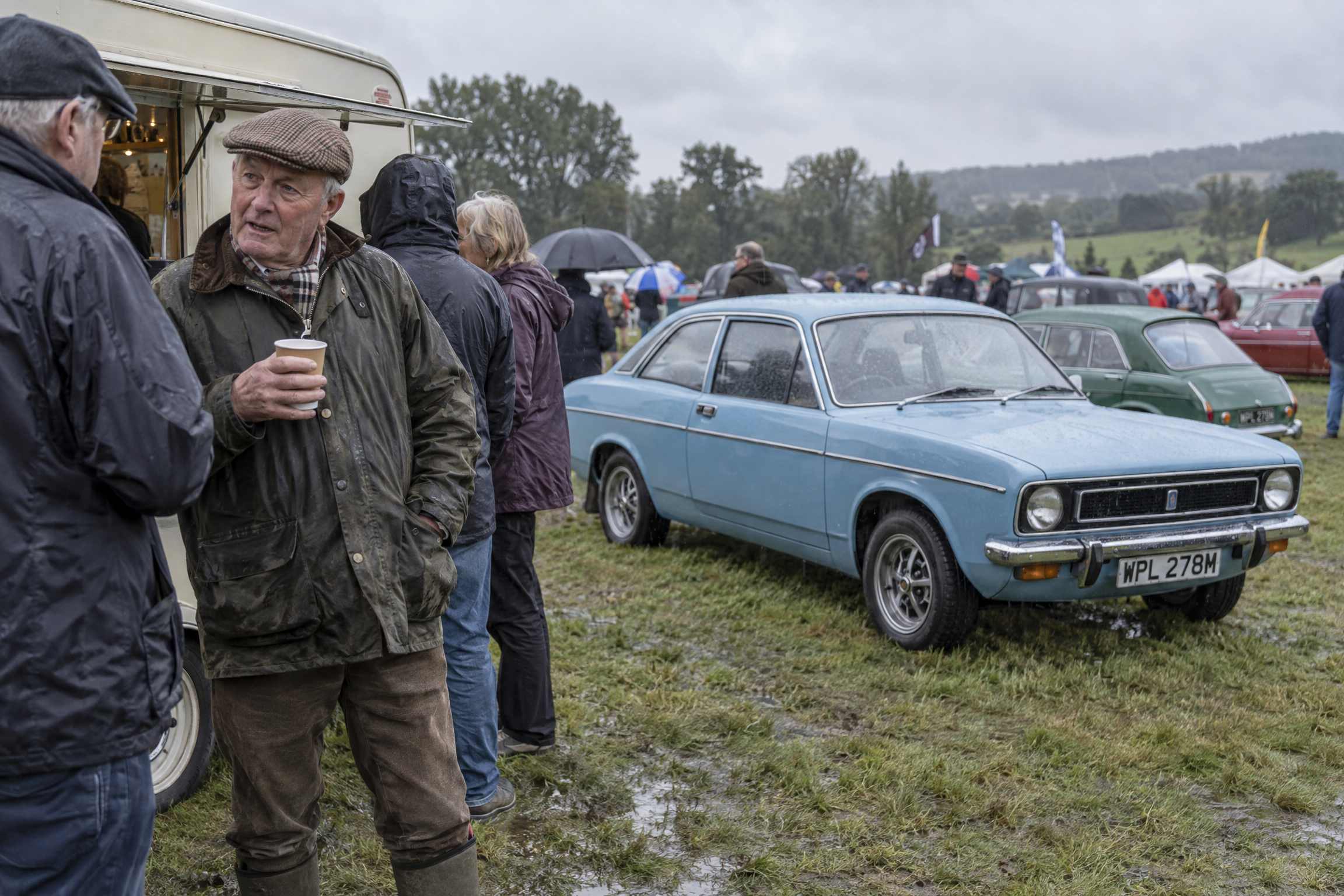
The tea queue philosopher is not waiting for a drink. He is preparing a six minute lecture on the decline of sensible engineering.
The Morris owner who has been rebuilding it since 1987
Every show has one. His Morris Minor has been “nearly finished” since 1987, which is not a criticism because he has rebuilt it with the patient care usually reserved for restoring a cathedral ceiling. The current version is approximately the fourth current version. There was a period when it was going to be original, then a period when it was going to have a bigger engine and now it is, quite sensibly, “being developed”.
He knows every bolt by name. He can point at a small metal bracket under the bonnet and tell you where it was made, why the later one was inferior and how he found three of them in a shed in Shropshire. The Morris runs beautifully for eight minutes at a time. That is enough. The important thing is that the owner has had a splendid thirty nine years of Sundays.
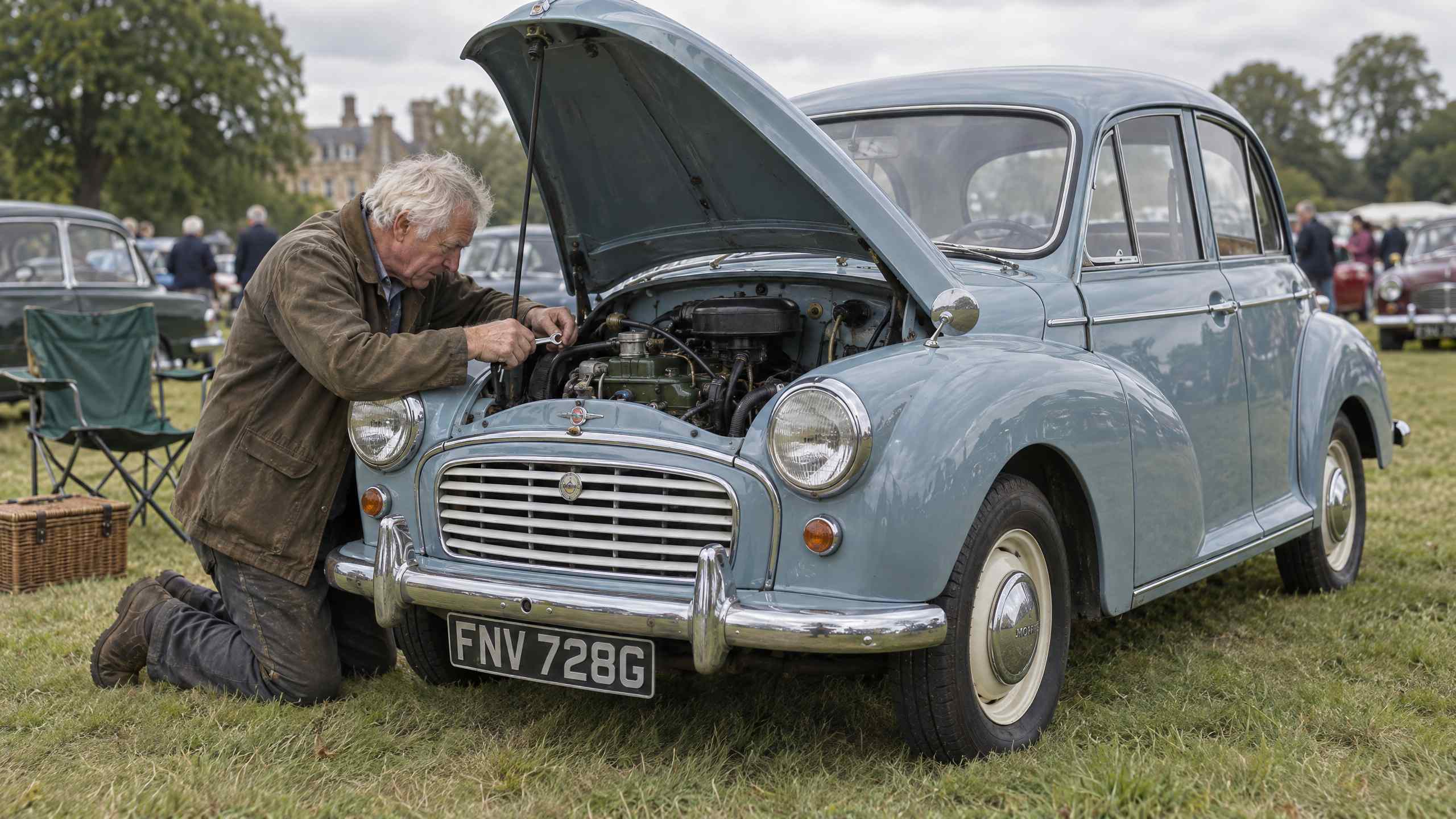
The Morris has been on a journey since 1987. Mostly to the garage and back, but still.
The owner who only meant to come for ten minutes
This owner is leaning against his car, having opened the bonnet for somebody at 10.12am. It is now 3.40pm. He has not eaten, sat down or been allowed to visit the toilets, because every time one conversation finishes, another person arrives who had an aunt with one exactly like it. He is too polite to escape and secretly too pleased to try.
By the end of the day, he has explained the gearbox three times, the paint colour seven times and the meaning of the small rattling noise sixteen times. He has given a stranger the number for a good trimmer, promised to bring the car to a pub meet and entirely forgotten why he came. This is not a failure of time management. It is the whole point of owning an interesting old car.
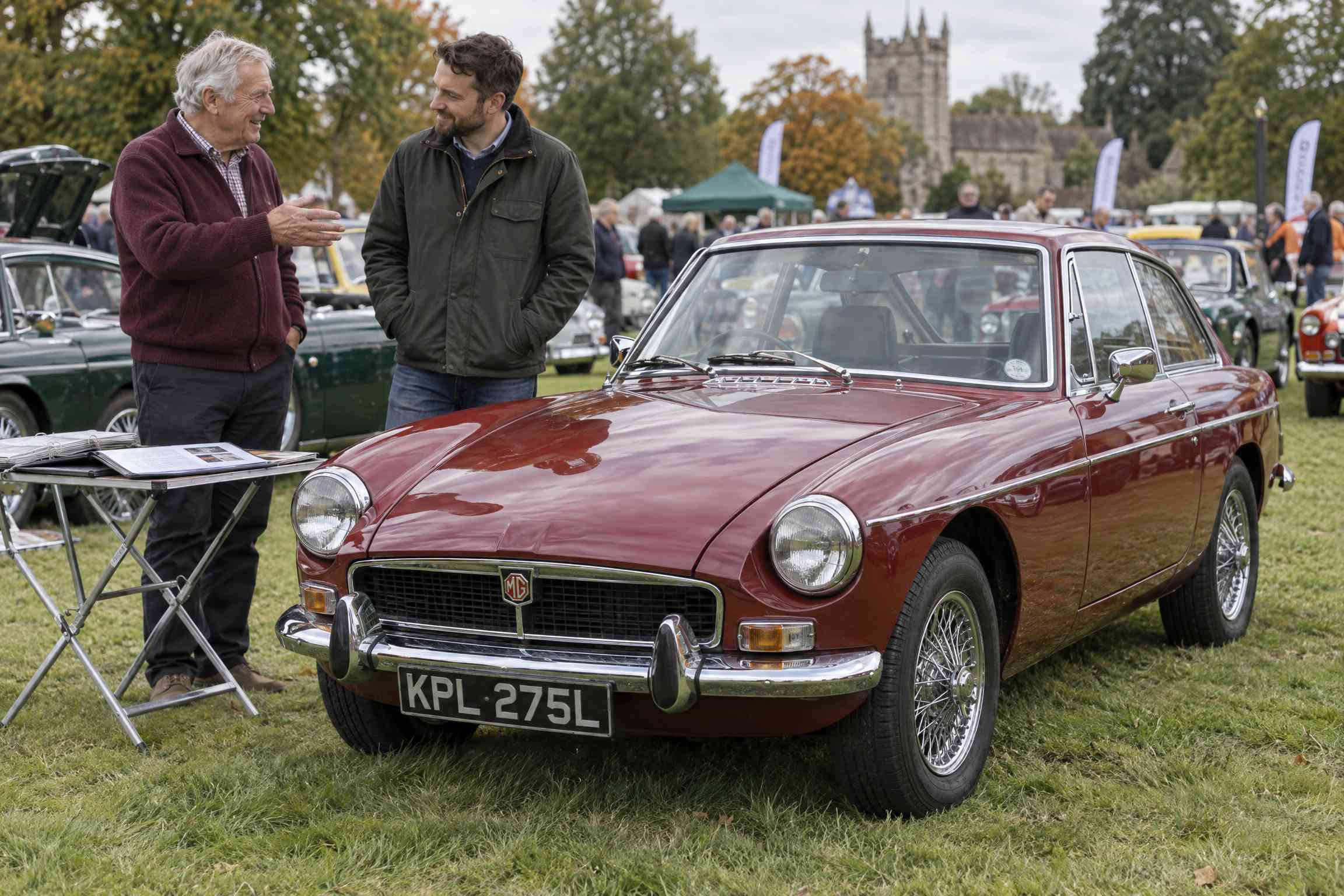
He came for ten minutes. The car has made him its unpaid customer service department.
The collector of deeply specific information
You may mistake this person for an ordinary owner until he begins speaking. Then you discover that he can identify a 1973 MGB GT by the location of one washer bottle, the sound of a door shut and whether the glovebox lid has the correct degree of disappointment in it. He is not showing off. He has simply spent forty years storing facts that would otherwise take up useful space in the garage.
Ask one question and you may get an answer with a map, a date, the name of a former factory worker and a warning about a supplier who apparently cannot be trusted with a rubber grommet. This is valuable information. Take notes. One day, when your own car needs an obscure part that has not existed since decimalisation, he will be the difference between driving home and learning to enjoy bus timetables.
A very good day out, really
Classic car shows work because everybody brings a slightly different form of enthusiasm. The marshal brings order. The concours perfectionist brings standards. The tea queue philosopher brings opinions, which are almost as useful. The Morris owner brings proof that commitment is a renewable resource.
So the next time you are standing in a field, drinking coffee that tastes faintly of a cardboard cup and listening to somebody explain the failure rate of a certain Italian electrical component, do not rush off. You are not at a car show. You are in the natural habitat of people who have turned a hobby into a very enjoyable way of being late for lunch.
Thanks to your amazing response, we've created a dedicated website to help you explore Britain's...
We were over the moon that our article on the best classic car museums in the UK went down so well...
Who gets the prime spot by the door, and why is it always the guy with the MGB who arrived three...
